S. Agnon - Shira
Здесь есть возможность читать онлайн «S. Agnon - Shira» весь текст электронной книги совершенно бесплатно (целиком полную версию без сокращений). В некоторых случаях можно слушать аудио, скачать через торрент в формате fb2 и присутствует краткое содержание. Год выпуска: 2014, Издательство: Toby Press, Жанр: Современная проза, на английском языке. Описание произведения, (предисловие) а так же отзывы посетителей доступны на портале библиотеки ЛибКат.
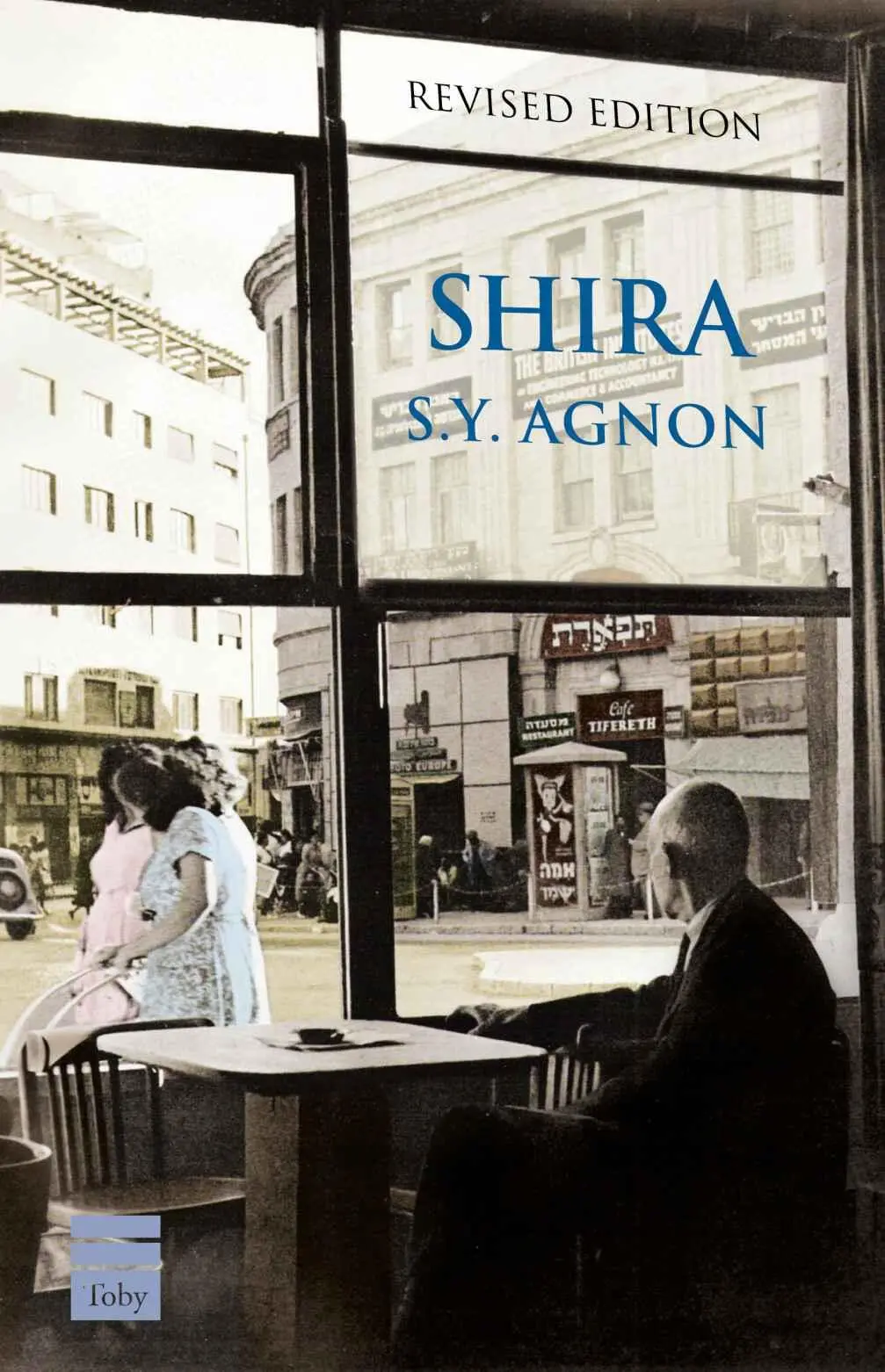
- Название:Shira
- Автор:
- Издательство:Toby Press
- Жанр:
- Год:2014
- ISBN:нет данных
- Рейтинг книги:5 / 5. Голосов: 1
-
Избранное:Добавить в избранное
- Отзывы:
-
Ваша оценка:
Shira: краткое содержание, описание и аннотация
Предлагаем к чтению аннотацию, описание, краткое содержание или предисловие (зависит от того, что написал сам автор книги «Shira»). Если вы не нашли необходимую информацию о книге — напишите в комментариях, мы постараемся отыскать её.
Shira — читать онлайн бесплатно полную книгу (весь текст) целиком
Ниже представлен текст книги, разбитый по страницам. Система сохранения места последней прочитанной страницы, позволяет с удобством читать онлайн бесплатно книгу «Shira», без необходимости каждый раз заново искать на чём Вы остановились. Поставьте закладку, и сможете в любой момент перейти на страницу, на которой закончили чтение.
Интервал:
Закладка:
A man has many friends and no preference about which one to go to, so he doesn’t go to any of them. While Herbst was deliberating, he arrived at a point where several roads intersect. One of them leads to Shira. I will waste no words. Of all the roads, Herbst chose the one that leads to Shira.
Chapter twenty-two
Shira was dressed in warm, unattractive clothes. Her face was tired, her cheeks smooth. Only her freckles were prominent, so enlarged that it seemed as if a part of her right cheek had been taken away. The room smelled of some liniment, the kind you apply to a bruise. Either she had been tending patients’ bruises or she herself was bruised. Herbst stared at her with probing eyes, like a man studying a woman he dislikes in order to identify the power that draws him to her. He saw again what he had already seen: although she wasn’t ugly, she certainly wasn’t beautiful. He had called her Nadia in the beginning, before he really knew her. Actually, this name suggests no particular image; still, it suits her better than Shira.
Herbst changed his face to register fury and considered: Maybe I won’t address her in the familiar second person. He hadn’t arrived at a decision when he said, “I’ve interrupted you.” He was prepared to hear her say, “I’m busy,” and to answer, “If so, I won’t keep you. I’ll be on my way.” But rather than answer his implied question, she said, “So you got home all right.” Herbst said, “That’s an old story. It’s been almost a month.” Shira said, “A month and a half. Still, you haven’t forgotten me, and you took the trouble to stop by. One can’t say the man has no curiosity.” Herbst said, “It’s not a question of curiosity. I’ve been busy. I had to prepare first-rate lectures for the winter semester. Students are beginning to come from all over; many have been at European universities and can’t be offered rubbish.” Shira said, “And you stopped working to come here.” Herbst said, “You want to know how I could stop working to come here? Because, I already prepared some of the lectures, so I’m able to take the time.” Shira answered in a relaxed tone, “You prepared your lessons and found yourself with a little time, some of which you’ve decided to donate to me. Now I need some time to arrange my thoughts and consider what to do with the gift of time you were kind enough to give me. If I were sure I would be able to arrange my thoughts in a single evening, I would tell you to take a chair and sit down. But I’m afraid I, too, might need a month and a half to arrange my thoughts, and that may be too long for you to wait.” Herbst said, “If you don’t mind, I’ll sit down.” He thought to himself: I’ll stay until she finishes complaining, then I’ll be on my way.
Herbst sat and Shira sat, making no move to change her clothes. Didn’t she realize such clothes were not likely to win hearts? Not to mention her complaints, or the look on her face. He thought of asking if she was sick but decided not to, for she would surely notice from his tone of voice that he was unsympathetic. He took a cigarette from the pack on the table and began smoking fiercely, to create his own atmosphere. As he smoked, he took out his own cigarettes and offered them to Shira. “I don’t want to smoke,” she said. Herbst blew smoke rings and said, “You don’t want to smoke? Then what do you want?” Shira stared at him and said, “What do I want? I want to know how Mrs. Herbst is doing.” Herbst growled a response. “She’s fine.” Shira said, “She’s fine. And how is the baby? Her name is Sarah, isn’t it?” Herbst growled at her again, “She’s fine.” Shira continued to question him. “And Dr. Herbst himself, how is he?” “Me? Yes, I’m fine.” Shira stared at him and said, “Then you, the baby, and Mrs. Herbst are all healthy and sound. You are such a successful man, Dr. Herbst. A man whose entire family is in good health, lacks nothing. What else did I want to ask you? What are your views, doctor, about men who beat women?” He looked at her in alarm and said, “What was that?” Shira looked at him with malice and affection, and said, “I asked for Dr. Herbst’s views on men who beat women.” Herbst answered, “They are depraved, absolutely depraved.” Shira looked at him with smiling eyes and said, “I think so too, and I knew that’s how you would answer. Tell me, my friend, are you not capable of beating a woman?” Herbst cried out in alarm, “No!” and realized he was on the verge of slapping her face. Shira said, “Well said, my boy. You must never strike a woman. Women are fragile, and one must be gentle with them.”
Shira sat on her chair, becoming one with it, her shoulders contracting, while Herbst sat crushing the cigarette with his fingers. The lines on his palms began to jump and were covered by dry, searing heat. His temples throbbed and sweated. Once or twice he was about to speak, but the words remained on the tip of his tongue. He stared with enmity at the remains of the cigarette in his hand, its embers singeing his fingernails. Again he wanted to say something and didn’t know how to begin, although he knew that, if only he could begin, words would come. He got up and moved his chair, put the remains of his cigarette in the ashtray, snuffed it out, sat down again, passed his tongue over his lips, and asked in a whisper, “What were you talking about and what did you have in mind, Shira?” Shira looked at him, lowering her head and speaking from deep in her chest. “And if I tell you, will you understand?” Herbst said, “Why wouldn’t I understand?” Shira said, “Maybe you will and maybe you won’t. Even if you do, I don’t know why I asked such an odd question. Tell me, don’t you think it’s an odd question?” Herbst said, “It is an odd question, but allow me to ask what led to such a question.” Shira said, “You think I know?” Herbst said, “Don’t you know?” Shira said, “I don’t really know, but, because you asked, I will tell you something.”
Shira touched the tip of her nose, which was colored by the powder she had sprinkled on it, and asked in a leisurely tone, “What was I going to say?” Herbst said, “You were going to answer my question.” Shira said, “You mean about that odd question? I’ll tell you, if you like.”
Shira said, “The event took place a month and a half ago plus two days. Why did I say ‘plus two days,’ when actually it was a month and a half ago plus three days, exactly one night after the curfew. Remember, you were here the night they declared the curfew. So, one night later, a certain person happened by, not to my room but to the landlord’s apartment. A respectable person, healthy, not young but not old. In any case, his age didn’t show. He was an engineer by profession. A marine engineer, or some such thing. What do I know? Until that day, I never knew there were such engineers, though it’s logical that, if there are boats, they didn’t build themselves, and, just as you need someone to build houses, you need someone to build boats. Anyway, the engineer I’m telling about was related to the landlady, or maybe the landlord. For the life of me, I couldn’t say whose relative he was, hers or his. It happened that he came to visit his relatives, but they had gone to some kvutza because of a tragedy involving their daughter. The night before, her son, a child of about five and a half, had wandered off and encountered a jackal that devoured him, leaving only a headless skeleton. The architect was alone in his relatives’ home. What am I saying? I said ‘architect’ when, in fact, he was an engineer, a marine engineer. That gentleman, the engineer, was here in the home of his relatives, and I was in my room, paying no attention to him. It’s possible that I didn’t even know such a person was in the house with me. After dinner I said to myself: Why sit in the room when I could sit on the balcony? Hadn’t the landlady given me permission to sit out there whenever she and her husband were out? I put on comfortable clothes and went up to the landlady’s apartment and out onto the balcony, where I sat on a chair, allowing the wind to curl my hair and the moon to play hide-and-seek with me. I thought how lucky it was to have such a balcony, and now I was the lucky one. I heard footsteps. I’m not saying the footsteps concerned me. If someone was there, it was his right to move around. After a while, the architect appeared. Manfred, I’m talking, but you’re not listening. Are you listening? If so, I’ll tell you what followed.”
Читать дальшеИнтервал:
Закладка:
Похожие книги на «Shira»
Представляем Вашему вниманию похожие книги на «Shira» списком для выбора. Мы отобрали схожую по названию и смыслу литературу в надежде предоставить читателям больше вариантов отыскать новые, интересные, ещё непрочитанные произведения.









Обсуждение, отзывы о книге «Shira» и просто собственные мнения читателей. Оставьте ваши комментарии, напишите, что Вы думаете о произведении, его смысле или главных героях. Укажите что конкретно понравилось, а что нет, и почему Вы так считаете.