S. Agnon - Shira
Здесь есть возможность читать онлайн «S. Agnon - Shira» весь текст электронной книги совершенно бесплатно (целиком полную версию без сокращений). В некоторых случаях можно слушать аудио, скачать через торрент в формате fb2 и присутствует краткое содержание. Год выпуска: 2014, Издательство: Toby Press, Жанр: Современная проза, на английском языке. Описание произведения, (предисловие) а так же отзывы посетителей доступны на портале библиотеки ЛибКат.
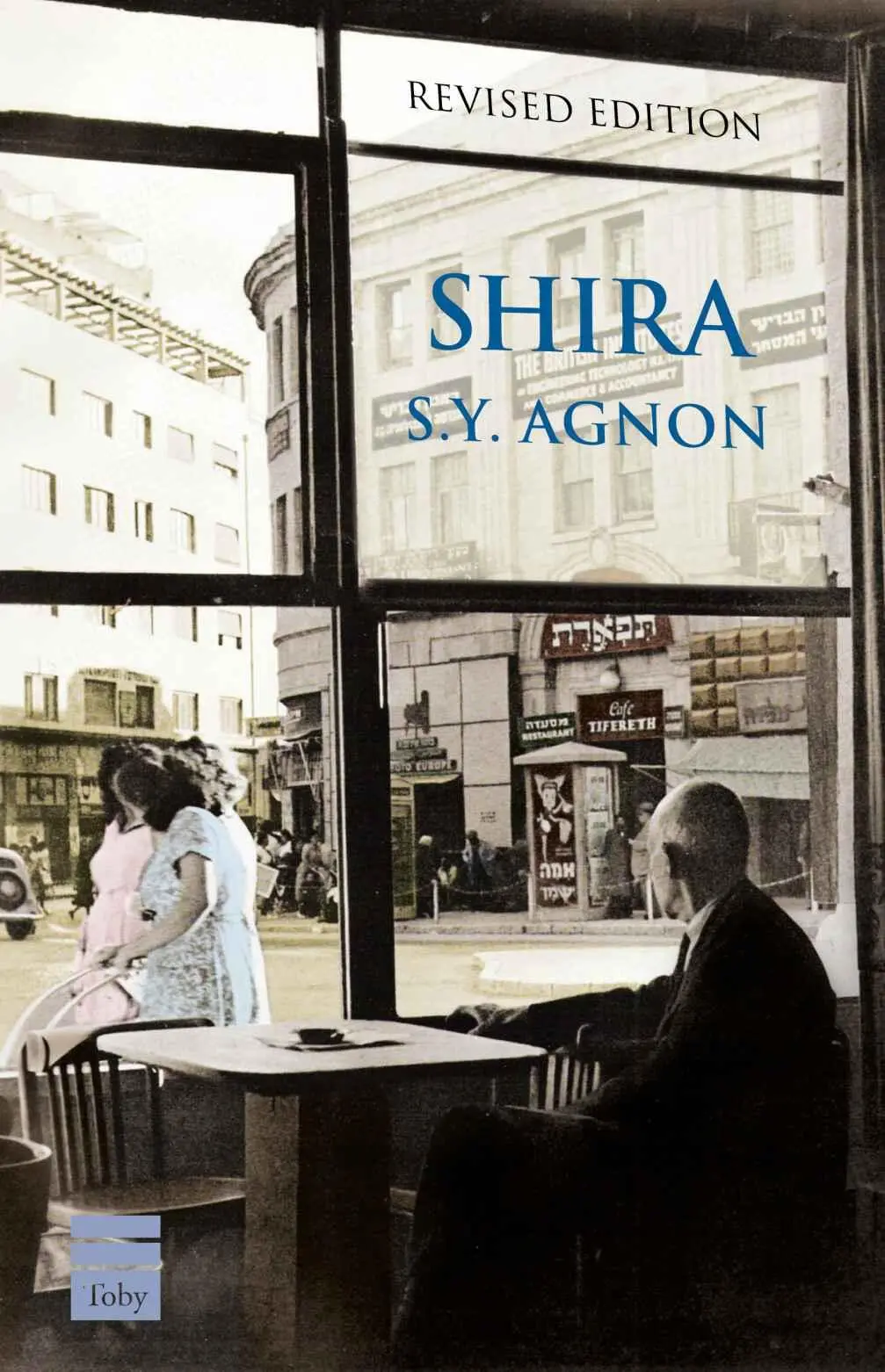
- Название:Shira
- Автор:
- Издательство:Toby Press
- Жанр:
- Год:2014
- ISBN:нет данных
- Рейтинг книги:5 / 5. Голосов: 1
-
Избранное:Добавить в избранное
- Отзывы:
-
Ваша оценка:
Shira: краткое содержание, описание и аннотация
Предлагаем к чтению аннотацию, описание, краткое содержание или предисловие (зависит от того, что написал сам автор книги «Shira»). Если вы не нашли необходимую информацию о книге — напишите в комментариях, мы постараемся отыскать её.
Shira — читать онлайн бесплатно полную книгу (весь текст) целиком
Ниже представлен текст книги, разбитый по страницам. Система сохранения места последней прочитанной страницы, позволяет с удобством читать онлайн бесплатно книгу «Shira», без необходимости каждый раз заново искать на чём Вы остановились. Поставьте закладку, и сможете в любой момент перейти на страницу, на которой закончили чтение.
Интервал:
Закладка:
Herbst parted from Shira on the run. He got into the car and sat on the edge of the seat, compressing himself into his body, his mouth agape with wonder that, at an hour when no one was allowed to be out, a driver had agreed to take him home. He watched the driver, who held the steering wheel in his hand and made the car move. Herbst realized what a great favor the driver was doing for him and wanted to thank him, but he couldn’t find the words. He sat gaping, his lips on fire, dismayed to find himself in a car in the heart of the dark night. He sank into the cushions, listening to the wheels of the car turning and rolling onward. He began to reflect: It’s good that I’m going home, but the essence of the matter isn’t good. He covered his eyes with both hands and reviewed what had happened to him with Shira. Actually, nothing at all had happened, so why the embarrassment and regret? After a while, he uncovered his eyes. He looked at his hands and was surprised to find that the darkness had not clung to them.
Again he buried himself in the cushions, alerting his ears to the sound of the car wheels clattering through the silent city, the silence receding before them as he approached his home.
Near the Allenby Barracks, two armed Syrian policemen popped out and stopped the car. They were so short that their rifles overshadowed them. They rattled their weapons to intimidate the passengers, made menacing faces, and spoke menacingly — like warriors seizing captives. Axelrod eyed them calmly, like a customer examining toy soldiers to see whether they are made of lead or tin. He said to them, “The man I am driving is a great professor, one of our great university professors, and he can’t be detained.” Whether or not the policemen knew what a professor was, they understood from the driver’s tone that his passenger was important and to be treated with respect. They signaled with their rifles and cleared the road for him. Shortly thereafter, Herbst found himself at home.
Chapter twenty-one
On the twenty-first of Heshvan, Herbst went up to Mount Scopus for the opening ceremonies of the academic year. It was his habit to go to these ceremonies without his wife, as Henrietta had trained him to go alone whenever he could manage without her.
The main hall of the Rosenblum Building was full. In addition to professors, lecturers, advisers, students, and university officials, there were guests from Jerusalem, Tel Aviv, Haifa, and the rest of the country’s towns and settlements — invited guests who were guaranteed a seat, as well as uninvited guests, the sort who push their way into every public place and grab the reserved seats.
It was past three in the afternoon. Early autumn permeated the spacious, high-ceilinged room with air for which any attire was suitable. One would not feel chilly in summer clothes, nor would winter clothes be too heavy. Similarly with the doors: when they were open, they didn’t let in a chill and when they were closed, it wasn’t too warm. The guests chatted with one another about the university, its buildings, the courses for which there were still no teachers, and Mount Scopus and its environs. They didn’t raise their voices as they talked; even those who were in the habit of making themselves heard, at any time and in any place, behaved respectfully. The windows drew light directly from the sky itself, with nothing intervening. There were many people present who felt, at that moment, that this structure was unique among structures and this setting unique among settings. Individuals who tended to respond only to what was created to be useful to man were astonished by what they saw from Mount Scopus: the city, the Temple Mount, the wilderness inhabited by infinite colors, the Dead Sea, whose quiet blue flows up from the bottom of the deep, capped by hills and valleys that soar and dip and wrinkle, with every wind etching shapes above like those below, from which a breeze ripples upward and flutters overhead.
On the platform and close by sat the leaders of the yishuv , who arrived early, before the proceedings began, unlike those functionaries who make a point of coming late, so they can feast their eyes on the crowd rising to honor them. Suddenly all conversation ceased, the hall was silent. All eyes were on the president of the university, who had begun his speech. He had been a Reform rabbi in his youth and had been forced to leave his post because he was a Zionist. Although he retained some of the mannerisms of the Reform rabbinate, which are considered ridiculous in this country, his height, style, and dignity led even the cynics in the hall to listen to what he had to say.
As he did every year, he expounded on the role of the Hebrew University, which is not merely the university of the Land of Israel, but belongs to Jews everywhere and is destined to break down the boundaries of Jewish learning, fusing Jewish studies with the humanities and natural sciences to form one single discipline — for everything human is Jewish, and everything Jewish is human.
After outlining the future of the university, he enumerated the innovations of the past academic year, as well as those on the agenda for the coming year: who was appointed lecturer and who was promoted to the rank of senior lecturer, associate professor, or tenured professor. Although most of this information was already public knowledge, everyone listened attentively, for it is one thing to hear a rumor in the marketplace and another to hear it from the president of the university at the official opening of the new academic year.
After listing the names of the faculty members and the promotions, he told how many buildings had been built and how many new students enrolled.
After finishing this account, he spoke about the obligations of teachers and students. Their purpose was twofold and manifold, for, apart from coming to this institution for the sake of learning — some to study and some to teach — a further duty was thrust upon them: to fortify the Torah and the Jewish ethic, without which there could be no future for the nation and no basis for society.
After mentioning all the lofty and exalted hopes invested in the university and in rebuilding the land, he lowered his voice and spoke of impending dangers, dangers we did not foresee, with the power to undermine the lofty and sublime hopes that had brought us here.
Everyone sat and listened, not so much to the speech as to a voice from their own hearts that spoke without words and began to take form. Earlier, as long as there was peace in the world, in all the lands of our exile it was possible to dream of the return to Zion, the revival of the people and its language. Some unique individuals added a dream to this dream: the dream of a Hebrew University in Jerusalem. How? The dreamers never explained this dream. When they were awake, they could provide no key to it. Our holy language remained unsuited to scholarship; Hebrew-speaking professors were scarce, and Hebrew was as far from the lips as dreams from reality. The war suddenly erupted, the world was in chaos, and not one of the dreamers dreamed a good dream. The towns Jews lived in were eradicated, and hundreds of thousands of Jews were killed in the war and its aftermath. At last those at war were worn out and no longer able to fight. All weapons were at rest, and there was no more war. Some of those who survived the war thought about returning to their homes. They found no way to travel. There were no vehicles, no horses to ride. Highwaymen prowled the roads, which were in disrepair and difficult to traverse by foot. The survivors were pressed to leave those places in which they had found refuge from the sword of war, because of hardships and a shortage of food. So they plucked up their courage and, without regard for themselves, set off. They returned to their towns and found desolation, their houses burned to the ground. Anyone who found his home intact found it occupied by a vicious Christian, who held on to the house, shouting at him, “Jew, what do you want here? Go to Palestine!” During the war, Britain had issued a declaration and even published a letter saying that she viewed with favor the opening of the gates of the Land of Israel to the people of Israel. This message had not yet reached people’s hearts, though the hostile voices of those who stole our houses resounded wherever Jews sought their homes and property.
Читать дальшеИнтервал:
Закладка:
Похожие книги на «Shira»
Представляем Вашему вниманию похожие книги на «Shira» списком для выбора. Мы отобрали схожую по названию и смыслу литературу в надежде предоставить читателям больше вариантов отыскать новые, интересные, ещё непрочитанные произведения.






Обсуждение, отзывы о книге «Shira» и просто собственные мнения читателей. Оставьте ваши комментарии, напишите, что Вы думаете о произведении, его смысле или главных героях. Укажите что конкретно понравилось, а что нет, и почему Вы так считаете.