S. Agnon - Shira
Здесь есть возможность читать онлайн «S. Agnon - Shira» весь текст электронной книги совершенно бесплатно (целиком полную версию без сокращений). В некоторых случаях можно слушать аудио, скачать через торрент в формате fb2 и присутствует краткое содержание. Год выпуска: 2014, Издательство: Toby Press, Жанр: Современная проза, на английском языке. Описание произведения, (предисловие) а так же отзывы посетителей доступны на портале библиотеки ЛибКат.
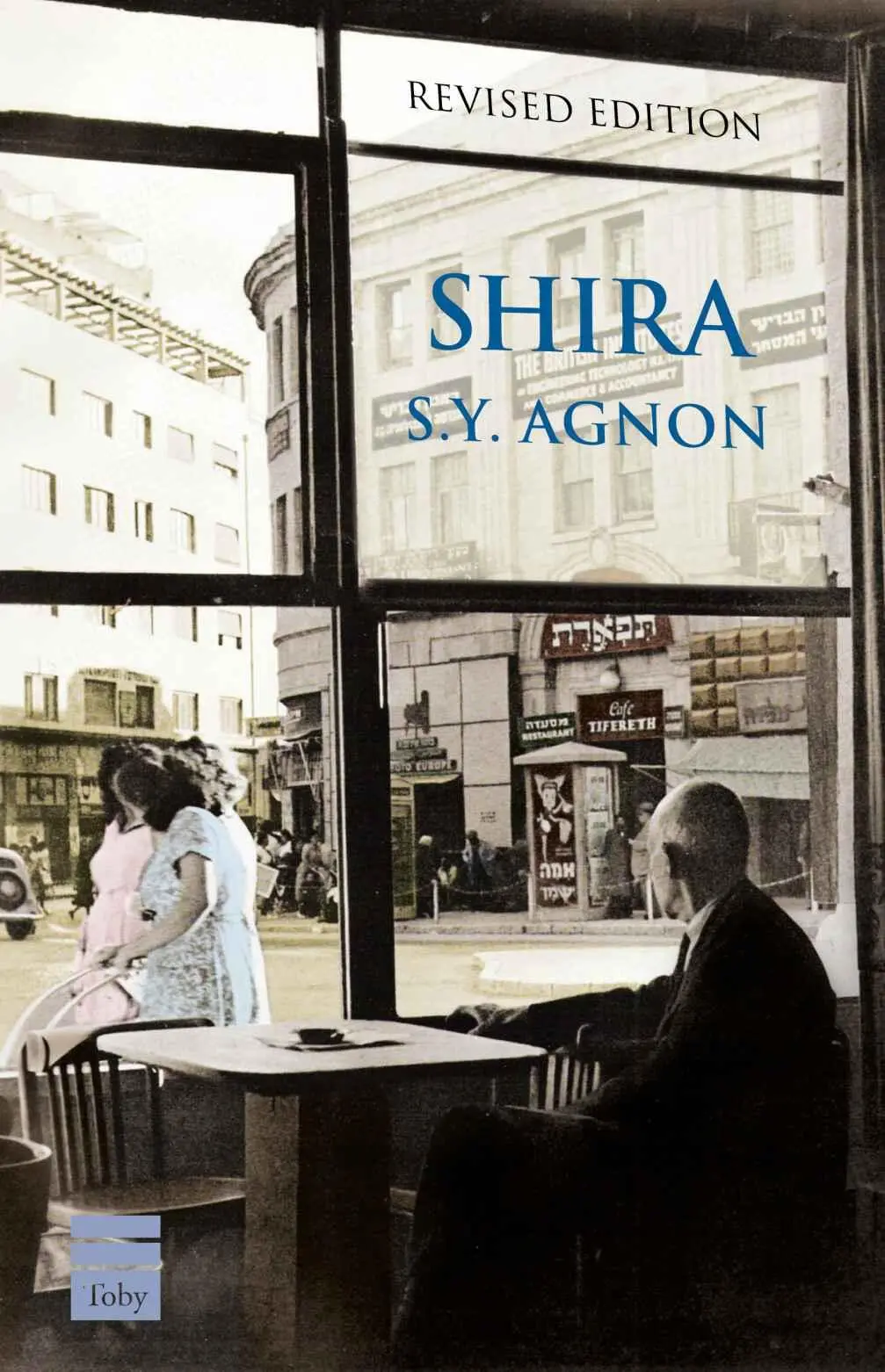
- Название:Shira
- Автор:
- Издательство:Toby Press
- Жанр:
- Год:2014
- ISBN:нет данных
- Рейтинг книги:5 / 5. Голосов: 1
-
Избранное:Добавить в избранное
- Отзывы:
-
Ваша оценка:
Shira: краткое содержание, описание и аннотация
Предлагаем к чтению аннотацию, описание, краткое содержание или предисловие (зависит от того, что написал сам автор книги «Shira»). Если вы не нашли необходимую информацию о книге — напишите в комментариях, мы постараемся отыскать её.
Shira — читать онлайн бесплатно полную книгу (весь текст) целиком
Ниже представлен текст книги, разбитый по страницам. Система сохранения места последней прочитанной страницы, позволяет с удобством читать онлайн бесплатно книгу «Shira», без необходимости каждый раз заново искать на чём Вы остановились. Поставьте закладку, и сможете в любой момент перейти на страницу, на которой закончили чтение.
Интервал:
Закладка:
Manfred Herbst sits at home nights and doesn’t go into town. Which is a good thing, for, if he were to go there, he would stop at Shira’s, and he doesn’t want to stop at Shira’s. In other words, he does and he doesn’t want to, and, since he is ambivalent, he assumes he really doesn’t want to.
A person can’t give up going into town night after night — because of a friend he needs to talk to there, or for some other reason. There are countless reasons. Most important: anyone who turns away from society will find society turning away from him. As for the dangerous roads, it is dangerous to go on foot but safe in a car, even in a bus, since the buses have been equipped with iron window bars that keep out the rocks Arabs fling at passengers. The way it works is this: one puts off compulsory trips and undertakes the optional ones. Since an optional trip is optional, it ends up becoming compulsory. One night Herbst happened to be in town, which did not gratify him. So he decided to go to Shira.
He didn’t really want to see her. On the way there, he began to wish that she wouldn’t be in, that her house would be locked, that some passerby would detain him. As he approached her house, his legs began to tremble with desire.
He arrived at her house, saw a light, and remarked in despair, “She does seem to be at home.” He began to mutter, “Let her be sick, let her not be able to get out of bed to open the door for me.”
He stood at the entrance to Shira’s house like a man whose mind is on a woman, who is wondering just what he sees in her, why she is in his mind, and what moved him to go to her, who concludes that, since he’s there, he might as well go in and stay just long enough to say hello, then take leave of her and go home.
He came to Shira’s and found she was in good health. Her face showed annoyance at having an uninvited guest. But in her heart she was glad to see him. He didn’t see what was in her heart, only what was in her face. She was sitting near the light, reading a German magazine. When he came in, she took off her glasses, held the magazine in her right hand, and greeted him with the left. Her fingers were cool, and Shira herself was like her fingers. There was something about her that puzzled Herbst.
A man has his eye on a woman and is eager to see her. After a while, he goes to her. He wonders what he saw in her, what it was that attracted him to her. She is not his type, and he is not hers.
He peered at the magazine in her hand, his mouth twisted with contempt, and said, “Put down that rag.” Shira answered, “It’s not a rag, and I have no reason to put it down.” Herbst said, “Why so angry?” Shira answered him, “It’s not anger, and there’s no reason for you to ask me questions.” Herbst shrugged his shoulders and said, “All right, all right.” Shira said, “Could it be that Dr. Herbst has nothing to say?” Herbst said, “What, for example, should I say?” Shira said, “After not showing yourself to me for weeks — a number that adds up to months, in fact — you come and start a fight. But I won’t fight with you. On the contrary, I’ll prove how eager I am to know how you’re doing. So, how is Dr. Herbst doing? And how is Mrs. Herbst? And the baby? I think she’s called Sarah. If you change the vowels, her name is like mine. So you are all well? A man whose wife and children are well is truly fortunate. Please take a chair, Dr. Herbst, and sit down, rather than wear out your legs pacing. You might like to try a new kind of cigarette; they say it’s easy on the nerves.”
Herbst was pacing around the room in an agitated state. He didn’t look at Shira, but her evil presence was palpable wherever he turned. He encircled his left thumb with his right hand and pressed it hard. After a while, he went over to Shira, looked down at the magazine she was holding, and took her glasses. Shira said, “What are you doing? Give me my glasses and I’ll read you something nice.” Herbst said, “If that’s the verdict, I’ll sit and listen.” After she had read awhile, he got up and said, “There are people who write such nonsense, and there are people who read such nonsense. For the life of me, I can’t understand it.” Shira said, “Tell me, please, what’s so bad about this article?” Herbst said, “Tell me, please, what’s so good about it?” He recognized from these words that such an argument would not lead to a meeting of hearts. He shut his mouth and thought to himself: If I hadn’t lingered this long, we wouldn’t be arguing.
Shira saw that his face was becoming more and more gloomy. She looked up at him and asked, “What’s wrong, dear? Did something happen?” There was a trace of pity in her voice. Herbst answered, “It’s nothing.” Shira said, “Then why so sad?” Running her hand through his hair, she said, “A fine head of hair, no doubt about it. And a fine forehead, the forehead of a scholar. I suppose there are fine thoughts rumbling around in your head when you are at work. Manfred, will I ever see you at work?” Herbst stretched out his arms to embrace her. Shira said, “I’m making meaningful conversation, and you want to be silly.” He caught her and sat her on his lap. But he wasn’t happy. Although she seemed to be in his hands, she could slip away. And what was in his mind she acted upon. She slipped off his lap, stood up, arranged her blouse, and said, “I’ll go and make you tea. I could even make you supper. When did you leave home? Aren’t you hungry? You could sit and read the magazine while I go to the kitchen.”
Shira went off to the kitchen, while Herbst sat browsing through the magazine. What he read didn’t add up to anything of interest, nor did his thoughts add up to anything. Only one thing interested him: when would Shira be back, and how would she behave with him?
Shira has already been gone longer than it takes to put a kettle on the fire, boil water, and brew tea. What is taking so long? She must be preparing supper. Yes, Shira is preparing supper. She invited him to eat with her. All day she works with patients; when she gets home, she has household chores to do. In this respect, she is no different from most single people in Jerusalem and throughout the land. Some of these women are her betters, yet their fate is in no way better than Shira’s. Before looking to them, let’s look to Lisbet Neu. But Herbst was not faring so well either: when he took the time to come to Shira, she went off to the kitchen, leaving him all alone.
Chapter twenty
Shira returned and set the dishes on the table, along with butter, cheese, tomatoes, cocoa, grapes, and berries. She moved slowly, singing some inane song. Her voice was not pleasant, and the words were banal. Herbst was irritated by the voice, the words, and most of all her pace. Such a leisurely pace would provoke even the most easygoing person, such as myself, to murder. In the interests of peace, he shut his mouth, rather than risk saying a harsh word.
When the dishes and food were arranged, Shira went to bring a jar of pickled olives. She sniffed them and said, “You don’t have to worry about garlic. I’ll bring us some cognac. I’ll have mine with the meal, and you can drink yours before, during, after — however you like, my dear. There’s no rule.” Then, with a start, she tapped her forehead and said, “What a fool I am. I have gin, and I didn’t bring it. Do you like gin?”
Herbst sat silently, thinking to himself: The devil take you, gin and all. He remembered that night when he was in her room for the first time; he remembered suggesting that she change her clothes, and he remembered everything that followed. He wouldn’t offer such a suggestion now — if she went to change her clothes, she would be sure to linger, and his chief desire was to be with her.
Читать дальшеИнтервал:
Закладка:
Похожие книги на «Shira»
Представляем Вашему вниманию похожие книги на «Shira» списком для выбора. Мы отобрали схожую по названию и смыслу литературу в надежде предоставить читателям больше вариантов отыскать новые, интересные, ещё непрочитанные произведения.










Обсуждение, отзывы о книге «Shira» и просто собственные мнения читателей. Оставьте ваши комментарии, напишите, что Вы думаете о произведении, его смысле или главных героях. Укажите что конкретно понравилось, а что нет, и почему Вы так считаете.