S. Agnon - Shira
Здесь есть возможность читать онлайн «S. Agnon - Shira» весь текст электронной книги совершенно бесплатно (целиком полную версию без сокращений). В некоторых случаях можно слушать аудио, скачать через торрент в формате fb2 и присутствует краткое содержание. Год выпуска: 2014, Издательство: Toby Press, Жанр: Современная проза, на английском языке. Описание произведения, (предисловие) а так же отзывы посетителей доступны на портале библиотеки ЛибКат.
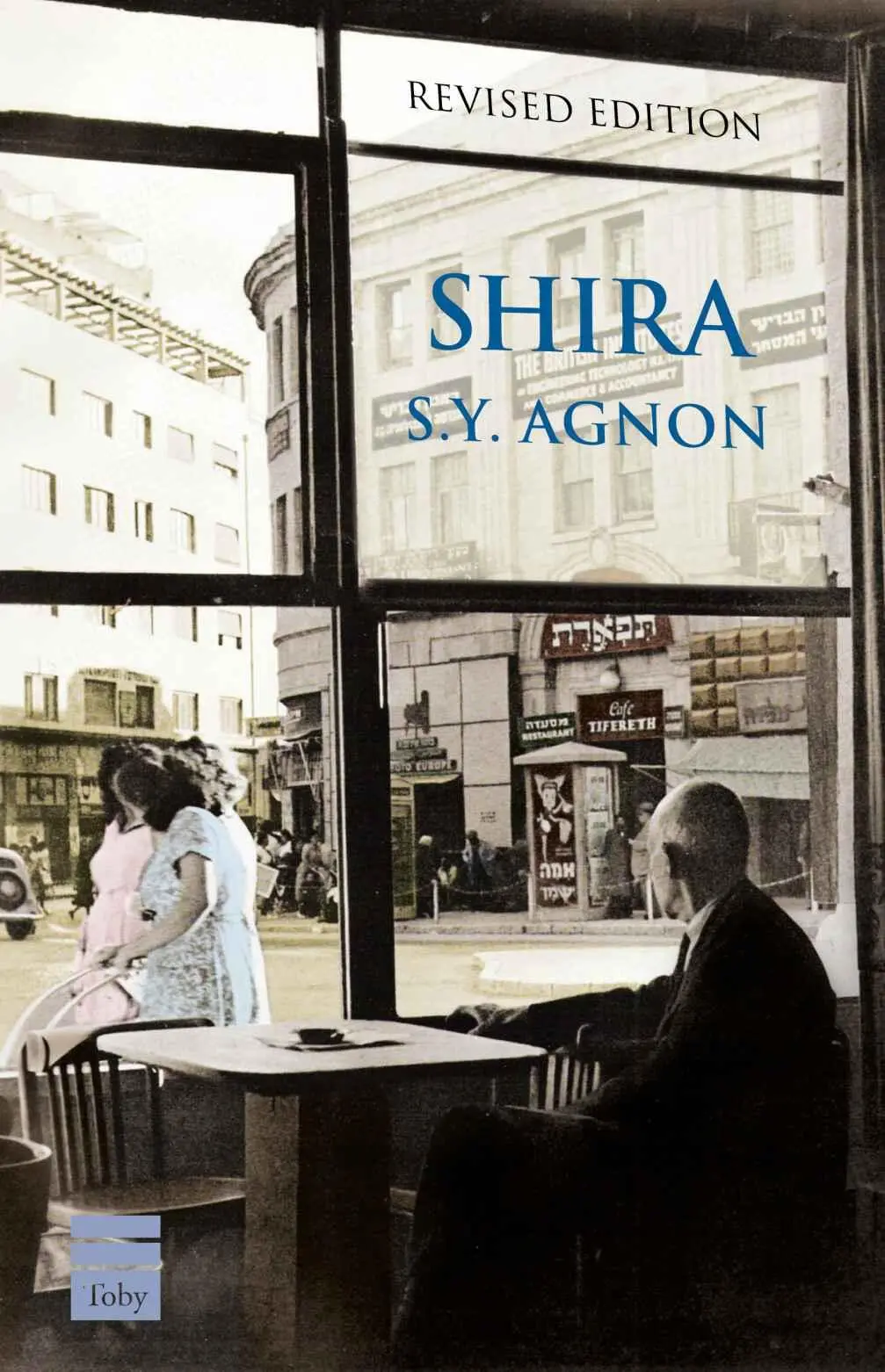
- Название:Shira
- Автор:
- Издательство:Toby Press
- Жанр:
- Год:2014
- ISBN:нет данных
- Рейтинг книги:5 / 5. Голосов: 1
-
Избранное:Добавить в избранное
- Отзывы:
-
Ваша оценка:
Shira: краткое содержание, описание и аннотация
Предлагаем к чтению аннотацию, описание, краткое содержание или предисловие (зависит от того, что написал сам автор книги «Shira»). Если вы не нашли необходимую информацию о книге — напишите в комментариях, мы постараемся отыскать её.
Shira — читать онлайн бесплатно полную книгу (весь текст) целиком
Ниже представлен текст книги, разбитый по страницам. Система сохранения места последней прочитанной страницы, позволяет с удобством читать онлайн бесплатно книгу «Shira», без необходимости каждый раз заново искать на чём Вы остановились. Поставьте закладку, и сможете в любой момент перейти на страницу, на которой закончили чтение.
Интервал:
Закладка:
They swallowed their pride and looked elsewhere. Walking from place to place, they found nothing. They began to despair and asked, “Could it be, God forbid, that Israel’s destruction has been decreed and that this is the beginning of the end?” A very few individuals overcame these misfortunes and said, “Salvation will come from these very misfortunes.” How? Salvation isn’t brought about by reason.
In any case, there were a few individuals who ignored logic and didn’t wait for salvation. They banded together and went up to this land. They wandered from nation to nation, from country to country, along with those hordes returning from the war, its disabled victims, wounded human fragments, thieves, and murderers. At last they came to a port and hired leaky vessels that took them up to heaven and down to the abyss. Some reached the gates of death, and some reached the gates of this land. When they arrived, they engaged in hard labor. All day they were consumed by the sun; at night, by insects and other ills with which God blighted the land. Without regard for themselves, they paved roads, made settlements, and cured the ills of the land, preparing it for the next generation and for all our brothers-in-exile. Today they are here in Jerusalem, our glorious city, capital of our land, the Land of Israel, at our sanctuary-university at the opening ceremonies of the academic year. They sit at the Hebrew University, on benches like the ones in a real university. And what is the language of instruction? Hebrew. Disregard the fact that some of the professors are not very learned. You could say that they are like clay shards placed between beams, that great men will come tomorrow and fill the house with scholarship. Do you ask, “Who needs a university in an age such as this, when books are widely available and anyone who wishes can open a book and learn?” As long as other countries support universities, it is fitting for us to have one too.
When the ceremony was over, Herbst left for home. There were many cars at the university gate, waiting to take the guests back to town. But what always happens, on any day, at any hour, happened then. Those who value time, love work, and behave decently are shoved aside by loudmouthed idlers in noisy pursuit of nothing, who push and shove, occupying every space without leaving an inch, preventing you from getting home and back to the work that was interrupted by these ceremonies. All the cars were occupied and would be filled again when they returned by those who jump lines and are stronger than you. This being the case, Herbst chose to go back on foot.
He turned away from the vehicles, toward the edge of the road, stopping to adjust the elegant tie he had worn for the occasion and to decide which road to take, for there were many roads branching off this way and that, each one scenically special, so that it was hard to choose one over the others. Before Herbst had a chance to decide which he would take, he heard the sound of a car behind him. He moved aside, turned toward the car, and saw four or five of his friends in it, among them Professor Wechsler, who invited him to join them. When Herbst noticed that Axelrod was driving, he had no wish to get in, for Axelrod might mention that he had given him a lift the other night, and it would be best if they knew nothing about it. He thanked them for the invitation and went on.
Twilight. All over the mountain and in the valley, everything was still. The sky above was overlaid with an array of shifting colors throwing light on each other, blending, modulating, appearing, and disappearing in a flash, only to be succeeded by others, still others. Before these settle in, another round appears, and they swallow each other up. Dirt and rock take shape, as do shrubs and grass, fragrant grass which, along with thorns, briars, and wild brush, fills the arid land with its good smell as the day dims. Each step bestows peace, each breath cures, taking in the scent of field grass, a remnant of summer, born of the early rains. Suddenly, the lights were turned on and the whole city glowed. Over the city, in the skies above, the moon could be seen beginning its tour.
The evening was fine and pleasant, the air clear and fresh, like most autumn evenings in Jerusalem after the first rains. Herbst was in a similar state. The days spent at home, in his study, in the garden with Henrietta, peaceful and quiet, had a favorable effect. But for the somber thoughts that wrinkled his brow, Herbst was like a young man.
Herbst was already at the foot of the mountain, near town. Those who live in outlying neighborhoods, who come to town and are not in a hurry to get home, spend an hour or two roaming Jerusalem’s streets or seeing friends. Herbst, who had had his fill of society even before the ceremonies, wasn’t eager for his colleagues or their conversation. But he had an urge to see the whole city, to go beyond the wall, which he didn’t do. If he were to go there, he would become involved, endlessly so and without limits. Yet much as he resists, he is drawn there, because of a place he never saw, though he knew he was already there many times.
He took himself toward the post office, from there to the Jewish Agency, from there to Zion Square, and from there to a small department store. He looked in all the windows and came back to the one with fountain pens that sprang forward as if from inside a mirror. Actually, there was a large mirror beneath the pens, which were suspended over it on invisible string. A tiny light was attached to every pen, shining on it, on its shadow, and on the face of anyone who happened to be studying the display. While Herbst was considering which pen he would like to buy, his reflection peered out at him from the mirror, decked out in the finery he had worn for the opening ceremonies of the new academic year. It was a long time since Herbst had been so elegantly dressed and a long time since he had felt so fresh. He stopped to adjust the tie Henrietta had bought him for his birthday, with money held back from household expenses, and gazed into the mirror.
The tie was in place; it hadn’t stirred, not this way, not that. His thoughts, however, were stirring this way and that. He dismissed the pen he had in mind to buy for himself, as well as his thoughts about what he would write with the pen, and began listing the names of the lecturers and professors the president of the university had mentioned in his address. He repeated the names of all those who had been promoted. He considered each one of them — the books they had produced, the articles they had written. He envied neither them nor their works. He would have enjoyed discussing academic politics with his colleagues, but he wasn’t drawn to any one of them. This one never makes a clear statement; that one has a wife who doesn’t let him get a word in, and, before he has a chance to answer you, the house is brimming with her conversation. This fellow is even worse than the other two. He takes what you say and twists it, so you wear yourself out explaining what you meant, and you can never be sure he won’t quote you on something you never said. Still worse is the one who talks only about himself — what Mrs. So-and-so said to him after visiting him with a group of tourists, who felt deeply honored by his hospitality, and what Professor So-and-so wrote to him about his new book. Julian Weltfremdt is the one person worth listening to, but, not being a member of its inner circle, he tends to demolish the university and its professors with every breath. Also, if you come at night, you find him and his wife sitting across from each other at one table with one light. She is reading the novels she reads, while he covers his face with a newspaper or book to avoid seeing them. You begin talking, and, as soon as she says a word, Julian gets up, takes his hat, puts a hand on your shoulder, and says, “How about a walk?”
Читать дальшеИнтервал:
Закладка:
Похожие книги на «Shira»
Представляем Вашему вниманию похожие книги на «Shira» списком для выбора. Мы отобрали схожую по названию и смыслу литературу в надежде предоставить читателям больше вариантов отыскать новые, интересные, ещё непрочитанные произведения.









Обсуждение, отзывы о книге «Shira» и просто собственные мнения читателей. Оставьте ваши комментарии, напишите, что Вы думаете о произведении, его смысле или главных героях. Укажите что конкретно понравилось, а что нет, и почему Вы так считаете.