S. Agnon - Shira
Здесь есть возможность читать онлайн «S. Agnon - Shira» весь текст электронной книги совершенно бесплатно (целиком полную версию без сокращений). В некоторых случаях можно слушать аудио, скачать через торрент в формате fb2 и присутствует краткое содержание. Год выпуска: 2014, Издательство: Toby Press, Жанр: Современная проза, на английском языке. Описание произведения, (предисловие) а так же отзывы посетителей доступны на портале библиотеки ЛибКат.
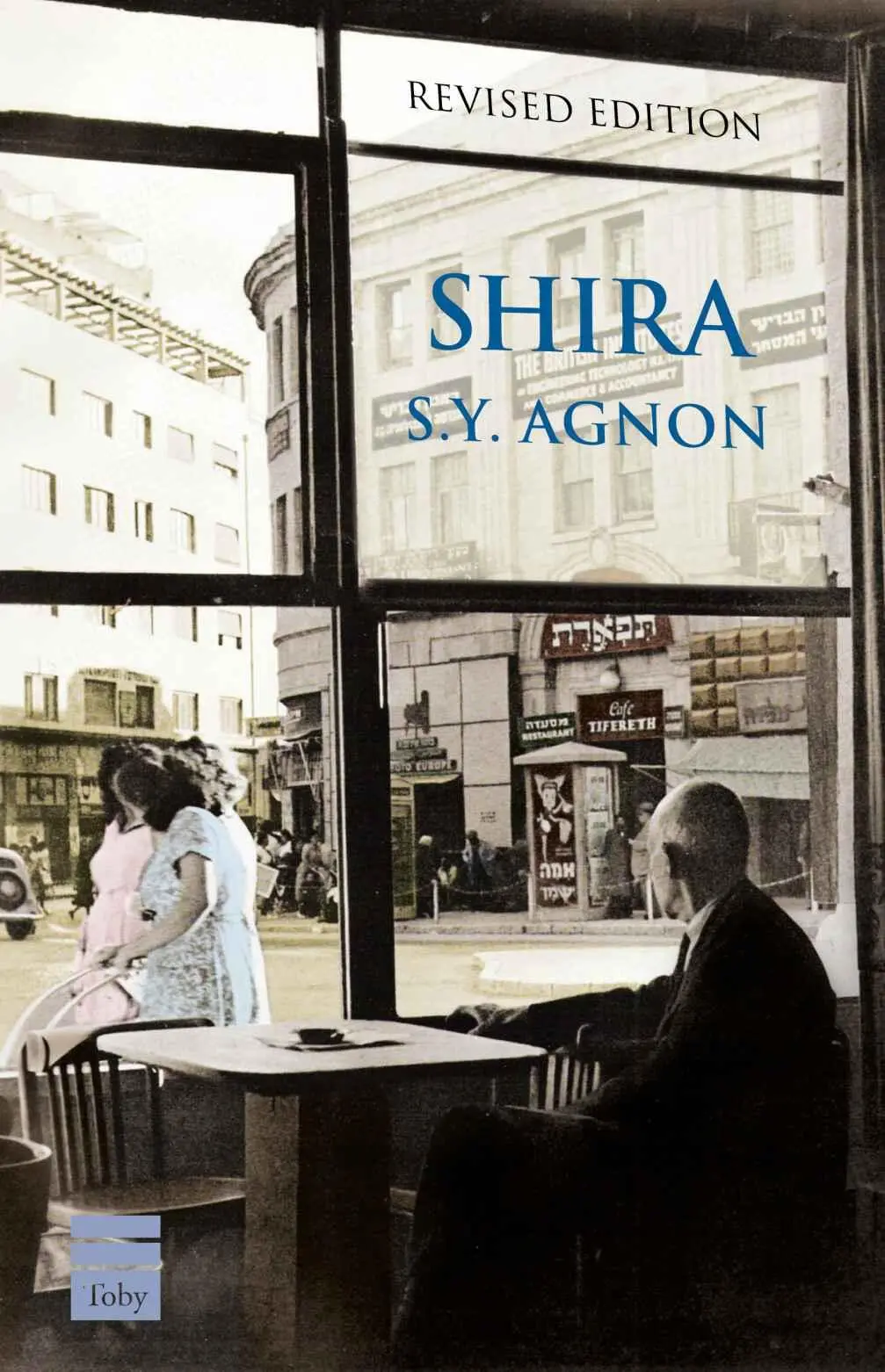
- Название:Shira
- Автор:
- Издательство:Toby Press
- Жанр:
- Год:2014
- ISBN:нет данных
- Рейтинг книги:5 / 5. Голосов: 1
-
Избранное:Добавить в избранное
- Отзывы:
-
Ваша оценка:
Shira: краткое содержание, описание и аннотация
Предлагаем к чтению аннотацию, описание, краткое содержание или предисловие (зависит от того, что написал сам автор книги «Shira»). Если вы не нашли необходимую информацию о книге — напишите в комментариях, мы постараемся отыскать её.
Shira — читать онлайн бесплатно полную книгу (весь текст) целиком
Ниже представлен текст книги, разбитый по страницам. Система сохранения места последней прочитанной страницы, позволяет с удобством читать онлайн бесплатно книгу «Shira», без необходимости каждый раз заново искать на чём Вы остановились. Поставьте закладку, и сможете в любой момент перейти на страницу, на которой закончили чтение.
Интервал:
Закладка:
I will get back to the heart of my story. Actually, I have nothing new to add. Everything is in order in the Herbst household. Henrietta deals with her concerns, and Manfred deals with his. They eat together and converse with each other. When she is free from her chores for a while, he reads the news to her and adds details excluded from the paper. Many things are happening. Every day Jews are killed in secret as well as in public, and every day there are black borders in the newspaper. At first, when we saw a black band in the paper and read that a Jew had been murdered, we left our meal unfinished. Now that there is so much misfortune, one sits at the table eating bread with butter and honey, reading, and remarking, “A Jew was killed again, another man, woman, child.” We sit with folded hands, yielding to murder, proclaiming, “Restraint, restraint!” They murder, kill, incinerate, while we exercise restraint. As for the authorities, how do they react? They enact a curfew. Our people are contained in their houses. They don’t go out lest they be struck by an arrow, for those who shoot the arrows roam freely, unleashing their weapons anywhere. You can’t say the authorities aren’t doing their job, nor can you say we’re not doing ours. We exercise restraint and show the world how beautiful we are, how beautiful the Jewish ethic is: even when they come to kill us, we are silent.
Manfred sits with Henrietta, reading her the news of the day, explaining England’s strategy, along with the importance of the Arab factor, listing all our disappointments from the Balfour Declaration to the present. Manfred and Henrietta are not politically knowledgeable, and I doubt if Herbst has read a single book about English policy, not to mention Henrietta, who doesn’t even read the newspaper. But since the riots of 1929, even they pay attention to what is going on in the country. With Jews being murdered every day, anyone who lives in the Land of Israel hears his brother’s blood crying out to him from the earth, and he too cries out. The Herbsts, who were remote from politics, began to dabble in them, like every other Jew, when the trouble became more constant.
Manfred and Henrietta are sitting together. He reads and she listens; she questions and he responds, stimulating her with his responses, so that she asks further questions. Manfred says to Henrietta, “You think those who hate Jews love Arabs and those who love Arabs hate Jews. But, in fact, when they denounce Zionism, they denounce us, hoping to win the Arabs.” Manfred, whose ideas lead to memories and whose memories lead to ideas, recounts earlier history, written and unwritten, provocative newspaper articles and virulent sermons delivered in mosques, inciting Arabs against Jews. Henrietta marvels at Manfred’s ability to fathom politics and to put things together. Henrietta accommodates her opinions to his and makes his thoughts hers. If Henrietta understood Manfred in other areas as well as she understands his remarks on the delusions of politics, they would both be better off.
The Herbsts’ position among their Arab neighbors in the Baka area began to deteriorate. Before 1929, Baka was settled by Jews who lived with Arab neighbors in peace and harmony. They rode in the same buses, the same pharmacists filled their prescriptions, and good wishes winged their way from a Jew’s mouth to an Arab’s ear and from an Arab’s mouth to a Jew’s ear. When a Jew greeted an Arab, he greeted him in Arabic, and when an Arab greeted a Jew, he greeted him in Hebrew. It was not mere lip service but a sincere, loving exchange, so that there were those who prophesied that Arabs and Jews would become one nation in the land. How? This could not be spelled out, but what reason doesn’t accomplish is often accomplished by time. The power of time exceeds the power of reason, even of imagination. Suddenly, all at once, came the riots of 1929. Jewish blood was spilled by Arab neighbors who had lived alongside them like beloved brothers. Fear of the Arabs fell upon the Jews, and anyone living in their midst ran for his life. All the Jews who lived in Lower Baka or Upper Baka fled and never returned to their homes in Arab neighborhoods.
When calm was restored, several families picked up and went back to Baka. Those who found that their homes had been plundered retrieved their remaining property and settled somewhere else. Those who found their homes intact went back to live in them while they looked for housing in a Jewish neighborhood.
Herbst was the first one to go back. On Sunday, after calm was restored, Herbst emerged from the hiding place in which he, his wife, and several neighbors had taken refuge that entire previous day and night. He met Julian Weltfremdt, who asked, “What happened to your books?” He said, “They were either flung into the street or burned.” Weltfremdt said, “I see a police officer. Come, I’ll tell him you left a roomful of books and you want to see if they survived.” They went and told the officer. He invited them into his car, and they drove to Baka.
They arrived in Baka and found that the house and study were both intact. The officer saw the books and was astonished that one man could own so many volumes. He was charmed by Dr. Herbst and said to him, “You and your family can go back to your house today, and I will guarantee your safety.” Three or four days later, the Herbsts were back in their house. Manfred returned because of his books, and Henrietta returned because she was attached to the home she had put together with her own hands. Mrs. Herbst had found a mound of trash and transformed it into a delightful home.
The Herbst family lived in an Arab neighborhood in a lovely house in the midst of a lovely garden, as if the riots had never occurred. Kaddish was still being said for those murdered in the Land of Israel, and the land was still in mourning for these victims, yet the Herbsts’ neighbors were already coming to “Madame Brovessor Herberist,” one to borrow a utensil, another to bare a troubled soul: her husband was threatening divorce because of her repeated miscarriages. She asked Madam Brovessor to take her to a Jewish doctor, as she had done for other neighbors whose homes were now teeming with children, for Jewish doctors deliver live babies. Once again Herbst’s neighbors anticipated his greeting, as in the old days; in those days, however, they greeted him in Hebrew, whereas they now greeted him in Arabic or English. In the interim, England had sent many troops to the Land of Israel, and the English language was becoming widespread. Before the riots, there were four hundred English soldiers in the land; since the riots began, you couldn’t make a move without running into an Englishman.
I will skip the years between the disturbances and the unrest (1929 to 1936), recounting events that occurred from 1936 on and relating them to Manfred’s story. Suddenly, without the leaders of the community and its great men being aware that a catastrophe was imminent, there was a new round of violence known as the riots, in which Jewish blood flowed unrestrained, and there were so many murders and massacres that no self-preserving Jew would venture out at night, certainly not a Jew living among Arabs, for his life would be at risk.
In the Talmud Tractate Gittin , we are told that Tur Malka was destroyed because of a rooster and a hen, that Betar was destroyed because of a chariot peg. What was it that brought on these riots? A straw mat. They tell a story about a Polish rabbi who went up to Jerusalem and prayed at the Western Wall on Yom Kippur. He gave an order, and a straw mat was hung up to separate the men from the women. Arab leaders complained to the English governor. The governor sent soldiers to demolish the divider. Jewish leaders called a protest meeting. Arab leaders incited their people against the Jews. The Arabs came out to demolish, eliminate, annihilate all the Jews. Blessed is the Lord, who didn’t abandon us.
Читать дальшеИнтервал:
Закладка:
Похожие книги на «Shira»
Представляем Вашему вниманию похожие книги на «Shira» списком для выбора. Мы отобрали схожую по названию и смыслу литературу в надежде предоставить читателям больше вариантов отыскать новые, интересные, ещё непрочитанные произведения.





Обсуждение, отзывы о книге «Shira» и просто собственные мнения читателей. Оставьте ваши комментарии, напишите, что Вы думаете о произведении, его смысле или главных героях. Укажите что конкретно понравилось, а что нет, и почему Вы так считаете.