S. Agnon - Shira
Здесь есть возможность читать онлайн «S. Agnon - Shira» весь текст электронной книги совершенно бесплатно (целиком полную версию без сокращений). В некоторых случаях можно слушать аудио, скачать через торрент в формате fb2 и присутствует краткое содержание. Год выпуска: 2014, Издательство: Toby Press, Жанр: Современная проза, на английском языке. Описание произведения, (предисловие) а так же отзывы посетителей доступны на портале библиотеки ЛибКат.
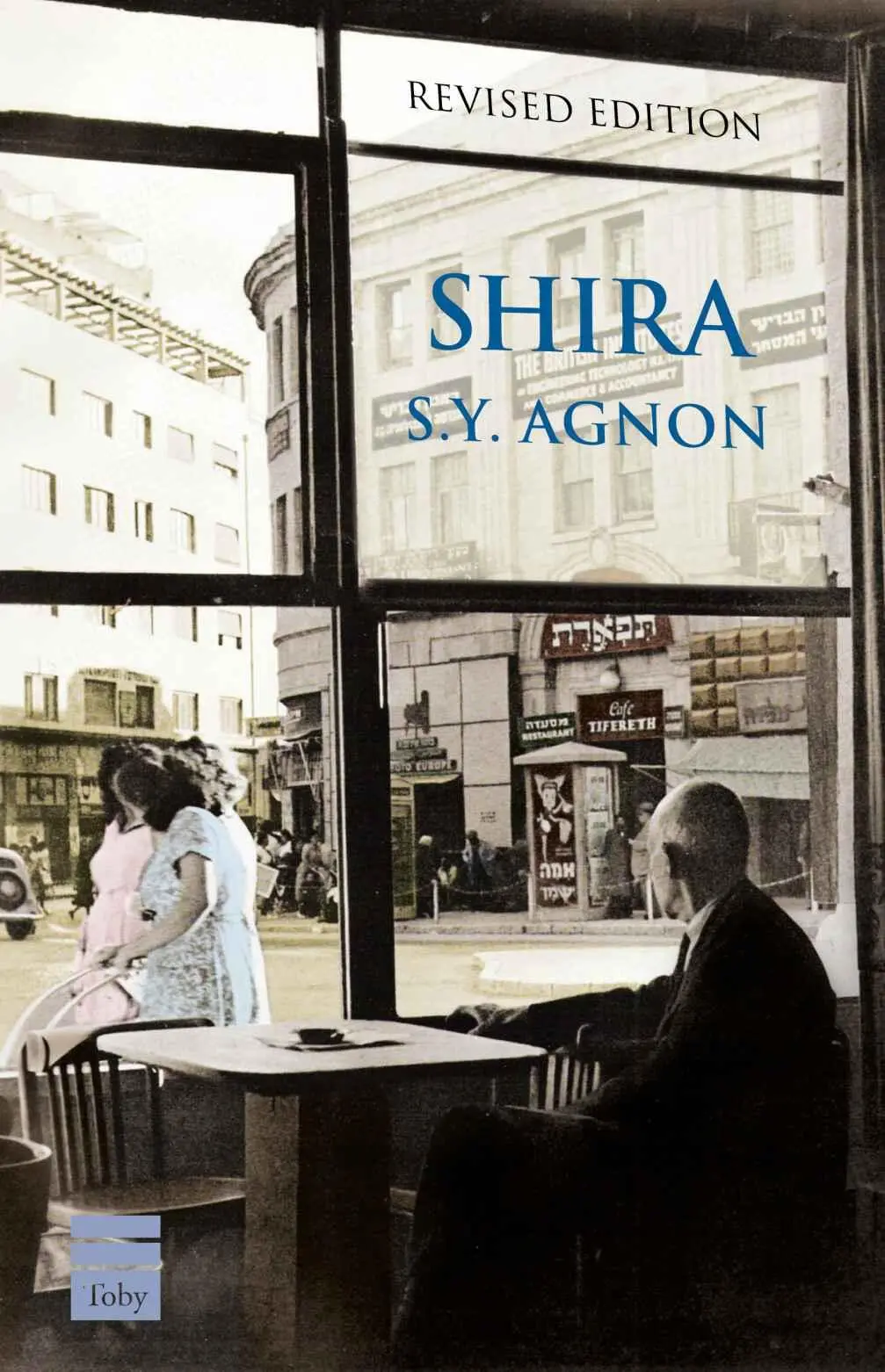
- Название:Shira
- Автор:
- Издательство:Toby Press
- Жанр:
- Год:2014
- ISBN:нет данных
- Рейтинг книги:5 / 5. Голосов: 1
-
Избранное:Добавить в избранное
- Отзывы:
-
Ваша оценка:
Shira: краткое содержание, описание и аннотация
Предлагаем к чтению аннотацию, описание, краткое содержание или предисловие (зависит от того, что написал сам автор книги «Shira»). Если вы не нашли необходимую информацию о книге — напишите в комментариях, мы постараемся отыскать её.
Shira — читать онлайн бесплатно полную книгу (весь текст) целиком
Ниже представлен текст книги, разбитый по страницам. Система сохранения места последней прочитанной страницы, позволяет с удобством читать онлайн бесплатно книгу «Shira», без необходимости каждый раз заново искать на чём Вы остановились. Поставьте закладку, и сможете в любой момент перейти на страницу, на которой закончили чтение.
Интервал:
Закладка:
Now I will give about a pen’s worth of ink to a description of their daughters. But I will precede this with a few remarks about our other sisters in this land, as well as about ourselves.
When we came to the Land of Israel, we were shy young men with no interest in women, our every thought being centered on the land and on work. Finding work, we found a slice of bread, a plate of greens, and a cup of tea, and we were grateful for the land and its bounty. If we didn’t find work, we were hungry. In a hungry period, we sometimes danced to take our minds off our hunger. Whether or not the Lord of Hunger saw our situation, we paid no attention to Him. Either way, we were devoured by malaria and the other scourges of the land. If a young woman fell in with our group, we paid no attention to her looks, since it was not for the sake of beauty that she came to this country, but to work the land. When we sat discussing land, labor, farmers, and workers, it didn’t occur to us that the One who made farmers different from laborers made young men and women different too. If a fellow had his eye on a girl, it was her virtues that interested him, not her anatomy; if he had romantic tendencies, he would be interested in her doleful eyes, her plaintive voice. If she brought us songs of her homeland, in Yiddish, Polish, Russian, Ruthenian — which is now called Ukrainian — and sang them to us, we enjoyed these times on the beach at Jaffa far more than any concert we later attended in Europe’s great cities.
There were other young women, whose families were Sephardic exiles descended from the ruling class of Judea, from the tribe of Judah, like David our king and like our righteous Messiah, who will come to deliver us from exile in the lands of Edom and Ishmael. They would sit at a window and never come out of the house, for their dignity enclosed them. Unlike their Ashkenazic sisters, their dignity was interior. Their eyes were black; their black hair was parted in the middle and flowed to the edge of the forehead. A blue-black or black-blue spark flashed from their eyes, settling on their eyebrows with a fiery glow. A baffled smile fluttered over their mouth. Between eyes and mouth, the nose loomed, angry and menacing.
There were others, also descendants of exiles from Spain. They took on any job that came their way to earn their bread. Both their hair and their eyes were black. Their eyebrows glistened with warm compassion. Their mouth seemed about to cry, and, when they opened their lips to sing, their voice would embrace you and you would want to cry for no reason. If you took notice of such a one, she would turn away from the window and withdraw into the house. Why? Because you could have asked her father for her hand, but you did no such thing; you merely peered and gazed at her.
There were other young women, Moroccans, with full faces, oval heads, eyes almost as large as their face. I mean not to disparage but to praise these eyes, for they animated the entire face. They spoke a brand of Arabic not many people in this country would recognize. We include ourselves, realizing that, if we were to speak Arabic, the Arabs would assume it was Russian.
There were still others, descendants of the exile into Yemen, the cruelest of all exiles. They came to this country with a purpose — to welcome the Messiah, for our righteous Messiah will reveal himself here first, before other countries. They left homes filled with every comfort and came empty-handed, with only the clothes on their back, carrying their books, which were written with ink on parchment and on parchmentlike paper. Some were copied from the manuscripts of our great Maimonides; others, we had heard of but never seen until these immigrants from Yemen came to the country. They wandered from desert to desert, hungry and thirsty. Their days were consumed by drought, their nights by frost, and they couldn’t sleep for fear of snakes, scorpions, or bandits. Still, they never said, “Why did we forsake a settled place to wander in this wasteland?” When they reached this country, they were not welcomed with bread; no door was opened to shelter them from the night, for their brothers regarded them as strangers. They slept in the woods, foraged for food, accepted their fate without rebelling. God opened the eyes of a few unique individuals, who saw the plight of their brothers from Yemen, bought Kfar Hashiloah, and built them houses there, so they could live off the yield of their labor. This, in summary, is the tale of our brothers, the early settlers from Yemen who have been a boon to the country.
So much for the fathers, for I mean to deal only with the daughters.
They were like children, though already mothers. Only yesterday they were nurslings; today it is they who offer the breast. We noticed their work but not their charm. The good Lord, cherishing their reserve, spread a film over our eyes, so we would not be led astray.
There were others, from the land of Queen Esther. Their eyes were as sweet as the raisins from which wine is made for Pesah, and their hair soft as the neck of a songbird. They wore so many layers that their limbs didn’t show. Their ragged clothes concealed their beauty, like the wretched exile they had come from.
We will also mention those distant sisters we saw in Jerusalem when we made a pilgrimage there. On special occasions and holidays, we used to stroll through the Bukharan Quarter. It was the largest and most sweeping of Jerusalem’s neighborhoods. All its houses were grand and elegant. Grandest of all was the splendid house built for the Messiah, our king, who, when he comes, will come to Jerusalem first. Our forefathers, elders, prophets, kings, generals, and scribes will come to receive him, along with many righteous men and dignitaries. To house them all, our brothers from Bukhara have prepared grand and elegant quarters.
So much for the houses; I will now deal only with the daughters.
Their faces were full. Their colorfully embroidered garments adorned the streets. They were round, absolutely round, the embodiment of good fortune. We walked the streets of the neighborhood, our eyes on the locked doors, the closed houses — the lovely girls will appear now, they’ll come out for us to see. When they came out, it didn’t occur to us that young men such as we were could approach them. The reserve was so intense in that generation that a young man — even one who devoured romantic novels and perhaps composed his own — would never presume to approach a girl not destined by God to be his wife.
There were other young women from the cities of Lebanon, from Damascus, Aleppo, Izmir, Babylonia, all the cities of Ishmael — each with unique charm and beauty. The Creator made pots of goodness and offered them to us, but their loads are so heavy that, before we get a good look at them, their beauty fades. This is how it was when we were young.
Between yesterday and today, our generation has changed its aspect. Its young women have done likewise. The world was stripped of its original beauty; primeval beauty was eclipsed, and other concepts of beauty began to dominate our minds, then our hearts. Neither lovely eyes nor a warm face make a woman attractive now. Shapely limbs, a proud bearing, and light-footedness are the qualities that count. A body like an aspen, quaking with every breeze, is considered beautiful.
Now, to get back to the two Herbst daughters. I will begin with Tamara. True, Zahara is the older one, but when they appear together, one sees Tamara first.
Tamara, as I have noted, is tall, and her cheeks are full — you might say plump. Her forehead is narrow. Her eyes are small, suggesting two bronze specks in which the artist has engraved the trace of a smile. Her hair, like her eyes, has a bronze cast to it, and she wears it loose and disheveled. As I already suggested, her eyes have a mysterious smile, but her mouth laughs openly, and it’s hard to find anything that doesn’t elicit laughter from this mouth. I have listed all her obvious qualities. As for the less obvious ones, who can say? So much for Tamara. Now I will turn to Zahara.
Читать дальшеИнтервал:
Закладка:
Похожие книги на «Shira»
Представляем Вашему вниманию похожие книги на «Shira» списком для выбора. Мы отобрали схожую по названию и смыслу литературу в надежде предоставить читателям больше вариантов отыскать новые, интересные, ещё непрочитанные произведения.








Обсуждение, отзывы о книге «Shira» и просто собственные мнения читателей. Оставьте ваши комментарии, напишите, что Вы думаете о произведении, его смысле или главных героях. Укажите что конкретно понравилось, а что нет, и почему Вы так считаете.