S. Agnon - Shira
Здесь есть возможность читать онлайн «S. Agnon - Shira» весь текст электронной книги совершенно бесплатно (целиком полную версию без сокращений). В некоторых случаях можно слушать аудио, скачать через торрент в формате fb2 и присутствует краткое содержание. Год выпуска: 2014, Издательство: Toby Press, Жанр: Современная проза, на английском языке. Описание произведения, (предисловие) а так же отзывы посетителей доступны на портале библиотеки ЛибКат.
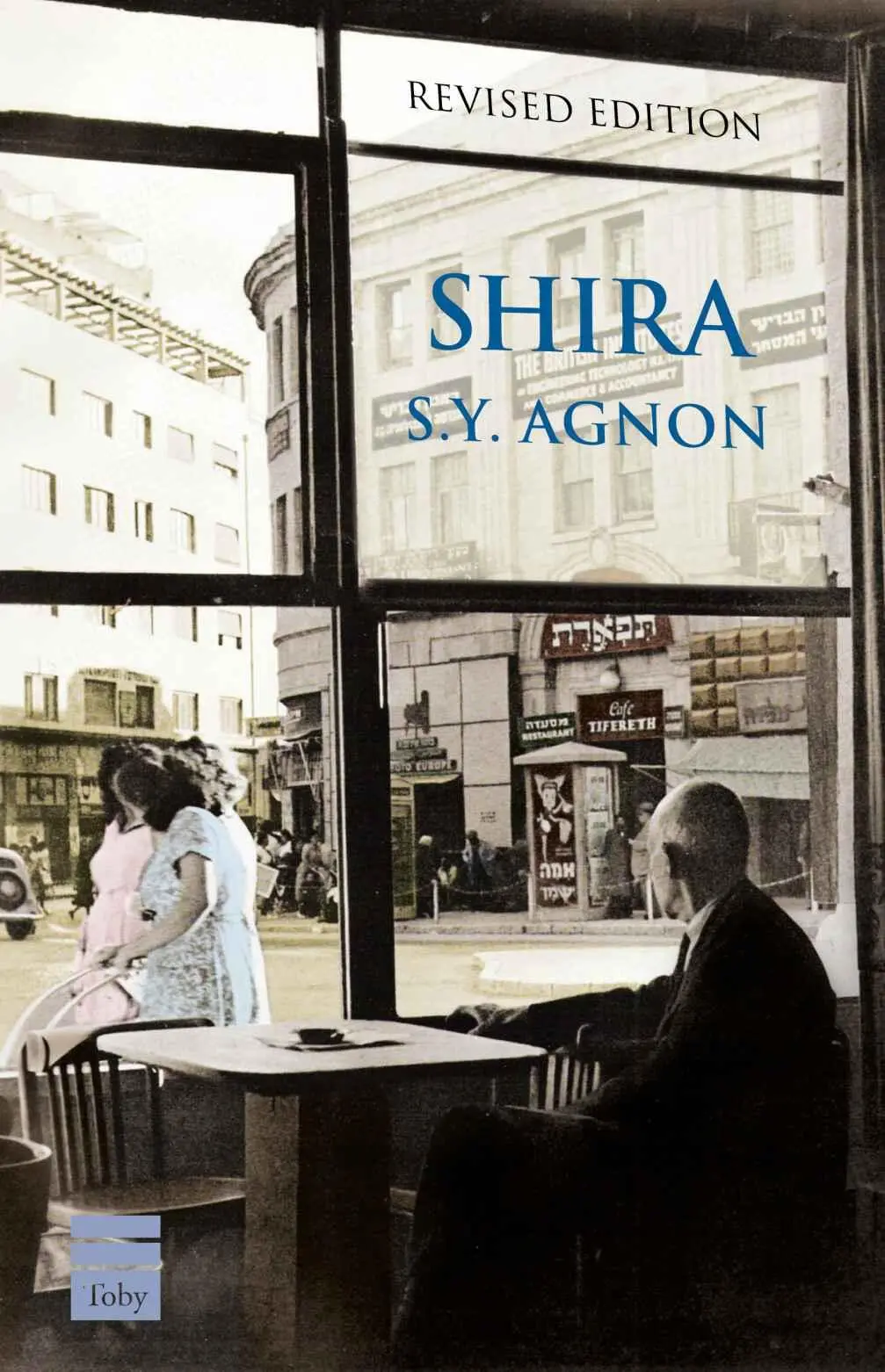
- Название:Shira
- Автор:
- Издательство:Toby Press
- Жанр:
- Год:2014
- ISBN:нет данных
- Рейтинг книги:5 / 5. Голосов: 1
-
Избранное:Добавить в избранное
- Отзывы:
-
Ваша оценка:
Shira: краткое содержание, описание и аннотация
Предлагаем к чтению аннотацию, описание, краткое содержание или предисловие (зависит от того, что написал сам автор книги «Shira»). Если вы не нашли необходимую информацию о книге — напишите в комментариях, мы постараемся отыскать её.
Shira — читать онлайн бесплатно полную книгу (весь текст) целиком
Ниже представлен текст книги, разбитый по страницам. Система сохранения места последней прочитанной страницы, позволяет с удобством читать онлайн бесплатно книгу «Shira», без необходимости каждый раз заново искать на чём Вы остановились. Поставьте закладку, и сможете в любой момент перейти на страницу, на которой закончили чтение.
Интервал:
Закладка:
As soon as Herbst started to get close to his students, listening to their talk and watching their actions, he began observing the land and those living in it. His eyes were opened, and he saw what most of his friends did not see, for they had found there a place to rest their weary feet, a comfortable and painless livelihood, a place where their sons and daughters would be safe from those evil doctrines that lead to extinction. It was not because of the Arabs that they found what they found, but because of those who formed the yishuv , transforming desolate wilderness into habitable land. They built cities and established settlements, which they defend with body and soul against a desert sword that threatens annihilation. And even these predators exist because of those who built the land. Both sides are governed from above, so no one knows whether to build or destroy.
For some time now, Herbst had in mind to put his views on paper. But he was concerned that his knowledge of the history of the land and its settlement would not provide an adequate base, and Herbst was a professional and a scholar, subject to a thousand research criteria, who would not make any work of his public until it was validated. Besides, this wasn’t the time for research and validation, since Ernst Weltfremdt had asked him to collaborate on a book about those terms in the writings of the contested Church Fathers that are not found in the writings of the true Church Fathers. Nonetheless, Herbst’s views were not wasted. He conveyed some of them in a letter to his elder daughter, Zahara, who belonged to a kvutza. Realizing that he was in accord with those engaged in building up the land, he began to be proud of his daughter, and she became an extension of his ideas about the land and its settlement.
While Manfred arrived at this truth through conversation with his students, Henrietta arrived at it on her own. All those years, living in the Land of Israel, she watched the land being built and saw who its builders were; and that there were others who would destroy it, and who they were. This being the case, to whom does the land belong? To the builders, of course. She objected to those who were cloistered in their homes, buried in their own affairs as if eternal peace had been achieved, who in the event of trouble would be unable to defend themselves and would surely be slaughtered, as was the fate of Jews in Hebron and Safed during the massive slaughter of 1929. She even used to argue with Manfred: any man who volunteered to fight in Germany’s war, who can handle weapons, who wrote an article about the strategy of Emperor Valens — how could he not enlist in defense of his people and his land? This woman, who always fought to protect her husband from any task that might distract him from his work, was demanding this of him. But she didn’t press him. I will now add a small detail, from which one can learn about everything else. When Henrietta rented a house in Baka, it was a ruin filled with garbage rather than a house, and no one would have considered it suitable to live in. Henrietta cleared out the garbage, repaired the house, and made herself a garden with fruit trees, vegetables, and flowers. When the land began to be productive, Arab shepherds appeared with their sheep and cattle, and what she had been tending all year was consumed in two or three days. She hired workers to fence in the garden. What did the shepherds do? They poked a stick in the fence, made openings, and sent their flocks into the garden. Henrietta found an olive tree that wasn’t bearing fruit; she dug up the soil and fertilized it, and it flourished. What did the shepherds do? They sneaked into the garden and pulled off leaves, which they fed to their sheep, or brought in goats to demolish the olives.
During one of those days when Manfred was keeping himself at home, sitting there for hours on end, this is what happened. That day he went out into the garden. The heat was past its peak, and the soil was fragrant. Above the earth, trees and bushes and grasses made a wreath of varied hues — some derived from innate power granted by God, others from His power being renewed all the time, at every moment. Just then, in fact, the skies were testing all the hues to determine which was most suited to the moment, shifting from hue to hue and back again.
Manfred looked around and saw Henrietta getting up from the ground, a bunch of flowers in her hand. His senses drifted back to a time when they were both young. He, a student at the university, and she, a clerk in a music store, used to meet in the evening, among rows of flowers in a park in Berlin. Not that evenings there were like this one; nor were there flowers such as these. Still, the scents and after-scents of those flowers wafted from the shadows of those vanished evenings. Manfred’s heart began to throb, as it had in those days of his youth when he used to run to those parks and see Henrietta walking through rows of flowers, waiting for him with a bouquet in hand. God-who-is-good-and-renders-good, man’s spirit lives not only in the present but in every good memory of days long past. His eyes were moved to tears, and he whispered, “Let’s sit a minute.” Henrietta heard him and said, “We can sit, if you like.” She repeated, “Yes, let’s sit.”
They sat together and exchanged pleasantries. Manfred was afraid he might say something inappropriate, for in such a setting and at such a time one might very well say words it would be embarrassing to recall, because of their banality. Manfred took the flowers from Henrietta and put her hand in his rather gruffly. He placed the flowers on a rock and closed his eyes. He saw Henrietta’s affection rising up before him, completely engulfing him. Now her hand was in his, lifeless. Only the afterscent of the flowers he took from her hand and placed on the rock was still alive. Manfred knew that the stress of caring for the household and the children had consumed the years of love. Add to this the anxiety about her relatives in Germany, where God’s wrath was loose. To remain alive, her relatives and acquaintances needed certificates. Henrietta used to spend half her day dealing with the household and the other half in pursuit of certificates. The household had its routines. As for the immigration officials, if no tears can move their ruthless hearts, from whence will our help come? While Manfred held Henrietta’s hand, the day darkened, the garden grew dusky, the array of colors vanished from the sky, and an evening chill set in. Henrietta went to get her shawl. Manfred followed her. As she wrapped herself in the shawl, Manfred reached out his arms and embraced her. She teased him and said, “What do you want with this withered stick of wood?” And she slipped out of his arms.
Chapter eighteen
Zahara and Tamara, Manfred and Henrietta’s daughters, came to welcome their little sister. Zahara is about nineteen, and Tamara is a year and a half younger as well as half a head taller, for she was only a baby when her parents brought her to this country, whose special milk makes people tall. Their faces are tanned, their hands steady — Zahara’s as a result of work, and Tamara’s from bathing in the sea and rowing on the Yarkon. Zahara belongs to a kvutza called Kfar Ahinoam, and Tamara is a student at a teachers’ seminary in Tel Aviv. They were both slow to arrive. One, because of a group of youngsters from abroad she was asked to take charge of; the other, because she went hiking with some friends.
Before dealing with the daughters, let us deal with the parents. Henrietta is blonde; her limbs are full and relaxed, responding to her at work as well as at rest. Her eyes are a medium blue that can turn fierce. Her hair is pulled across the middle of her ears and folded up in back, framing her face and leaving her neck exposed. Manfred is dark. His hair is thick, so that, seeing him in the street, you assume he is on the way to get a haircut. His eyes, either laughing or bemused, suggest a pleasant temperament. His mouth is small. A narrow mustache separates his nose from his mouth, and a wrinkle begins between his eyes, curving up to his broad forehead, where it joins with the other three and a half wrinkles that are there. This is approximately how Manfred and Henrietta look.
Читать дальшеИнтервал:
Закладка:
Похожие книги на «Shira»
Представляем Вашему вниманию похожие книги на «Shira» списком для выбора. Мы отобрали схожую по названию и смыслу литературу в надежде предоставить читателям больше вариантов отыскать новые, интересные, ещё непрочитанные произведения.







Обсуждение, отзывы о книге «Shira» и просто собственные мнения читателей. Оставьте ваши комментарии, напишите, что Вы думаете о произведении, его смысле или главных героях. Укажите что конкретно понравилось, а что нет, и почему Вы так считаете.