S. Agnon - Shira
Здесь есть возможность читать онлайн «S. Agnon - Shira» весь текст электронной книги совершенно бесплатно (целиком полную версию без сокращений). В некоторых случаях можно слушать аудио, скачать через торрент в формате fb2 и присутствует краткое содержание. Год выпуска: 2014, Издательство: Toby Press, Жанр: Современная проза, на английском языке. Описание произведения, (предисловие) а так же отзывы посетителей доступны на портале библиотеки ЛибКат.
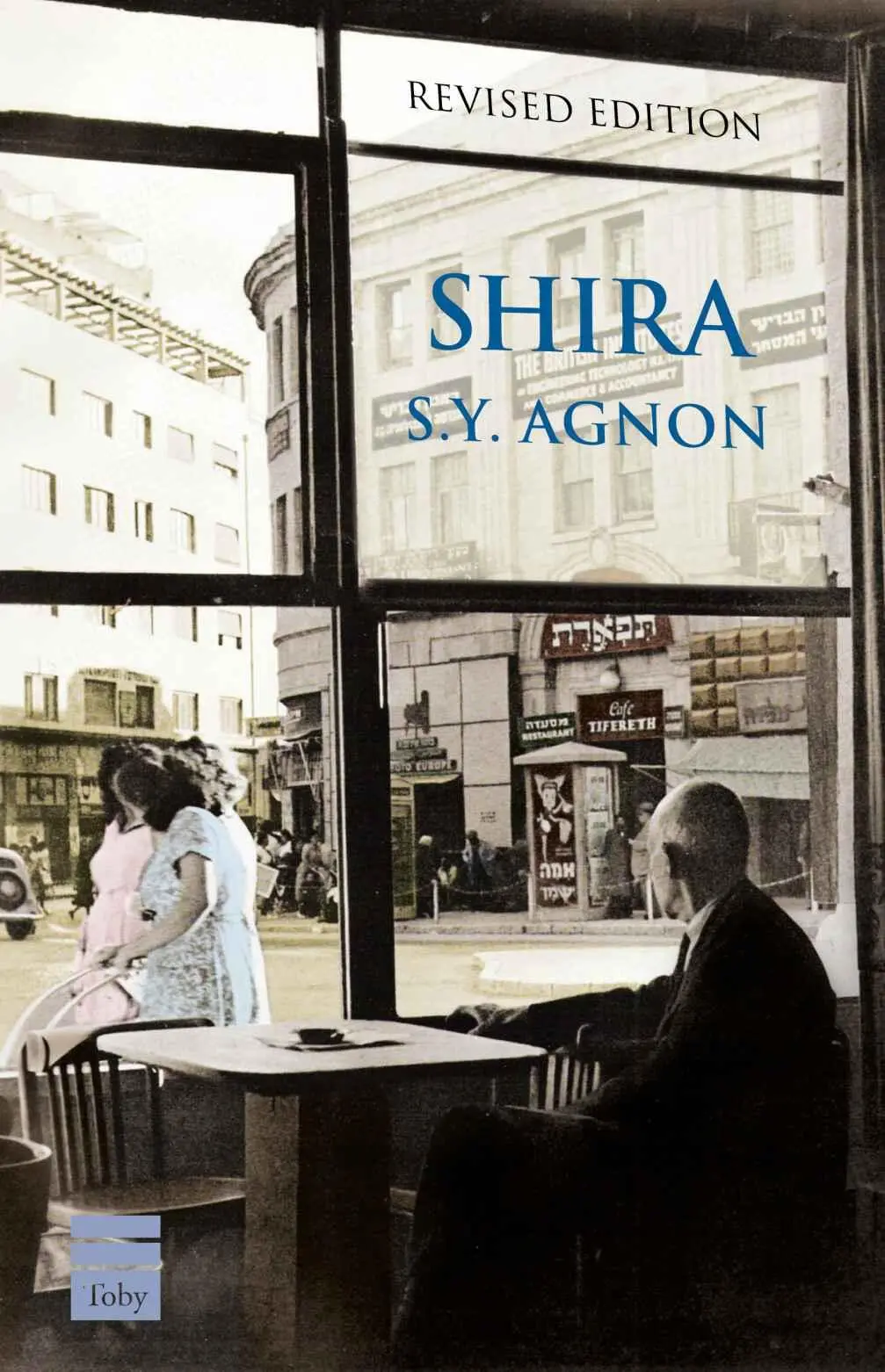
- Название:Shira
- Автор:
- Издательство:Toby Press
- Жанр:
- Год:2014
- ISBN:нет данных
- Рейтинг книги:5 / 5. Голосов: 1
-
Избранное:Добавить в избранное
- Отзывы:
-
Ваша оценка:
Shira: краткое содержание, описание и аннотация
Предлагаем к чтению аннотацию, описание, краткое содержание или предисловие (зависит от того, что написал сам автор книги «Shira»). Если вы не нашли необходимую информацию о книге — напишите в комментариях, мы постараемся отыскать её.
Shira — читать онлайн бесплатно полную книгу (весь текст) целиком
Ниже представлен текст книги, разбитый по страницам. Система сохранения места последней прочитанной страницы, позволяет с удобством читать онлайн бесплатно книгу «Shira», без необходимости каждый раз заново искать на чём Вы остановились. Поставьте закладку, и сможете в любой момент перейти на страницу, на которой закончили чтение.
Интервал:
Закладка:
When they were outside, Weltfremdt said to Herbst, “Dear doctor, why is it that Julian finds it necessary to malign me everywhere? In any case, I can say, like King David in his time, my throne and I are pure. I don’t know if I’ve quoted the phrase correctly, but I’ve made my point. Incidentally, your article was very successful. I said this in so many words at the senate meeting. You ought to publish more articles like that one, doctor. Just like it. Yes, indeed. I have an important subject for you to investigate: when Athanasius went to Rome to seek support, why did the journey take a whole year? As for my cousin Julian, when he discredits Wechsler and Bachlam, we can say that, if he isn’t one hundred percent justified, he is surely fifty or sixty percent right. I’m not a mathematician, and I can’t formulate the precise percentage. But when he maligns me, he does himself harm, because everyone knows he’s not familiar with my field. All of Jerusalem has light, except for my house. My best to Mrs. Herbst and to you, too, doctor. Above all, let’s get together again. Really. Yes, yes. Back to the subject of Julian. When his little girl got sick and was taken to Hadassah Hospital, where she stayed many days, who was it who tried to get the bill canceled, if not me? And when the child died, who paid for her burial? I was the one who paid to have her buried. In Jerusalem, nothing is free. Now I have to go home too. I assume it was the printer’s messenger knocking at the door, coming for the galleys of my article for Bachlam’s jubilee volume. See you soon, doctor. I really mean it. I hope to see you soon.”
Chapter seventeen
How long did he keep himself at home, occupied with things he hadn’t done in years, for one purpose — so he wouldn’t go into town? If he were to go to town, his feet would run to Shira. How he agonized the night he visited Weltfremdt! And he triumphed. In the end, he didn’t go to Shira, though he knew she was at home, perhaps even expecting him. That witch, she never said, “I expect you to come.” Still, even someone inept in the realm of women’s wiles could sense it. So he kept himself at home, hanging around his wife while she worked. At this point, Henrietta even allowed him to do household chores without protesting. Sometimes she even asked him to relieve her, teasing, “If you had teats, we wouldn’t need a wetnurse.”
Manfred is with Henrietta, arranging Sarah’s crib, spreading her rubber sheet, smoothing the wrinkles, while Henrietta plays with the baby, cooing at her like any mother with an infant daughter. Manfred watches them, thinking: If I didn’t know otherwise, I would think the baby was with her grandmother. Manfred looks furtively for some trace of youthful charm, but he sees an old woman. He starts to pity her and is overcome with renewed affection. He engraves its new form in his heart. He is warmed by this affection. The One who was created only to cause trouble asks: Isn’t she an obstacle in your path, the one that keeps you from living your life? Manfred sighs and reflects: Life…the life that seduces us is, perhaps, not really life. It may be the mission of our life to live with the wife we were given. If not for a man’s wife, he would sink from bad to worse.
Those were good days. His evil thoughts lost their sting, and he began to cherish his wife, for it was through her that he avoided a reckless course. At first he kept himself at home, helping his wife just to prevent his feet from heading toward town; now he was helping her in order to ease her burdens. Henrietta would take note and say, “Thank you, thank you, my dear. You did such a good job. Now, dear, you can go back to your own work.” Manfred would take her advice, go to his room, and sit at his desk, editing lectures he had prepared for the winter term. Should you stop in he doesn’t behave as if you’ve kept him from discovering the symbol for zero, for example, or impeded him in his conquest of Mesopotamia. Should a student stop in, Herbst receives him warmly, gives him a chair, hears his questions, provides advice as well as research data from the box of notes, gratis, without suggesting he has offered all the Indies as a gift. A student who arrives at teatime is served tea with a slice of cake, along with cordial conversation unrelated to scholarly work. Dr. Herbst doesn’t have many students, but if you combine all of them over his entire career, there are more than a few.
We could dwell a bit on Dr. Herbst’s students without arresting the pace of our story. They came from various countries, where they roamed the roads for many years, sustaining themselves as porters. Even here, their sustenance doesn’t simply land in their mouths. Some of them deliver newspapers; others are teachers and accountants. Those privileged to deliver papers are up before dawn. After distributing the papers, they race up to class on Mount Scopus, on foot, since even those who do well can’t afford the busfare. Sometimes they are up early, but to no avail, because of a hand that tampers with the papers: censors appointed by the Mandate government often allow things to be printed, only to ban them suddenly. The Hebrew newspapers remain in their place and never reach their readers. Those who deliver them are demoralized by the wasted time and loss of income. The others — those who are accountants or teachers — are no better off. But those with a talent for writing fare worst. They hire themselves out to all sorts of operators, do-gooders, and ordinary people who wish to perpetuate themselves through memoirs, although they haven’t the ability to write two or three lines properly. They write what they write and hire a poor student to translate their words into civilized language. They pay by the hour and include proofreading in the price. Not only do the students invest their strength in others, whose business is of no interest to them, but they don’t get to do what is suited to their talents. There is even a young woman, the mother of a baby, among those who listen to Herbst’s lectures. She is in Jerusalem five days a week, cleaning office floors for a living. On Friday nights, she goes down to Tel Aviv to enjoy her husband and the small daughter she leaves with her mother-in-law. On Sunday mornings, she returns to Jerusalem, to her studies and her job. What moves them to learn about subjects such as the history of Byzantium? Perhaps they are eager for knowledge, and it is not the subject that is crucial, but the learning process. Herbst is a splendid teacher, the sort one can learn from. Even if you wanted to, how could you pursue the subject of your choice, when the university is small and in many areas there are no teachers, so that what you want to study may be taught by some imbecile who distorts the material?
We have mentioned the students’ occupations; let us now mention their housing. They live in tin huts in Nahlat Achim, two or three to a room. Their beds are flimsy, their tables unsteady, their chairs lame. At night, they go out and learn to handle rifles. You, sir, lie in bed secure, get up the next morning, and sit at your lavish table reading the paper, assuming that mighty Britain is spreading a tabernacle of peace. Actually, it is a small band of fellows with empty tables and flimsy beds — they and other Haganah members — who protect you. Herbst isn’t one of them. He belongs to Brit Shalom, and he used to sit at Brit Shalom meetings devising plans to prevent Jews from victimizing the Arabs. Herbst once went to a friend’s home for a housewarming; he had built a new house in Rehavia. There was food, drink, conversation. Herbst noticed that his friend was sad and asked, “Did something happen to you?” He answered, “The same thing that happened to you, to me, to every Jew who lives in this country. Every Jew that lives here is driving out an Arab, since the land is his.”
Читать дальшеИнтервал:
Закладка:
Похожие книги на «Shira»
Представляем Вашему вниманию похожие книги на «Shira» списком для выбора. Мы отобрали схожую по названию и смыслу литературу в надежде предоставить читателям больше вариантов отыскать новые, интересные, ещё непрочитанные произведения.










Обсуждение, отзывы о книге «Shira» и просто собственные мнения читателей. Оставьте ваши комментарии, напишите, что Вы думаете о произведении, его смысле или главных героях. Укажите что конкретно понравилось, а что нет, и почему Вы так считаете.