S. Agnon - Shira
Здесь есть возможность читать онлайн «S. Agnon - Shira» весь текст электронной книги совершенно бесплатно (целиком полную версию без сокращений). В некоторых случаях можно слушать аудио, скачать через торрент в формате fb2 и присутствует краткое содержание. Год выпуска: 2014, Издательство: Toby Press, Жанр: Современная проза, на английском языке. Описание произведения, (предисловие) а так же отзывы посетителей доступны на портале библиотеки ЛибКат.
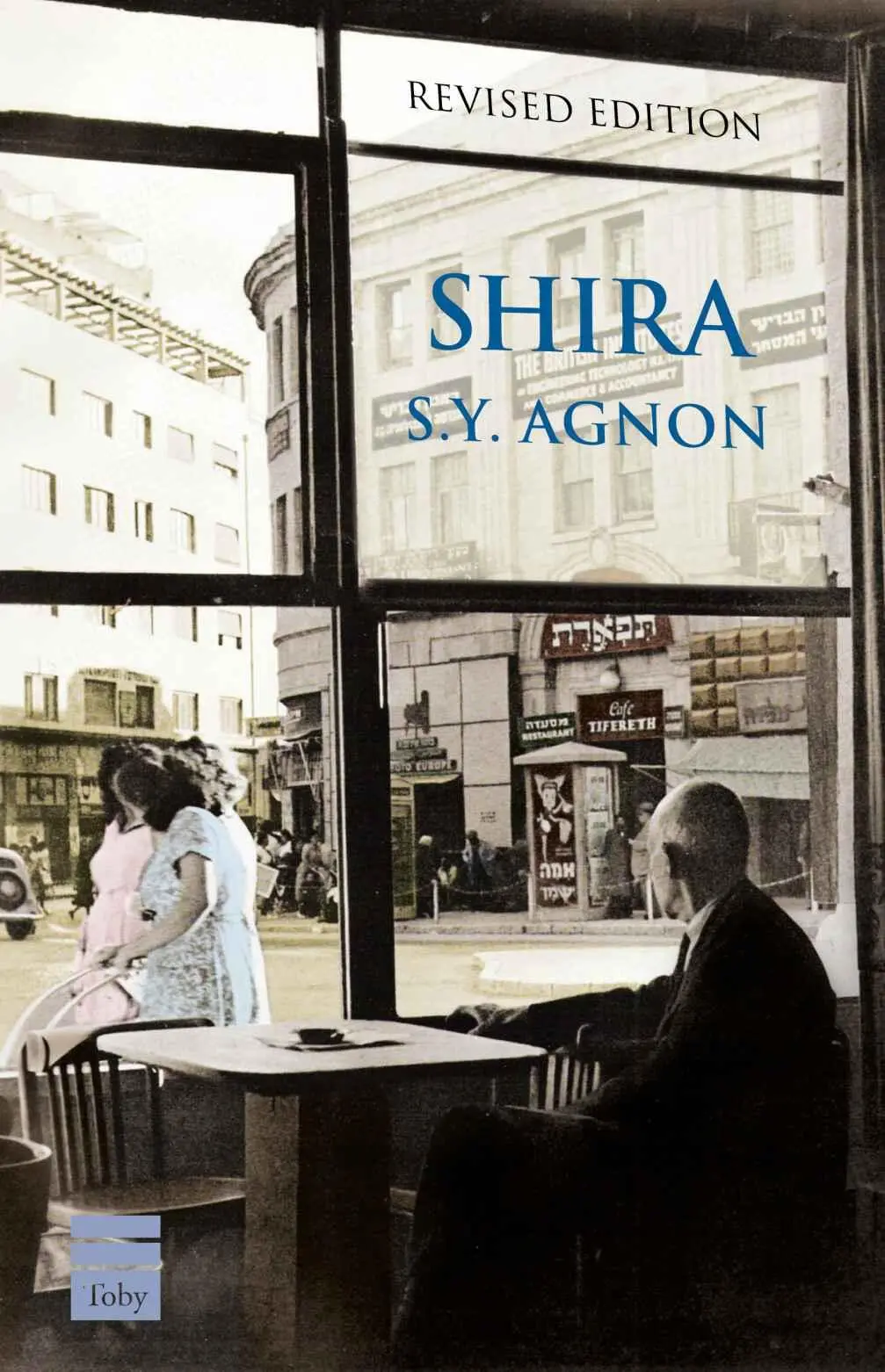
- Название:Shira
- Автор:
- Издательство:Toby Press
- Жанр:
- Год:2014
- ISBN:нет данных
- Рейтинг книги:5 / 5. Голосов: 1
-
Избранное:Добавить в избранное
- Отзывы:
-
Ваша оценка:
Shira: краткое содержание, описание и аннотация
Предлагаем к чтению аннотацию, описание, краткое содержание или предисловие (зависит от того, что написал сам автор книги «Shira»). Если вы не нашли необходимую информацию о книге — напишите в комментариях, мы постараемся отыскать её.
Shira — читать онлайн бесплатно полную книгу (весь текст) целиком
Ниже представлен текст книги, разбитый по страницам. Система сохранения места последней прочитанной страницы, позволяет с удобством читать онлайн бесплатно книгу «Shira», без необходимости каждый раз заново искать на чём Вы остановились. Поставьте закладку, и сможете в любой момент перейти на страницу, на которой закончили чтение.
Интервал:
Закладка:
Zahara is blonde, like her mother. But she is shorter than her mother, father, or sister, as she was born in Germany during the lean years, when a pregnant or nursing woman had to struggle to find food to sustain her child. Henrietta used to tell that, when she was pregnant with Zahara, a bottle of oil fell into her hands, and she exulted over it all day. Because of this meager prenatal fare, Zahara arrived in the world serious. Tell her a joke, and you won’t get even the ghost of a smile; even when she herself tells an amusing story, such as the tale of the controversy between kvutza members and Jewish National Fund officials who called the kvutza Tel Vernishevsky, after one of thousands of active Zionists whose names are forgotten once they are dead. The kvutza members, however, called it Kfar Ahinoam, after Ahinoam the Holstein, a comely dairy cow, arguing that whereas man eats, drinks, and produces waste, she eats the waste and produces milk, butter, cream, and cheese. Zahara doesn’t so much as smile, even when she describes her friend Avraham-and-a-half, who is taller than anyone, as tall as two people, but is called Avraham-and-a-half because of his modesty. Once, when they were on a walk together, Zahara sprained her ankle, and Avraham-and-a-half picked her up and carried her. Anyone who saw them from a distance would have been astonished at such a tall woman. Zahara tells this story, too: There was a Yemenite in another kvutza , near Ahinoam, who was installed there by the religious party to slaughter poultry in the ritual manner and perform marriages throughout the area. He used to sit in his hut composing poems, which he sold to collectors. He tucked his legs under him and leaned to the left or on his knees as he wrote, adding poems to the cycle he was composing. Being preoccupied with his poetry, he often appeared at a wedding after the event. But everyone was so eager to please him, they set up the canopy and had him perform the ceremony anyway.
The father of these daughters sat in his study, with the mounds of printed matter this country provides in profusion laid out before him. He didn’t discard it, out of respect for the written word. He didn’t look it over, because he knew there was nothing of substance there. Being an orderly man, Herbst took the trouble to put these papers in order: announcements with announcements, reminders with reminders, letters with letters; another pile for memos, appeals, political flyers, and the like, put out by national and charitable institutions, scholarly and political groups, children’s schools and academies, jubilee committees and plain committees — the assorted material one receives daily. An entire lifetime is not long enough to look it over.
Tamara came in and stood behind him. She leaned over him and said, “So, Manfred, you’ve made us a sister.” At that moment, the father was not comfortable with his daughter’s impudence, and he asked, “How are your classes?” Tamara answered, “Don’t worry, I’ll get my diploma.” Her father said, “When I was your age, my studies were more important to me than the diploma.” Tamara responded coyly, “When you were my age, you weren’t expected to know when Issachar Ber Schlesinger was born, and you weren’t expected to know that poem about the statue of Apollo wrapped in phylacteries.” Herbst regarded her harshly and said, “That’s absurd.” Tamara said, “You see, Father, we’re expected to learn those absurdities, and they determine whether we advance to the next class or fail. That’s how it is, Manfred.” Herbst placed both his hands on the piles of paper and muttered whatever he muttered. Tamara stared at his papers out of the corner of her tiny eyes and said, “Wow! Your desk is popping with wisdom!”
Zahara came in and said, “Hello, Father. The little one is sweet. I’ve never seen such an adorable baby. She’s intelligent, too. When I said, ‘You’re my sister,’ she looked me over to see if I deserve to be her sister. You’ve acquired some new books, Father. The shelves are full, the desk is full, even the floor is full. I won’t be surprised if we have to start coming in through the chimney. What are you up to? Mother says you hardly leave the house. In that case, you’ll soon have a book in print.”
Herbst took a chair and said, “Sit down, Zahara. Sit down. How are you, my child?” Zahara said, “That’s good advice, I’m really tired. It’s nice to sit in your room, Father. I can’t remember when I last sat on an upholstered chair.” Herbst took another chair, moved it, and said to Tamara, “You can have a seat, too. So, Tamara, no marvels to report from school?” Tamara said playfully, “You want marvels? Who expects marvels these days? In my opinion, even small accomplishments are excessive.” Herbst said, “I met up with your history teacher, and he said to me — “ Tamara said, “Never mind what he said. What did you say? In your place, I would have said to him, ‘A deadhead like you ought to cover his tiresome face to keep me from yawning.’“ Herbst said, “Don’t you think a person should know our nation’s history?” Tamara said, “Then the nation should make the kind of history I want to know.” Her father said, “Your tongue is quick, my dear.” Tamara said, “I can’t tie my tongue to a birthing bed.” Zahara said, “It’s impossible to talk to you, Tamara.” Tamara answered, “And you’re such a conversationalist? Is it essential to talk? I like people I can sit with in silence. Who’s knocking on the door?”
Zahara got up to open the door and returned with a heavy, loose-limbed young man carrying a briefcase, confident he was created for a purpose. He placed his hat on the desk, took a chair, sat down, perspired, opened the briefcase, took out a notebook, leafed through it, and said to Herbst, “You haven’t paid your dues; you owe one grush.” Herbst paid him, and the young man added, “You probably want to subscribe to the jubilee volume the committee is putting out for Getzkuvitz.” Herbst said, “I have never had the privilege of hearing that name.” The young man said, “Is it possible you never heard of Getzkuvitz? He’s the Getzkuvitz who…” and he talked on and on, until Herbst put his hands on his head, wishing for a refuge.
As soon as the visitor left, Zahara asked her father what would be done with the grush he came to collect and why he called it a grush when he meant a shilling. Her father said, “Who knows?” Zahara said, “And you gave it to him without asking what it’s for?” Herbst said, “In this country, is it possible to investigate every organization that asks for money? Mother contributes to forty funds whose names she doesn’t even know. If you wanted to know the names of all the funds that demand money, you would have to appoint a special secretary, and even that wouldn’t do. It’s easier to get rid of them with money. Words don’t work.” Zahara said, “The officials know that, and they set their agents on your trail. Nonetheless, one should ask them what they give you for your money.” Herbst laughed and said, “They don’t give me anything.” Tamara said to her sister, “You’re asking such questions — you, a kvutza member!” Zahara looked at her disdainfully and offered no response. Tamara realized she had overstepped and said to her sister, “Don’t be upset, honey. Let’s get back to Sarah. What do you think of her?” Zahara said, “She’s a sweetheart.” Tamara said, “I can picture you at her age. You were probably a sweetheart too.” Herbst looked at Zahara and said fondly, “You really were a sweetheart, Zahara.” Tamara stretched to her full height and asked, “What about me, Father?” Her father said, “Your enthusiasm about yourself spares me the trouble of an opinion.” Tamara said, “Have I no reason to be enthusiastic about myself?” Her father smiled and said, “If I say otherwise, you won’t believe me anyway. Now, what are your plans for today?” Tamara answered, “Whatever comes my way is already in my plans.” Zahara answered, “I came to attend to some business for the kvutza. ” Tamara said, “And if a sister hadn’t suddenly been born to you, the business would remain undone.” Zahara said, “They would have sent someone else to attend to it.” Tamara asked, “Tell me, sister, did they at least pay part of your expenses?” Zahara said, “Whether they did or not makes no difference.” Tamara said, with a wink, “Father, explain to her that her kvutza costs you more than my tuition.”
Читать дальшеИнтервал:
Закладка:
Похожие книги на «Shira»
Представляем Вашему вниманию похожие книги на «Shira» списком для выбора. Мы отобрали схожую по названию и смыслу литературу в надежде предоставить читателям больше вариантов отыскать новые, интересные, ещё непрочитанные произведения.




Обсуждение, отзывы о книге «Shira» и просто собственные мнения читателей. Оставьте ваши комментарии, напишите, что Вы думаете о произведении, его смысле или главных героях. Укажите что конкретно понравилось, а что нет, и почему Вы так считаете.