Gail Hareven - Lies, First Person
Здесь есть возможность читать онлайн «Gail Hareven - Lies, First Person» весь текст электронной книги совершенно бесплатно (целиком полную версию без сокращений). В некоторых случаях можно слушать аудио, скачать через торрент в формате fb2 и присутствует краткое содержание. Год выпуска: 2015, Издательство: Open Letter, Жанр: Современная проза, на английском языке. Описание произведения, (предисловие) а так же отзывы посетителей доступны на портале библиотеки ЛибКат.
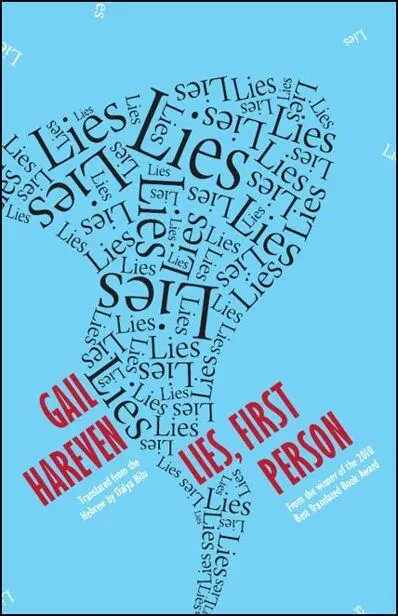
- Название:Lies, First Person
- Автор:
- Издательство:Open Letter
- Жанр:
- Год:2015
- ISBN:нет данных
- Рейтинг книги:3 / 5. Голосов: 1
-
Избранное:Добавить в избранное
- Отзывы:
-
Ваша оценка:
Lies, First Person: краткое содержание, описание и аннотация
Предлагаем к чтению аннотацию, описание, краткое содержание или предисловие (зависит от того, что написал сам автор книги «Lies, First Person»). Если вы не нашли необходимую информацию о книге — напишите в комментариях, мы постараемся отыскать её.
Elinor's comfortable life — popular newspaper column, stable marriage, well-adjusted kids — is totally upended when she finds out that her estranged uncle is coming to Jerusalem to give a speech asking forgiveness for his decades-old book,
.
A shocking novel that galvanized the Jewish diaspora,
was Aaron Gotthilf's attempt to understand — and explain — what it would have been like to be Hitler. As if that wasn't disturbing enough, while writing this controversial novel, Gotthilf stayed in Elinor's parent's house and sexually assaulted her "slow" sister.
In the time leading up to Gotthilf's visit, Elinor will relive the reprehensible events of that time so long ago, over and over, compulsively, while building up the courage — and plan — to avenge her sister in the most conclusive way possible: by murdering Gotthilf, her own personal Hilter.
Along the way to the inevitable confrontation, Gail Hareven uses an obsessive, circular writing style to raise questions about Elinor's mental state, which in turn makes the reader question the veracity of the supposed memoir that they're reading. Is it possible that Elinor is following in her uncle's writerly footpaths, using a first-person narrative to manipulate the reader into forgiving a horrific crime?
Lies, First Person — читать онлайн бесплатно полную книгу (весь текст) целиком
Ниже представлен текст книги, разбитый по страницам. Система сохранения места последней прочитанной страницы, позволяет с удобством читать онлайн бесплатно книгу «Lies, First Person», без необходимости каждый раз заново искать на чём Вы остановились. Поставьте закладку, и сможете в любой момент перейти на страницу, на которой закончили чтение.
Интервал:
Закладка:
“What for? There’s nothing to see here. Even before they built this thing there wasn’t. Just another ordinary house.”
“Still, isn’t it a shame they tore it down? Developers. They could have built additional stories on the existing ones. Houses are history.”
Isn’t it a shame? I carefully considered the alternatives, as if my opinion counted and I had actually been called upon to choose between them: the building would stand. The building would be torn down. The building would go on standing and new stories would be built on the old foundations. Tour guides would be able to pass here with their flocks, point to the old and tell their tales: the lower floors belong to what was once Pension Gotthilf. A pension was here. Gotthilf was here.
“I don’t know,” I said in the end. “You’re the one who knows about real estate and urban planning. In my opinion at least, there was nothing here worth preserving. It’s probably better this way.”
— 4 -
When we got home I went straight to the computer, only now that I already knew exactly what information I required, there was no need to search: Menachem had made haste to send me the program of the conference. “You’ll find your uncle on the evening of the second day, on a panel at the Cinematheque. Rachel says to tell you that to her regret we won’t be able to make it, the daughter of friends of ours from Nahalal is getting married. I’m sorry too. The program looks interesting.”
Professor Gotthilf of Queen’s College would be the third of four speakers under the lengthy heading “Popular Portraits of Evil — the Borders and Limits of Representation.” Later on in the evening the film The Night Watchman would be screened in the small hall, and The Bunker in the big hall. The title of the Professor’s presentation was also long, taking into account the twenty minutes at his disposal: “ Hitler, First Person as a Test Case: Regrets and Errors in the Exploration of the Roots of Evil.”
The last speaker’s subject was “Education versus Vulgarization — the Test Case of Oprah Winfrey”; I don’t remember what test cases the first two speakers were going to discuss, I wasn’t paying attention, because the date of the only test that concerned me was already more or less clear.
“I’m sorry,” my husband repeated, looking over my shoulder. “My mother has gotten it into her head that we all need to start relating to your family with respect, because that’s what will make you happy. I’ll find a way to change her mind somehow.”
“Your mother is too good for this world. The Brandeis family is too good for this world,” I replied unemotionally.
“It’s a terrible shame that we can’t go there and simply shout the truth, so people will know who that man is and what he did.”
“Because what would happen then, exactly?”
“I don’t know. He’d be lynched.”
“Do you really think so?” I inquired politely. I moved my chair back so that I would be able to look at my husband when he replied.
“But it’s inconceivable that they’re letting him get away with it, making a second career out of a so-called admission of guilt! What, are they all idiots? It’s intolerable how stupid people are. How can they let someone profit from an admission of guilt?”
I went on sitting, watching him contort himself above me in rising rage, as if the snake writhing inside me had escaped and entered into him. “That’s the way of the world,” I fanned the flames in a tone of indifference. “There are a lot of things that people don’t understand.”
“My father does somehow smell a rat, of that I’m certain, only he doesn’t know. He doesn’t know. If he had the faintest idea. .”
“Elisheva’s okay,” I said. “My sister’s happy, isn’t that what’s important? She’s been born again. She’s forgiven him. If she has any ambition at all, it’s to save Hitler from hell.”
“Your sister can forgive until the cows come home. Let her forgive. It’s her right, but I don’t forgive.”
I closed my email, stood up and gave my husband a non-committal kiss between the eyebrows. And this time it was my turn to imitate our single-session therapist: “Accepting injustice is a very painful thing,” I said.
“Shit,” he groaned as I withdrew my face from his. “Shit, shit, shit.”
Cursing and scowling demonstratively, he looked very much like our Yachin when he was a teenager. And for a moment, like then, I felt like ruffling his hair, and like then — I refrained. Nobody likes having his hair ruffled.
“Okay, but what shit are you talking about?”
“Everything. That a person like that exists at all, and that he’s coming here, and his colossal nerve in getting in touch with us. Just the thought of him walking the streets here makes me sick. I know you can ask how come I woke up all of a sudden, but try to understand that your sister and brother-in-law and all that Limoncello — somehow it didn’t seem real to me. A place like that, people like that — I know we were there, but somehow it’s as if it weren’t real.”
“So you’re claiming again that my sister’s a fake.”
“I’m not claiming anything. Apparently I’m a simple person, so perhaps your sister is beyond my comprehension. Perhaps she’s too great for me, your sister. But it’s precisely because of that, I think, precisely because of her greatness that I can’t even comprehend, precisely because of this greatness everything suddenly seems utterly loathsome to me. So you can say that I just woke up, and it’s true, because it’s only now that it’s suddenly become real to me: what happened, what he did, that man who’s traveling the world now. All the ruin and destruction, the extent of the impudence of evil. I don’t know. Maybe I should’ve seen where you grew up in order to realize how close it all is: where you, where the two of you were while I was playing games in the scouts. You know that I once took my troop there for a camp fire in the valley, five minutes from you? You were still a child then, and so was Elisheva. You still had a few years before the real shit arrived.”
Years of maternal self-restraint helped me suppress my smile. Because I was so relieved, and the joy of the relief succeeded in rising to the fortress at the top of my scalp, from which I looked down on everything: inferior families, inferior childhoods also had a right to exist. I didn’t need to offer my husband copper trays and wrap my childhood up for him in scents of jasmine for him to understand this. My husband increasingly understood as well as any outsider could, and when the day came — I thought — the day of the deed, rapidly approaching, maybe he would understand then as well, and would not hate me and be revolted by me.
“Look,” I said, “look, what happened happened. At his age he isn’t going to put suitcases on any more little girls. The main thing is that Elisheva is better now. She’s balanced, the world is balanced. The good God saved her. End of story. It’s all over.”
“What’s over? Nothing’s over. The good God. . you know what I feel like doing? What I feel like doing is taking a truck full of dynamite and driving it into your sister’s god and blowing him up.”
I kissed him again, this time on his lips, and when I retreated he looked a little ashamed.
“Good. As far as this dinner that my parents are supposed to eat with him is concerned, you can stop worrying about that at least. Because it isn’t going to happen.”
•
A Jerusalem restaurant. Menachem didn’t say which one. Perhaps it hadn’t been decided on yet. But I needed to know even if it hadn’t been decided on. Taking into account the fact that the people invited to the dinner were not among the important guests, it wouldn’t be a luxury restaurant. If it was only visitors from abroad we were talking about, the choice may have fallen on one of the tourist restaurants that boasted of their authenticity, for example the one in the first alley on the left, immediately after entering the Old City from the Jaffa Gate. But people like Menachem and Ruth had also been invited, who would not want to walk down the first alley on the left after the Jaffa Gate. And on top of everything else, the place would probably have to be kosher.
Читать дальшеИнтервал:
Закладка:
Похожие книги на «Lies, First Person»
Представляем Вашему вниманию похожие книги на «Lies, First Person» списком для выбора. Мы отобрали схожую по названию и смыслу литературу в надежде предоставить читателям больше вариантов отыскать новые, интересные, ещё непрочитанные произведения.










Обсуждение, отзывы о книге «Lies, First Person» и просто собственные мнения читателей. Оставьте ваши комментарии, напишите, что Вы думаете о произведении, его смысле или главных героях. Укажите что конкретно понравилось, а что нет, и почему Вы так считаете.