Gail Hareven - Lies, First Person
Здесь есть возможность читать онлайн «Gail Hareven - Lies, First Person» весь текст электронной книги совершенно бесплатно (целиком полную версию без сокращений). В некоторых случаях можно слушать аудио, скачать через торрент в формате fb2 и присутствует краткое содержание. Год выпуска: 2015, Издательство: Open Letter, Жанр: Современная проза, на английском языке. Описание произведения, (предисловие) а так же отзывы посетителей доступны на портале библиотеки ЛибКат.
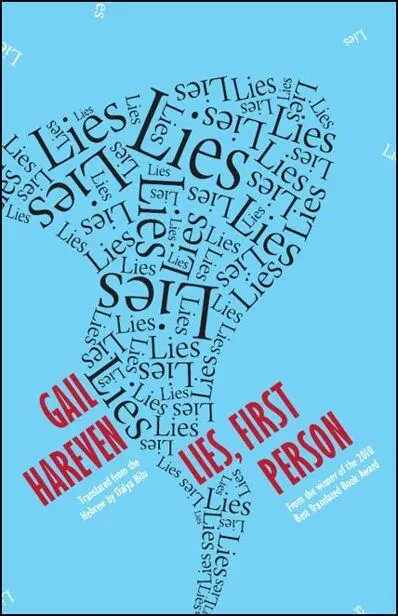
- Название:Lies, First Person
- Автор:
- Издательство:Open Letter
- Жанр:
- Год:2015
- ISBN:нет данных
- Рейтинг книги:3 / 5. Голосов: 1
-
Избранное:Добавить в избранное
- Отзывы:
-
Ваша оценка:
Lies, First Person: краткое содержание, описание и аннотация
Предлагаем к чтению аннотацию, описание, краткое содержание или предисловие (зависит от того, что написал сам автор книги «Lies, First Person»). Если вы не нашли необходимую информацию о книге — напишите в комментариях, мы постараемся отыскать её.
Elinor's comfortable life — popular newspaper column, stable marriage, well-adjusted kids — is totally upended when she finds out that her estranged uncle is coming to Jerusalem to give a speech asking forgiveness for his decades-old book,
.
A shocking novel that galvanized the Jewish diaspora,
was Aaron Gotthilf's attempt to understand — and explain — what it would have been like to be Hitler. As if that wasn't disturbing enough, while writing this controversial novel, Gotthilf stayed in Elinor's parent's house and sexually assaulted her "slow" sister.
In the time leading up to Gotthilf's visit, Elinor will relive the reprehensible events of that time so long ago, over and over, compulsively, while building up the courage — and plan — to avenge her sister in the most conclusive way possible: by murdering Gotthilf, her own personal Hilter.
Along the way to the inevitable confrontation, Gail Hareven uses an obsessive, circular writing style to raise questions about Elinor's mental state, which in turn makes the reader question the veracity of the supposed memoir that they're reading. Is it possible that Elinor is following in her uncle's writerly footpaths, using a first-person narrative to manipulate the reader into forgiving a horrific crime?
Lies, First Person — читать онлайн бесплатно полную книгу (весь текст) целиком
Ниже представлен текст книги, разбитый по страницам. Система сохранения места последней прочитанной страницы, позволяет с удобством читать онлайн бесплатно книгу «Lies, First Person», без необходимости каждый раз заново искать на чём Вы остановились. Поставьте закладку, и сможете в любой момент перейти на страницу, на которой закончили чтение.
Интервал:
Закладка:
Among the various parasites preying on my mind the book I had thrown into the trash in the Chicago airport popped up again. This was already after the plane had steadied itself over the ocean, after the lights had gone off and the flight attendant had asked the passengers to pull down the blinds, when I was feeling a little sleepy at last.
It occurred to me that perhaps one of the cleaning staff in O’Hare had picked First Person out of the trash. A woman, perhaps. And presumably she had no idea what it was. She saw a book in good condition, saw the sensational subject of Hitler, and decided to keep it. Before she hid it on her person she presumably removed her rubber gloves. Not a young woman. Her fingernails dirty and painted red, her teeth crooked and in need of dental care she could not afford. She brought her find to her boyfriend, as she was in the habit of doing with all her other windfalls. Many different things can be found in an airport, and this one too she presented to her boyfriend — who was he? A follower of Louis Farrakhan, I imagined. Her boyfriend read it, in the week that had passed since then he told his friends about it, and one night he would order the woman to read it aloud to him. She would stumble over the words, he would snatch the book from her hands and say, “You’re so stupid,” and when he went to bed with her he would hurt her and look into the gaping void of her mouth and say, “There’s nothing there.”
And maybe it wasn’t a cleaning woman who plucked the book from the trash, but Not-man himself who happened to be passing through the airport at precisely that moment and fished First Person out of the bin — so I thought, and with this paranoid fantasy my sleepiness vanished. The thing I threw into the trash was covered in brown paper, Menachem had covered it, and anyone who didn’t know what was underneath the paper, even the Not-man himself, wouldn’t have been able to recognize it. Why hadn’t I removed the paper to look at the cover of the book?
“You never told me what he put on the cover,” I said to Oded.
“What?” My husband was sleeping, his mouth was slightly open, to a degree that was not aesthetically unpleasing. My husband was exhausted and asleep, and even in his sleep he did not allow his mouth to sag and gape. The biggest prize of my life. The land of the salt of the earth into which I had come by chance, not by right. Why was I nagging him?
— 9 -
And then we were home. I was always happy to return. I was happy when we returned to our first apartment from our first backpacking trip to Europe, and no less happy on our return from expensive luxury hotels.
Anyone who grew up like I did will always see the room from the point of view of the maid who comes to clean it. And even though I enjoyed the luxuries my husband provided without any pangs of conscience, I never left a hotel room without making sure that our trash was securely bagged, that the sheets betrayed nothing, and that no garments or towels had been left on the floor.
I enjoyed most of my trips with Oded and also the ones in which we were joined by our children, but when they were coming to an end I was always happily aware of the fact that we would soon be going home. To our own house and sheets that were ours alone.
My father would collect old books left next to garbage bins. My mother would buy her fancy-dress costumes from second-hand shops. And therefore, apparently, even in the fanciest hotel it did not escape me that the bed linen covering us was used.
Sheets that had covered us alone, kitchen utensils that no strangers had touched were among the first pleasures of my life with my husband, and on our return home from our holidays I would always spoil the boys by frying real chips or devote the whole morning to preparing a pot of stuffed vegetables. This was also the time when I particularly enjoyed hosting friends. We often invited people to dinner, both real friends and people my husband needed in order to increase our luxuries, and among the latter there were some who became real friends too.
I always enjoyed returning to my chosen books. I enjoyed seeing what was new in the garden — surprises sprouting in the ground even after one week’s absence — and I liked knowing that at almost any moment I desired, I could escape to our clean bed and rise from it to the land of dreams. The gates of this land were always close to me, and most of the time they opened easily.
The return from Seattle was different, and both on the drive to Jerusalem and when the taxi was already going down Prophets Street, the happy feeling did not come to me. I said to my husband: “Here we are, we’re home,” but the fault remained, and the cosmic fault emptied the words and the voice that spoke them.
I had wasted the few days I had with my sons, I had soured and embittered them, and now I felt sour and bitter, and there was bile in my throat. Was it my fault that an evil for which there was no atonement had entered my home with me? My sister had pardoned. And I would remain alone in the prison of the pardon with the sour smell of a Not-man.
It was cold. We turned on the heating. It had rained during our absence. There was no need to water the garden, and Oded only took the pots of grass he had shut up in the shed when we left out into the light.
I threw out a few potatoes that had rotted. I cleaned the muddy prints of a cat that had stolen in and dirtied the marble counter. We unpacked — we both hate luggage standing in the middle of the room — and while Oded listened to the many messages on the voice mail I crammed the first load of clothes into the washing machine, and sorted out the things destined for the dry-cleaners.
“Emails can wait for tomorrow?” he asked when he handed me a list of my messages. We had already called his parents from the taxi. “I need another hour here,” I replied and pointed to the kitchen and living room which were not in any need of cleaning or tidying. My husband rubbed his nose against the nape of my neck and bent down to kiss my tiger face through my sweater. “If you don’t need me here I’m going to shower, and if anyone phones tell them we’re not back yet.”
Oded fell asleep in the light of the reading lamp awaiting me; in the meantime I emptied the vegetable compartment in the fridge and scrubbed it. After that I hung up the washing and, for a few moments in the smell of the laundry softener for babies, I had a sense of normality.
Only after I had made sure that my husband was already asleep, I switched on my computer. The emails could indeed wait for tomorrow, but there was one thing I had to check, and I promised myself that the moment I finished and satisfied the need, I would slip under the goose down and perhaps I would even wake Oded.
I went onto Amazon and located the book. I checked that the same picture appeared on the first edition and on the paperbacks, and then I enlarged what Menachem had hidden.
The face of the first person took up a quarter of the screen, and it was the face of a child. The chin was raised a little, the nostrils looked flared because of the tilt of the head, which stared straight ahead, the eyelids drooping in a way that was too tired for his age. The arms were folded high on the chest, presumably so they would be seen in the photograph. The way the black hair was plastered to his scalp made his ears stand out. The graphic artist had added a bleeding swastika on the left side of his forehead, and the impression created was that the arrogant child bore his wound heroically, perhaps even defying those who had stamped the crooked cross on his face. Hitler, First Person and “Aaron Gotthilf,” were written in white letters.
I didn’t linger long opposite the picture. The need to see had been satisfied. Enough for now, time to go to bed.
Читать дальшеИнтервал:
Закладка:
Похожие книги на «Lies, First Person»
Представляем Вашему вниманию похожие книги на «Lies, First Person» списком для выбора. Мы отобрали схожую по названию и смыслу литературу в надежде предоставить читателям больше вариантов отыскать новые, интересные, ещё непрочитанные произведения.











Обсуждение, отзывы о книге «Lies, First Person» и просто собственные мнения читателей. Оставьте ваши комментарии, напишите, что Вы думаете о произведении, его смысле или главных героях. Укажите что конкретно понравилось, а что нет, и почему Вы так считаете.