Alan Moorehead - Gallipoli
Здесь есть возможность читать онлайн «Alan Moorehead - Gallipoli» весь текст электронной книги совершенно бесплатно (целиком полную версию без сокращений). В некоторых случаях можно слушать аудио, скачать через торрент в формате fb2 и присутствует краткое содержание. Год выпуска: 0101, ISBN: 0101, Издательство: Rockport Publishers, Жанр: prose_military, military_history, на английском языке. Описание произведения, (предисловие) а так же отзывы посетителей доступны на портале библиотеки ЛибКат.
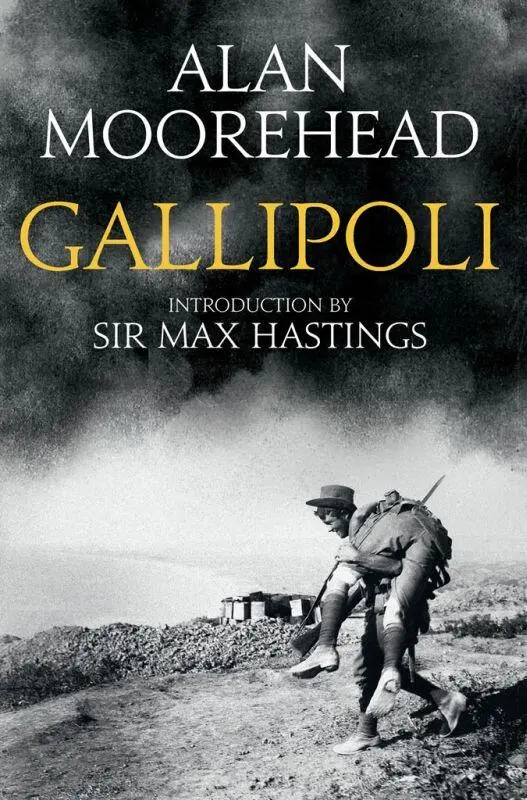
- Название:Gallipoli
- Автор:
- Издательство:Rockport Publishers
- Жанр:
- Год:0101
- ISBN:9781781314852
- Рейтинг книги:5 / 5. Голосов: 1
-
Избранное:Добавить в избранное
- Отзывы:
-
Ваша оценка:
Gallipoli: краткое содержание, описание и аннотация
Предлагаем к чтению аннотацию, описание, краткое содержание или предисловие (зависит от того, что написал сам автор книги «Gallipoli»). Если вы не нашли необходимую информацию о книге — напишите в комментариях, мы постараемся отыскать её.
Gallipoli — читать онлайн бесплатно полную книгу (весь текст) целиком
Ниже представлен текст книги, разбитый по страницам. Система сохранения места последней прочитанной страницы, позволяет с удобством читать онлайн бесплатно книгу «Gallipoli», без необходимости каждый раз заново искать на чём Вы остановились. Поставьте закладку, и сможете в любой момент перейти на страницу, на которой закончили чтение.
Интервал:
Закладка:
* Uncensored Letters from the Dardanelles. By a French medical officer. Heinemann, 1916.
Soldiers of the Prophet. Lt.-Col. C. C. R. Murphy. Hogg, 1921.
* Inside Constantinople. Lewis Einstein. Murray, 1917.
Flights and Fights. Air Commodore C. R. Samson. Ernest Benn, 1930.
Roger Keyes. Cecil Aspinall-Oglander. Hogarth Press, 1951.
The War in the Air. H. A. Jones. Oxford, 1928.
Submarine and Anti-submarine. Henry Newbolt. Longmans Green, 1918.
The Dardanelles Campaign. Henry W. Nevinson. Nisbet & Co., 1918.
* Turkey. Arnold J. Toynbee and Kenneth P. Kirkwood. Ernest Benn, 1926.
Modern Turkey . John Parker and Charles Smith. Routledge, 1940.
Two War Years in Constantinople. Dr. Harry Stuermer. Hodder & Stoughton, 1917.
Sir Arthur Nicolson, Bart. First Lord Carnock. Harold Nicolson. Constable, 1930.
* Some People. Harold Nicolson. Constable, 1927.
Tempestuous Journey. Lloyd George. His Life and Times. Frank Owen. Hutchinson, 1954.
The Struggle for Mastery in Europe. 1848–1918. A. J. P. Taylor. Oxford, 1954.
History of the World War. Liddell Hart. Faber & Faber, 1934.
* The Turkish General Staff History of the Campaign in Gallipoli. Analysis in the Army Quarterly, January and April, 1928.
The First Turkish Reinforcements at Suvla: August 7–9, 1915. The Army Quarterly, October 1929.
* The War Memoirs of David Lloyd George. Vol. I. Nicholson & Watson.
Ben Kendim. Aubrey Herbert. Edited by Desmond MacCarthy. Hutchinson, 1924.
Australia in Arms. Phillip F. E. Schuler. Unwin, 1916.
Memoirs of a Turkish Statesman 1913–1919. Djemal Pasha. Hutchinson, 1922.
Turkey in the World War. Ahmad-Amin. Yale University Press, 1930.
The Official History of Australia in the War. Vols. I and II. C. E. W. Bean. Angus & Robertson, 1921.
Index
Abdul Hamid,
Abydos,
Achi Baba,
Agamemnon , H.M.S.,
Aghyldere,
Albion , H.M.S.,
Allanson, Major,
Allenby, Field-Marshal,
Anafarta Sagir,
Anzac bridgehead, April 25 landing; description of,
Anzio,
Arcadian , S.S.,
Ari Burnu,
Arif,
Armenians, massacre of,
Arno ,
Ashmead-Bardett, Ellis,
Askold ,
Aspinall, Colonel (Brig.-General Cecil Aspinall-Oglander),
Asquith, Rt. Hon. H. H.,
Attlee, Clement,
Ayas Bay,
Bailloud, General,
Baldwin, General,
Balfour, A. J.,
Barbarossa Harradin ,
Battleship Hill,
Blamey, Field-Marshal Sir Thomas,
Bedri,
Birdwood, General Sir William, sent to Dardanelles; does not believe Fleet can get through; would risk a landing; commands Anzac Corps; advises landing at Bulair; confident; at Gaba Tepe; commands Anzac landing; asks to abandon bridgehead; determined to advance; his position attacked; wounded; warns of attack; takes part in truce; always in front line; urges attack on Sari Bair; plans attack; reproved by Hamilton for discussing plan; deception scheme at Anzac; secretly disembarks new troops; struggle for Sari Bair; leads August 6 attack; prepares new onslaught on Sari Bair; criticized by Murdoch; against evacuation; appointed temporary C.-in-C.; rejects appointment; comes round to idea of evacuation; his part in Keyes-Munro argument; remains in Gallipoli; anxiety over lack of secrecy; ashore for last time; eager to evacuate Helles; lives to be ninety-six,
Bompard, French Ambassador in Constantinople,
Bosphorus,
Bouvet ,
Boyle, Lt.-Commander, V.C.,
Braithwaite, General,
Breslau ,
Bridges, General,
British Naval Mission to Turkey,
Brooke, Rupert,
Bulair,
Bulgaria,
Byng, General Sir Julian,
Caldwell, General,
Canopus , H.M.S.,
Cape Helles; April 25 landing; evacuation,
Carden, Vice-Admiral,
Carson, Lord,
Carthage ,
Casualties, at Cape Helles up to July; total in campaign,
Cattaro,
Caucasus,
Chanak,
Charlemagne ,
Chatham , H.M.S.,
Chocolate Hill,
Christian, Rear-Admiral,
Chunuk Bair,
Churchill, Major Jack,
Churchill, Winston, requisitions Turkish warships; plans attack on Turkey; telegram to Carden; support of Carden’s plan; his description of Kitchener; influence on Admiralty; mistrust of; argument with Fisher; encourages Carden; appoints de Robeck; presses for naval attack; quarrel with Fisher; removed from Admiralty; Chancellor of Duchy of Lancaster; described by Ashmead-Bartlett; urges reinforcement Gallipoli; prevented from visiting Gallipoli; still supports Gallipoli; likes Keyes’ plan; removed from War Committee; goes to fight in France; criticism of; publishes The World Crisis ,
Cochrane, Lt.-Commander,
Committee of Union and Progress,
Constantine, King of Greece,
Constantinople, atmosphere in 1914; remoteness; vulnerability; and importance; reaction to first Gallipoli bombardment; rumours and situation in May; submarine scare; reception of the Allies,
Cornwallis , H.M.S.,
Crewe, Lord,
Courtnay’s Post,
Curzon, Lord,
D’Amade, General,
Dardanelles, importance to Russia; closed; trade never revived; defence of,
Darlington, Colonel,
Dartmouth , H.M.S.,
Davies, Lt.-General Sir Francis,
de Lisle, General,
Djavid,
Djemal,
d’Oyley-Hughes, Lt.-Commander,
Duckworth, Admiral,
Egypt,
Einstein, Lewis,
Enver, described by Harold Nicolson; early life and character; position in 1914 of; admiration of Germany; negotiates with Wangenheim; proposes alliance with Russia; breaks it; expedition to the Caucasus; confident of victory; becomes dictator; dealings with von Sanders; personal success; sends hostages to Gallipoli; row with Kemal; no longer confident; orders 9 divisions to Thrace; flees to Germany and Russia; in 1922 reported dead,
Eren Keui Bay,
Eski Hissarlik Point,
Essad Pasha,
Evacuation, Suvla Bay and Anzac; Cape Helles,
Feizi Bey, Ahmed,
Fisher, Admiral, plans for attack on Turkey; opposition to Gallipoli plan; acceptance of plan; relationship with Churchill; advocates army for Gallipoli; opposes new naval attack; resigns,
Fisher, Andrew,
Fitzmaurice,
French, Sir John,
Freyberg, Lt.-Commander Bernard (General Lord Freyberg, V.C.),
Gaba Tepe,
Gas, use of,
Gaulois ,
Gechl, Lt.-Col.,
German Military Mission to Turkey,
Germany,
Ghazi Baba,
Giers, Russian Ambassador to Turkey,
Godfrey, Captain,
Godley, General,
Goeben ( Yavus ),
Golden Horn,
Goliath , H.M.S.,
Goltz, Field-Marshal von der,
Gouraud, General,
Greece,
Green Hill,
Grey, Sir Edward,
Guépratte, Admiral,
Gully Beach,
Gully Ravine,
Haidar Pasha,
Haig, Sir Douglas,
Haldane, Lord,
Hamidieh Fort,
Hamilton, General Sir Ian, appointed C.-in-C. Gallipoli expedition; arrives Dardanelles; supports plan for military landing; meetings with de Robeck; with Rupert Brooke; appearance, character and record; preparations for April 25 landing; handling of the attack; decision not to withdraw; fails to get reinforcements from Egypt; agrees to truce; living conditions on Arcadian ; begs for ammunition; not known by the troops; plans Suvla landing; instructions to Stopford; security; failure to convince subordinates; watches invasion fleet leave; anxiety over Suvla landing; leaves for Suvla; interview with Stopford; replaces generals; asks for reinforcements from Egypt; promise of new army; postponed, reaction to first mention of evacuation; reputation diminishing; reputation with troops; Murdoch letter; dismissal; leaves Gallipoli; criticized by Royal Commission; later career; dies,
Читать дальшеИнтервал:
Закладка:
Похожие книги на «Gallipoli»
Представляем Вашему вниманию похожие книги на «Gallipoli» списком для выбора. Мы отобрали схожую по названию и смыслу литературу в надежде предоставить читателям больше вариантов отыскать новые, интересные, ещё непрочитанные произведения.







Обсуждение, отзывы о книге «Gallipoli» и просто собственные мнения читателей. Оставьте ваши комментарии, напишите, что Вы думаете о произведении, его смысле или главных героях. Укажите что конкретно понравилось, а что нет, и почему Вы так считаете.