William Gerhardie - Futility
Здесь есть возможность читать онлайн «William Gerhardie - Futility» весь текст электронной книги совершенно бесплатно (целиком полную версию без сокращений). В некоторых случаях можно слушать аудио, скачать через торрент в формате fb2 и присутствует краткое содержание. Год выпуска: 2012, Издательство: Melville House, Жанр: Классическая проза, на английском языке. Описание произведения, (предисловие) а так же отзывы посетителей доступны на портале библиотеки ЛибКат.
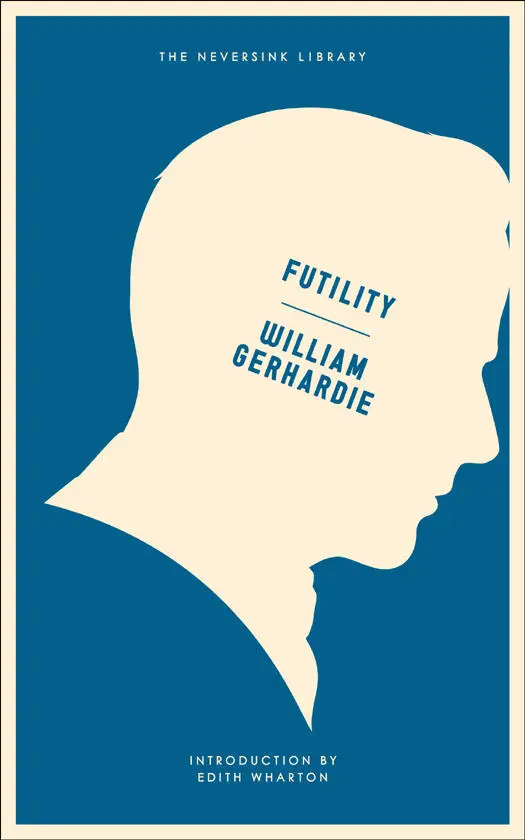
- Название:Futility
- Автор:
- Издательство:Melville House
- Жанр:
- Год:2012
- ISBN:нет данных
- Рейтинг книги:4 / 5. Голосов: 1
-
Избранное:Добавить в избранное
- Отзывы:
-
Ваша оценка:
Futility: краткое содержание, описание и аннотация
Предлагаем к чтению аннотацию, описание, краткое содержание или предисловие (зависит от того, что написал сам автор книги «Futility»). Если вы не нашли необходимую информацию о книге — напишите в комментариях, мы постараемся отыскать её.
one of the century's neglected masterpieces.
It tells the story of someone very similar to Gerhardie himself: a young Englishman raised in Russia who returns to St. Petersburg and falls in love with the daughter of a hilariously dysfunctional family-all played out with the armies of the Russian Revolution marching back and forth outside the parlor window.
Part British romantic comedy, part Russian social realism, and with a large cast of memorable characters, this astoundingly funny and poignant novel is the tale of people persisting in love and hope despite the odds.
Futility — читать онлайн бесплатно полную книгу (весь текст) целиком
Ниже представлен текст книги, разбитый по страницам. Система сохранения места последней прочитанной страницы, позволяет с удобством читать онлайн бесплатно книгу «Futility», без необходимости каждый раз заново искать на чём Вы остановились. Поставьте закладку, и сможете в любой момент перейти на страницу, на которой закончили чтение.
Интервал:
Закладка:
“Always going to Zina’s?”
“Yes,” said Fanny Ivanovna. “But it’s quite all right. They play cards there every night.” And then added for further reassurance: “He is passionately fond of cards … and it keeps him occupied.
“And do you remember that other play … at the Saburov?”
“Yes,” she said. “Yes.… Oh, what was the ending of that play? We had to leave before the end. I was curious how it would end. But I think you stayed to the last?”
“Yes.… She is waiting for him to come back to her. She is waiting confidently because he has left his silk hat on the table. So she is waiting. But his valet comes and takes the hat; and she breaks down — and curtain!”
“Oh,” she said.
“Nikolai Vasilievich liked it,” I observed.
“Did he like it?”
She did not like it. By her face I could see that she did not like his liking it. It was as if the thing was peculiarly discordant with her own mood and trend of thought, as if she feared, against her hope, that Nikolai Vasilievich, in spite of all, might one day follow the example of the gentleman with the silk hat … and send Stanitski to her for his suits and underclothes.
She brooded.
“How long ago it seems,” she said at last. “To think how long ago!.. and we are still the same. Nothing has changed … nothing. Then it was the climax, and we held our breath expecting that now … now something must happen. Nothing happened. Then our whole life stood on edge, and the edge was sharp. We felt that the crisis could not last. We waited for an explosion. But it never came. The crisis still dragged on: it lapsed into a perpetual crisis; but the edges blunted. And nothing happened. Life drags on: a series of compromises. And we drag along, and try to patch it up … but it won’t. And it won’t break. And nothing happens. Nothing ever happens. Nothing happens.…”
“When I was very young,” I said, “I thought that life must have a plot, like a novel. But life is most unlike a novel; more ludicrous than a novel. Perhaps it is a good thing that it is. I don’t want to be a novel. I don’t want to be a story or a plot. I want to live my life as a life, not as a story.”
“Yes,” she said, pursuing her own thought. “Nothing happens. Nothing .…”
The black night gazed through the window. The samovar produced melancholy notes. Tea was getting cold on the table.
XII
“WOULD SHE COME?” I THOUGHT, AS NEXT morning we drove off to the wharf. We passed a lonely square with a solitary Chink with a tin sword. That was the last we saw of Vladivostok.
The family came to see us off in practically its full strength. But she did not come. That settled it.
Nikolai Vasilievich was unshaven — a perfectly correct omission in a Russian gentleman. He wore blue spectacles, a bowler hat, a summer coat and goloshes. On the pier we talked of the political situation. The Admiral repeated but one phrase: “We are not to blame.” The Russian General shook his head and blamed some vague, unknown power in rather vague, indefinite terms with a rather vague, indefinite blame, and then summed up the situation with “I told you so!” though the substance of his telling was all very mysterious. But both fools and wise men alike had long given up the attempt to discover any meaning whatsoever in this resplendent General’s utterances; and if they listened to him at all, their attention was usually concentrated on his face or uniform or any other object near at hand.
She had not come. That settled it.
It rained, as on the day we arrived.
Then the Admiral came up to Nikolai Vasilievich to say good-bye. “Well, Nikolai Vasilievich,” he said, “what will you do?”
“Well … I’ll wait,” said Nikolai Vasilievich. “I don’t think it can be long now.…”
PART IV. NINA
I
AND THIS NOW IS THE ENDING, THE LIEBESTOD OF my theme. We had left so suddenly. Her last words, look, gesture had “settled it.” But now, in retrospect, the things that “settled it” were, in their very vagueness, just the things striving to unsettle me, as I resumed my interrupted course at Oxford, having “relinquished my commission,” thanks to the conclusion of the war. Was she à moi , or wasn’t she? Well, was she? She was. She wasn’t. Oh — how the hell could I know!
The art of living is the ability to subordinate minor motives to major ones. And it is an unsatisfactory art. You must make up your mind what you want, and when you have made up your mind what you want, you might as well, for the difference it makes to you, have never had a mind to make up. For the consequences have a way of getting out of hand and laying out the motives indiscriminately. And then you with your intent and will seem rather in the way. That is the truth.… (But it would serve us right if we thought so!) Since childhood I had more or less earmarked my future, and the circumscription did not really take in Nina. I had in those early days conceived a novel that, oh! was to knock all existing novels flat. This novel was to be my goal in life, and then later on the novel was to follow my real life, a life of augmented splendour and achievement. Pending that achievement, there was, of course, that other life, essentially out of focus with the novel, not really life at all, a transitory, irritating phase not meriting attention. The novel was begun — invariably begun. The quite indefinably peculiar atmosphere of it seemed to defy the choice of language. For I happen to belong to that elusive class of people knowing several languages who, when challenged in one tongue, find it convenient to assure you that their knowledge is all in another. And I am one of those uncomfortable people whose national “atmosphere” had been somewhat knocked on the head — an Englishman brought up and schooled in Russia, and born there, incidentally, of British parents (with a mixed un-English name into the bargain!), and here I am. The war claimed me. And then, the war over, I looked at the novel. Heaven! How it had shrunk. I had contrived to overlook real life since it was out of focus with my novel, and now I found that it was just the novel that was out of focus with real life. Nothing more than that. But what a discovery! I had lived these years like an automaton, giving scarcely any heed to the life about me but vaguely cherishing the “masterpiece,” and I found that I had really lived unconsciously and was alive, while the “masterpiece” had stifled and was dead. It must have been at this point that the thought of Nina came to me identified with the idea of living as against recording . She would come to me in dreams. I was walking with some people, and she was walking with some other people. And then we met, and the people she was with stopped to talk to the people I was with, and she looked at me, a little bashful, “repentance” written on her face, as if to say, “I am waiting”—but never said a word. And in my sleep the “truth” would dawn on me: “So all this other … was mere whimsicality? Oh yes, of course! I should have understood her.”
And in my waking hours, that were like dreams, involuntarily I would find myself asking General Bologoevski, whom I always went to see in town, if he “understood her.” But the General understood nothing. “I know why you are always coming here,” he once remarked. “It is because I know her, because you want to talk to me of her.… And you have reason to. My God! what eyes! What calves! What ankles! Look here: why in the world don’t you marry her?”
I had come to his hotel a while ago, which he had chosen on account of the “nice little women there,” as he explained, and overtook him in the act of making amorous advances to the pretty chamber-maid who was giggling loudly in his bedroom. “English women,” he confided to me, “always let themselves go with foreigners. They’re somehow ashamed with their own countrymen. However.”
Читать дальшеИнтервал:
Закладка:
Похожие книги на «Futility»
Представляем Вашему вниманию похожие книги на «Futility» списком для выбора. Мы отобрали схожую по названию и смыслу литературу в надежде предоставить читателям больше вариантов отыскать новые, интересные, ещё непрочитанные произведения.







Обсуждение, отзывы о книге «Futility» и просто собственные мнения читателей. Оставьте ваши комментарии, напишите, что Вы думаете о произведении, его смысле или главных героях. Укажите что конкретно понравилось, а что нет, и почему Вы так считаете.