William Gerhardie - Futility
Здесь есть возможность читать онлайн «William Gerhardie - Futility» весь текст электронной книги совершенно бесплатно (целиком полную версию без сокращений). В некоторых случаях можно слушать аудио, скачать через торрент в формате fb2 и присутствует краткое содержание. Год выпуска: 2012, Издательство: Melville House, Жанр: Классическая проза, на английском языке. Описание произведения, (предисловие) а так же отзывы посетителей доступны на портале библиотеки ЛибКат.
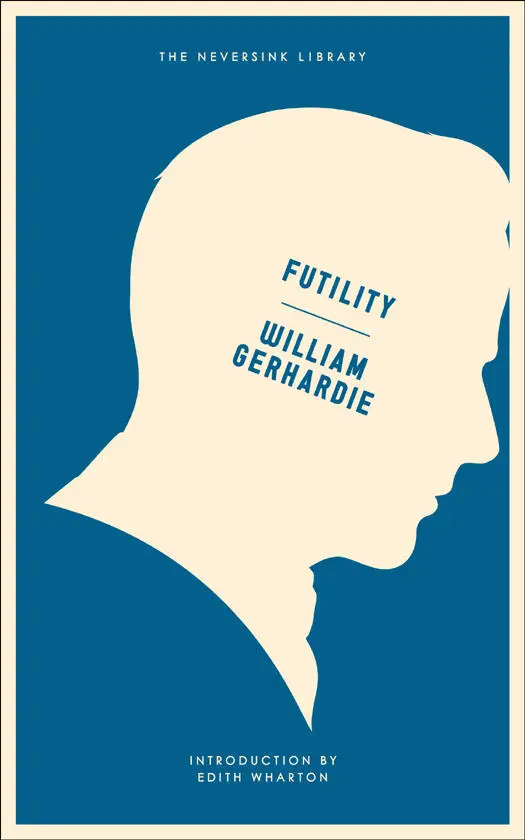
- Название:Futility
- Автор:
- Издательство:Melville House
- Жанр:
- Год:2012
- ISBN:нет данных
- Рейтинг книги:4 / 5. Голосов: 1
-
Избранное:Добавить в избранное
- Отзывы:
-
Ваша оценка:
Futility: краткое содержание, описание и аннотация
Предлагаем к чтению аннотацию, описание, краткое содержание или предисловие (зависит от того, что написал сам автор книги «Futility»). Если вы не нашли необходимую информацию о книге — напишите в комментариях, мы постараемся отыскать её.
one of the century's neglected masterpieces.
It tells the story of someone very similar to Gerhardie himself: a young Englishman raised in Russia who returns to St. Petersburg and falls in love with the daughter of a hilariously dysfunctional family-all played out with the armies of the Russian Revolution marching back and forth outside the parlor window.
Part British romantic comedy, part Russian social realism, and with a large cast of memorable characters, this astoundingly funny and poignant novel is the tale of people persisting in love and hope despite the odds.
Futility — читать онлайн бесплатно полную книгу (весь текст) целиком
Ниже представлен текст книги, разбитый по страницам. Система сохранения места последней прочитанной страницы, позволяет с удобством читать онлайн бесплатно книгу «Futility», без необходимости каждый раз заново искать на чём Вы остановились. Поставьте закладку, и сможете в любой момент перейти на страницу, на которой закончили чтение.
Интервал:
Закладка:
“Kolchak was impulsive and well-meaning,” said Eisenstein, “but unfortunate in his selection of a task. He dismissed General Ditrich, who wanted to give up Omsk to save the Army, and replaced him by General Saharov, who undertook to keep Omsk; whereon General Saharov lost both Omsk and the Army.”
“You Jews,” said the Admiral, “are all damned Bolsheviks.” When the Admiral spoke of Jews he was filled with anger and, curiously, his face assumed a kind of Semitic expression.
“I wasn’t, Admiral,” he said. “I might be one now. There may be a gleam of hope there at least. There’s none here.”
“ I wasn’t one,” said Kniaz, his eyes and nostrils flaming with passion, “till you Allies made me one!” The room grew still. We all turned round and stared at him. He had come in an hour or so ago, said nothing and consumed a box of chocolates all by himself. For twenty years or more he had said nothing. We felt that he had had ample time to think deep thoughts: and there at last he was pouring them out: giving us the benefit of all these years of silent contemplation: releasing the compressed fervour of his humiliated and down-trodden patriotism. “Kniaz! Kniaz!” cried Fanny Ivanovna in alarm. “Kniaz!”
But there was no stopping him. He spoke with the tremor and vehemence of a man who had held his tongue for twenty years. He overwhelmed us with surprise, but he seemed no less overwhelmed himself, flushed and marvelling at what was the matter with him. “Why I personally object to your meddling in our affairs,” he cried, “is because it implies the impression as if you could manage your own.” Fearful, flaming words spat from his fiery mouth. “Ireland. India. Egypt.” Etc., etc., etc.
An Admiral contradicted by an adult person not subject to Naval regulations is a man at a disadvantage.
“They are just a pack of damned Bolsheviks, the lot of them, that’s all they are,” said he.
“Jew-led, I suppose,” laughed Eisenstein.
“The Russian question,” said the Admiral, “is a very big question, and I do not propose to discuss it here.”
“You have made it into a big question,” they all shouted, “because you had not the imagination to foresee how it would grow into a big question when it was yet a little one.”
“I wonder,” said the Admiral, “if you have held these views consistently throughout the revolution, if you had always been opposed to our help?”
“Well,” said Kniaz, “when I thought you would back up a moderate democratic party I was at least more hopeful of the issue.”
“ Which ‘moderate party,’ pray?”
“Avksentiev’s Government. The Directorate.”
“Oh, those!” scoffed the Admiral. “They weren’t much good. They did not believe in armies, and fighting, and that sort of thing.”
Kniaz looked up at him and pondered over the Admiral’s uniform and probably thought that fighting, for the gallant sailor, was really an end in itself. And Kniaz concluded with the words: “And now having thoroughly muddled up our issues, you leave us to the tender mercies of the Japanese.” But Sir Hugo, conceiving that they were arguing beside the point, snatched that phrase from him and stepped in between them with much dignity. He must have felt that the occasion called for a clear brain like his own to clear the misunderstanding.
“I think, Prince Borisov” (and we all stared at Kniaz: it was indeed characteristic that Sir Hugo should be the first to know the Prince’s name), “that you are totally mistaken as to the object of the Allies in Siberia. You use that most unfortunate word ‘invasion.’ There was no question of ‘invasion.’ Our sole object in coming out to Russia, and the Admiral will confirm it, was to establish one indivisible national Russia by creating one strong united Russian Army — and that object, I am glad to say, we have now achieved.”
“One national Russia! Excuse me, but — but — but — but if there is any national Russia to-day it is all on the other side. As for the Russian Army, the only Russian Army now is the Bolshevik Army. The others have all melted away.”
“Ho! Kniaz is a Bolshevik!” cried Fanny Ivanovna.
“Ho! ho!” cried the others.
“I will not argue about details, Prince Borisov. I am not a biologist and I don’t dissect. And I don’t propose to be dragged into pedantic microscopic analysis as to which is the particular political party to which the army, for the moment, swears allegiance. I am satisfied that it is a strong Russian Army, which it has been our object to create. And I will now say good-bye to you, and I will ask you to accept my very best wishes for the welfare of your great country, sir, and your personal welfare, too. Good-bye.”
The Admiral and Sir Hugo then vanished with Nikolai Vasilievich, and Fanny Ivanovna went after them into the little hall to see them out, while I remained behind.
“Sonia! Vera! Nina!” came from Fanny Ivanovna. “How dark! Light the elektrichno !”
“Why don’t you tell her,” I said to the three sisters, “that it is not ‘elektrichno,’ but ‘elektrichestvo’ ?”
“We’ve told her hundreds of times,” they replied in unison, “but she will have it her own way ‘elektrichno’ and ‘elektrichno’ .”
The Admiral’s departure had set the ball spinning. Very soon the bulk of them was gone. And then the incredible happened. The three American boys arrived and took the three sisters to a dance. And on the eve of my departure! I heard their laughing voices in the street, as the door closed upon them. That settled it. How they enjoyed themselves! How they enjoyed life! As for me, I would have to go home and pack.… That settled it.
I sat alone with Nikolai Vasilievich and Fanny Ivanovna.
“Wasn’t Kniaz great?” said Nikolai Vasilievich.
“Who could have expected such eloquence from Kniaz?” said Fanny Ivanovna.
“Last night,” said Nikolai Vasilievich, “Fanny Ivanovna and Kniaz sat alone and drank. They were quite drunk when I got home.” And he laughed in a sad, kindly manner.
“We only had a little port,” said Fanny Ivanovna. “Kniaz drank but said nothing. He is a funny man. He bought some live chickens, and he keeps telling me every day at supper that he will bring me fresh eggs as soon as the chicks grow up and begin to lay. His contribution, you see, to the supper he consumes here! The chickens have had time to grow into old hens — but the eggs are not forthcoming. And when I say to him, ‘Kniaz, what about these eggs?’ he answers in a tone as though I had wronged him, ‘But, Fanny Ivanovna, they are only chickens yet.’ ”
“He is always borrowing money from me,” said Nikolai Vasilievich, “and he owes me many hundred thousand roubles — we have lost count, what with the exchange! — and two days ago he borrowed forty roubles just to pay his cab. He plays cards all day, and yesterday he won twenty thousand roubles; and, when Fanny Ivanovna suggested that he should pay me back, at any rate some of his debt, he gave me back the forty roubles!” Nikolai Vasilievich smiled again in a sad and kindly manner. What beautiful and kindly eyes he had.…
And then we talked of Petersburg and the old days, of pre-war Easter, and their charming house in the Mohovaya.
“And do you remember the Three Sisters , Nikolai Vasilievich?”
“Don’t I! I was so wild that night because I had to miss an appointment I had made with Zina. Oh, I was so wild that night.…” He looked at his watch.
“Well!” he said, and rose, yawning. “I’ve got to go.”
He put on his coat, for the night was fresh and damp, and his goloshes, as the roads were muddy. We heard the door close on him as he went out.
Читать дальшеИнтервал:
Закладка:
Похожие книги на «Futility»
Представляем Вашему вниманию похожие книги на «Futility» списком для выбора. Мы отобрали схожую по названию и смыслу литературу в надежде предоставить читателям больше вариантов отыскать новые, интересные, ещё непрочитанные произведения.











Обсуждение, отзывы о книге «Futility» и просто собственные мнения читателей. Оставьте ваши комментарии, напишите, что Вы думаете о произведении, его смысле или главных героях. Укажите что конкретно понравилось, а что нет, и почему Вы так считаете.