William Gerhardie - Futility
Здесь есть возможность читать онлайн «William Gerhardie - Futility» весь текст электронной книги совершенно бесплатно (целиком полную версию без сокращений). В некоторых случаях можно слушать аудио, скачать через торрент в формате fb2 и присутствует краткое содержание. Год выпуска: 2012, Издательство: Melville House, Жанр: Классическая проза, на английском языке. Описание произведения, (предисловие) а так же отзывы посетителей доступны на портале библиотеки ЛибКат.
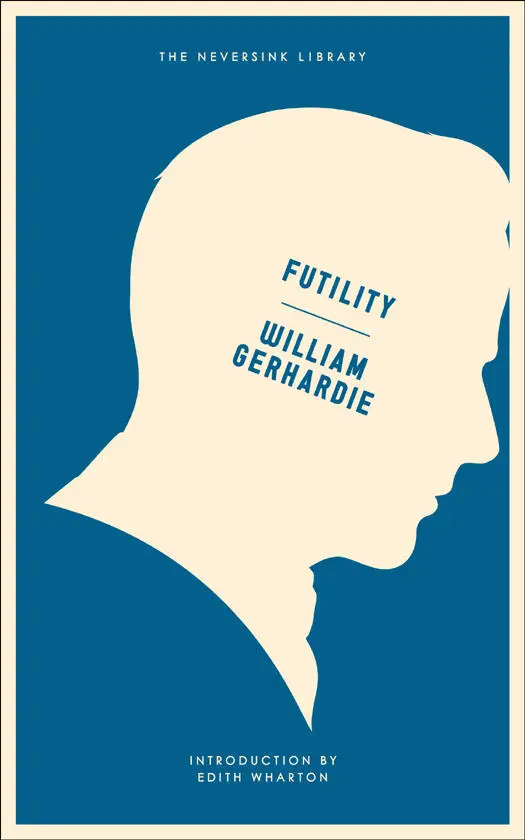
- Название:Futility
- Автор:
- Издательство:Melville House
- Жанр:
- Год:2012
- ISBN:нет данных
- Рейтинг книги:4 / 5. Голосов: 1
-
Избранное:Добавить в избранное
- Отзывы:
-
Ваша оценка:
Futility: краткое содержание, описание и аннотация
Предлагаем к чтению аннотацию, описание, краткое содержание или предисловие (зависит от того, что написал сам автор книги «Futility»). Если вы не нашли необходимую информацию о книге — напишите в комментариях, мы постараемся отыскать её.
one of the century's neglected masterpieces.
It tells the story of someone very similar to Gerhardie himself: a young Englishman raised in Russia who returns to St. Petersburg and falls in love with the daughter of a hilariously dysfunctional family-all played out with the armies of the Russian Revolution marching back and forth outside the parlor window.
Part British romantic comedy, part Russian social realism, and with a large cast of memorable characters, this astoundingly funny and poignant novel is the tale of people persisting in love and hope despite the odds.
Futility — читать онлайн бесплатно полную книгу (весь текст) целиком
Ниже представлен текст книги, разбитый по страницам. Система сохранения места последней прочитанной страницы, позволяет с удобством читать онлайн бесплатно книгу «Futility», без необходимости каждый раз заново искать на чём Вы остановились. Поставьте закладку, и сможете в любой момент перейти на страницу, на которой закончили чтение.
Интервал:
Закладка:
“How is Nikolai Vasilievich?” I asked.
“He is probably at the office … or else with Zina.”
“How are the mines?”
She only waved her hand.
“Hopeless?”
“Oh, he hopes —we all hope , of course.…”
“Well then,” said I, “… we must hope.”
Then Vera, radiant and marvellously pretty, came in. “Nina will come in five minutes,” she said.
“Not in five but in ten minutes,” came Nina’s voice, this time a whimsical voice.
I sat on the old sofa, and Sonia and Vera both stared at me in a curious manner, wondering, no doubt, why the dickens I had arrived.
Then the door of the adjoining room flew open, and Nina flitted in, shook hands without looking at me and flitted over to the window.
I still sat on the old sofa, of which the spring had burst, and no one spoke. It was a somewhat silly situation.
“That spring I am sitting on is burst,” I said at length.
“Oh, Vera burst it,” Nina said.
“It’s a lie!” Vera flared. “You know yourself you burst it last night when you jumped about with Ward.”
“No, it’s Vera,” Nina said.
“It’s a lie! a lie! a lie!”
“It really doesn’t matter in the least who burst it,” I intervened. “I noticed that the spring was burst because I happened to be sitting on it … otherwise everything seems to be very much the same.”
We sat still for a little while. Then Nina turned to me impulsively and said, “And you haven’t seen the three sisters!”
I stared at her with blank expression.
She ran out, and returning quickly, thrust three tiny kittens on my lap. The old cat followed her into the room and looked up at me suspiciously.
“This is Sonia. This is Nina. This is Vera,” she explained.
For a while we admired the “three sisters”; then with the same swift motion, she grabbed the kittens in her hands and carried them away. The old cat followed her back into the adjoining room.
Again there was silence. The canary in the cage went on: “Chic!.. cherric!..”
“And Andrei Andreiech always goes on with his ‘Chic!.. cherric!..’ ” said Nina.
“Which Andrei Andreiech?”
She pointed at the canary.
“What do you mean?”
“We call him Andrei Andreiech.”
“Why?”
“Oh, just so … there is something of you about him … something … unsubstantial.”
“Nina, come for a walk,” I said.
I helped her on with her coat.
We went by the Aleutskaya, bathed in sunshine, switched off down the Svetlanskaya and turned into a park overhanging the sea. Autumn stood at the door with its sombre moods of hopes frustrated, of joys gone, and aims blown to the wind, like leaves of autumn.
“Why did you come?” she said. “Why? I never asked you.”
“You told me that you love me,” I said.
“I never loved you.”
“Why did you lie then?” I cried.
“Go to the devil!” she answered, and turned her face away.
“I have been three months on the way … three months. Good God, Nina, travelling three months to come and see you — and there!..”
“It was an unusually long journey. You must have been moving very slowly.”
“There!” I went on protestingly, “I chuck Oxford, come all the way to Vladivostok, spend three months on the journey … because … because I love you, and you—”
“You have a speck of soot on your nose,” she remarked.
“Nina!” I cried laughing, my heart all weeping tears. “Nina!”
“Go and wash your face,” she said, “and then come back again. I’ll wait for you here.”
I gave it up. We sat together, saying nothing, and something about the autumn sun, the wind that came defiant from the roaring sea and harassed the fallen yellow leaves at our feet, suggested that I was late in the season with my love — perhaps too late. Tristan became a thing alien and remote, and I felt that I was singing in an altogether different opera.
IV
WE DID NOT GO HOME. SHE SAID, “I’M TIRED OF seeing Papa, Fanny Ivanovna and Kniaz. They always quarrel, always quarrel.… Kniaz is the best of the lot.” Instead we went to the Olenins who lived in a remote datcha by the sea. It was a place scarcely accessible by night, for there was not a light and the roads were pools of mud. The environment concentrated all the angry dogs and robbers in the town.
We found Sonia and Vera there chatting with the three American boys, now known as the “three brothers.” The hostess seated at the piano was sending forth sounds of syncopated music, and then the three sisters with their corresponding “brothers” jazzed, while I was left alone with my sense of the three months’ journey east gnawing at my heart.… The fact of the matter was that I failed to see exactly where I came in in this combination.
I strolled into the dining-room with its familiar pictures in gilt frames, poorly furnished. Colonel Olenin, now out of work, was playing cards with a brother officer, also out of work, and with Zina’s father, while a Japanese paying guest was looking on, picking his teeth the while. Madame Olenin, little Fanny clinging to her skirt, came up and stood, a little bored, and with that look of hers as though she could have loved a lot.
“You do not dance?” the paying guest inquired on our being introduced. “Why?”
“Andrei Andreiech is smitten,” said Madame Olenin.
“Ah!.. Iz zas so … zzz …?”
“Has lost his heart to Nina.”
The paying guest chuckled and picked his teeth. “Ah!.. Iz zas so?” he said and sucked his breath in “… zzz …” as Japanese do in their politeness. “Ah!.. Very nice! Very nice!”
“Andrei Andreiech wants to marry her,” continued Madame Olenin.
“Ah!.. Iz zas so?… zzz.… Very nice! Very nice!”
“But she doesn’t want to,” I said.
“Ask her,” she said.
“I have asked her. She won’t.”
“Well, you ask her again.”
“How many times?”
“Never mind how many times. Go on asking her. If you go on at it long enough any woman will give way. You go on asking her. Or else marry our little Olya, our little football. You’ll suit each other well.”
The paying guest chuckled loudly and picked his teeth.
She was trifling, trifling with a serious question, and I smiled, as one smiles on these occasions — an economic and reluctant smile.
I learnt that one of the veteran grandfathers had died a month ago; the other was alive. He sat and frowned before him, and little Fanny seemed to shun his frown each time she passed him in the dining-room. I spoke to him and found that he would not admit that any revolution had ever taken place in Russia. “Nonsense,” he kept saying. “Nonsense. In France there has been a revolution. But this is Russia. This is not France.”
“But — but what of the Bolsheviks?” I asked.
The antiquated veteran suddenly relapsed into a fit of anger. “I’ll show these Bolsheviks!” he threatened. “I’ll make them dance! I’ll stand no nonsense! Not I! They’ll soon see the man they’ve got to deal with! They’ll get short shrift from me, I can tell you! I’ll show these Bolsheviks! I’ll make them sing!..” The feeble old man was seized by a violent fit of coughing. His body shook and reeled, and his vain threats only emphasized the wretched impotence, the piteous weakness of his senility. Madame Olenin came to his rescue and beat him on the back to alleviate his coughing and prayed him not to talk of the wicked Bolsheviks as it was injurious to his health, but even through his coughing, choking hopelessly, he threatened angrily: “I’ll show these Bolsheviks! I’ll make them sing!.. these Bolsheviks! I’ll make them dance!” and then again relapsed into a violent fit of senile coughing.
Читать дальшеИнтервал:
Закладка:
Похожие книги на «Futility»
Представляем Вашему вниманию похожие книги на «Futility» списком для выбора. Мы отобрали схожую по названию и смыслу литературу в надежде предоставить читателям больше вариантов отыскать новые, интересные, ещё непрочитанные произведения.











Обсуждение, отзывы о книге «Futility» и просто собственные мнения читателей. Оставьте ваши комментарии, напишите, что Вы думаете о произведении, его смысле или главных героях. Укажите что конкретно понравилось, а что нет, и почему Вы так считаете.