Jan Slauerhoff - The Forbidden Kingdom
Здесь есть возможность читать онлайн «Jan Slauerhoff - The Forbidden Kingdom» весь текст электронной книги совершенно бесплатно (целиком полную версию без сокращений). В некоторых случаях можно слушать аудио, скачать через торрент в формате fb2 и присутствует краткое содержание. Год выпуска: 2013, Издательство: Pushkin Press, Жанр: Классическая проза, на английском языке. Описание произведения, (предисловие) а так же отзывы посетителей доступны на портале библиотеки ЛибКат.
- Название:The Forbidden Kingdom
- Автор:
- Издательство:Pushkin Press
- Жанр:
- Год:2013
- ISBN:нет данных
- Рейтинг книги:5 / 5. Голосов: 1
-
Избранное:Добавить в избранное
- Отзывы:
-
Ваша оценка:
The Forbidden Kingdom: краткое содержание, описание и аннотация
Предлагаем к чтению аннотацию, описание, краткое содержание или предисловие (зависит от того, что написал сам автор книги «The Forbidden Kingdom»). Если вы не нашли необходимую информацию о книге — напишите в комментариях, мы постараемся отыскать её.
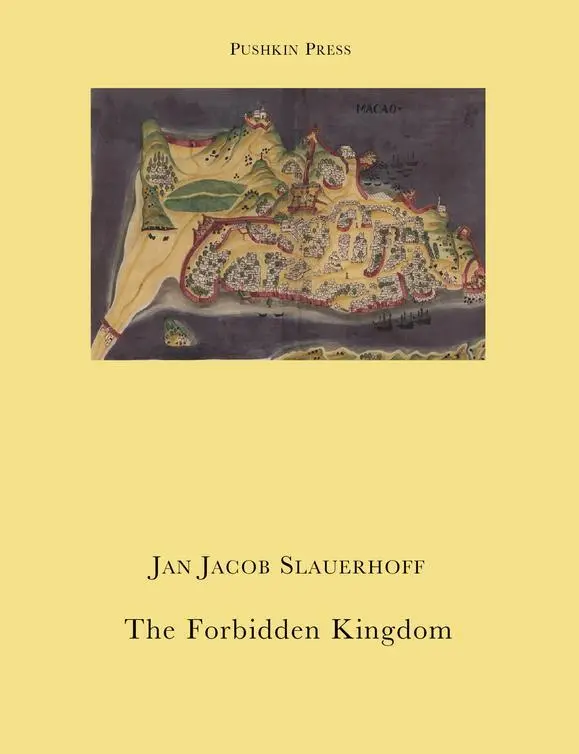
brings together the seemingly unrelated lives of a twentieth-century ship's radio operator and the sixteenth-century Portuguese poet-in-exile Luis Camoes.
Jacob Slauerhoff draws his reader into a dazzling world of exoticism, betrayal, and exile, where past and present merge and the possibility of death is never far away.
Born in The Netherlands in 1898, upon graduating from university
signed up as a ship's surgeon with the Dutch East India Company. He was at sea throughout his life, voyaging to the Far East, Latin America, and Africa.
The Forbidden Kingdom — читать онлайн бесплатно полную книгу (весь текст) целиком
Ниже представлен текст книги, разбитый по страницам. Система сохранения места последней прочитанной страницы, позволяет с удобством читать онлайн бесплатно книгу «The Forbidden Kingdom», без необходимости каждый раз заново искать на чём Вы остановились. Поставьте закладку, и сможете в любой момент перейти на страницу, на которой закончили чтение.
Интервал:
Закладка:
Finally, after a more protracted period of darkness, he got up and caught sight of a black cross, which a cathedral on a hill was thrusting into the sky. In the lower town he kept losing sight of it, but he persisted in trying to find it and finally found himself at the foot of a wide flight of steps and saw a wide front surmounted by the steep front of the cathedral above it and very far away the black cross boring into the grey night sky. He climbed the steps slowly, with head bowed, so as not to lose his footing: the steps were crumbling and slippery. When he could feel no more steps he looked up and was standing at the edge of the cathedral precinct. The front of the church was black, like an awesome vertical coffin, and no light came anywhere from the stained-glass windows. He knew that something dreadful was hiding behind this dead expanse. He could not go back; it was as if the steps had collapsed behind him, so that there was a yawning abyss behind him, and he went giddily and quickly towards the church.
He stood in front of it: the windows were high, the gate closed; he piled a number of stones, hung over a window sill with his upper body inside and saw that behind this façade the church had been eaten away; he glanced into the empty space paved with gravestones. Vultures sat on the remains of rotten pews. He fell down into it, they flew up and one skimmed past him, so that he stumbled over a boulder and then fell through a decayed choir stall. He thrashed around in a soft mass of wood, and the mouldy dust blocked his eyes and nose. He finally rose to his feet half choked. In the meantime the church was fully resurrected and full of figures walking to and fro, most of them climbing onto sacks of pews at the windows and firing outside with heavy muskets. At one window an old monk was operating a cannon. Every so often a bullet would whistle through the church. He was standing near the altar. A man in military dress but with a silvery wreath of hair around a bald scalp pressed an old gun into his hand, in the name of God. He positioned himself at a window and ran his fingers over the rusty breech and barrel. There were bullets on the window sill. He looked down at the slope of the hill on which the church was built, which figures were trying to climb; some of them were constantly falling, and involuntarily he began firing into the mass. He felt the jolts of the heavy musket against his shoulder. But he did not hear the report and saw the flash only seconds later.
The ghostly battle lasted for many hours. Finally, as the sky was turning grey as if it were morning, the defenders, including him, jumped out of the windows, and drove the attackers back. He saw them close up, and at first did not understand why he was fighting against them and with the others, since they were both equally alien to him.
Then he saw that those he was fighting belonged to a race of which he had recently been part, but he remained indifferent; he could just as well have turned round and fought with them against the defenders of the church, but he did not.
He stopped, with the musket, which he intended to use as a club, and stood at ease. A black adversary mistook his ease for fear and leapt on him; he saw the bulging eyes in front of him and a wild fury at the thought of being seized by someone of the race of slaves led him to attack again: he jumped back and felled the black with a blow of his gun butt. Then he dived back into the fray, seeing nothing more, fighting his way forward until he collapsed and lay where he fell. He could feel himself being walked over, but not being carried away.
III
THE NEXT MORNING the Procurador sat alone in the quietest and darkest room in his house, but there too he could hear the bells ringing and there were many of them, summoning the population to the churches. Thanksgiving masses were celebrated in all the churches. The Procurador’s absence from the cathedral would be noticed, and his reputation as a priest-hater would grow further. He bit back his fury, unable to rejoice at being rescued from the awkward siege.
Had it not been for two events, the victory of his small garrison of two hundred men (the rest were away on an expedition along the coast destroying nests of pirates) over a seaborne army of two thousand would have been eternally attributed to him. But Father Antonio’s well-aimed shot, which hit the powder magazine of the flagship, saved Macao as its ammunition was on the point of running out.
He had had to visit the hero in the Dominican hospital and was the first to recognize him.
The embassy had been given up for years. Not a soul had returned; a later embassy, which did manage to reach Beijing, had heard no word of them. So it was assumed that all had perished en route from hunger, or been murdered by hostile Chinese.
Camões.
Even more dangerous than when he washed up here: if he could then be safely presented as a deserter, now the people would sing his praises and it was harder to frustrate the people than the priesthood. He must be eliminated at all costs.
As the Procurador leant over him and with seeming pity surveyed his deathly pale face, he had quickly made a plan. He gave orders for the sick man to be brought to his house. His own physician would attend him. It had been an unexpected triumphal procession, with himself on horseback ahead of the litter, but he was well aware that the acclaim was for the stranger, whose body was covered by the canvas, and not for him.
After a day he regained consciousness. Campos had ordered the guard, his oldest servant, who knew no Portuguese, to call him immediately when the patient opened his eyes. Cautiously he began questioning him.
“What happened? Where were you attacked?”
From his first answers Campos realized to his great relief that Camões must have lost his memory and no longer knew anything about it. Greatly satisfied, he left the sickroom. He would have no further trouble from this quarter: Father Antonio was old and would soon die. He was still reminded of Velho’s enmity now and then, when negotiations with a Cantonese mandarin suddenly and inexplicably broke down. And it was sometimes as if in Lisbon Macao had been forgotten about as a possession; sometimes no ship or orders arrived for a whole year. The city freed itself and stood alone at a vast distance, with no need for rebellion to gain its freedom.
He had the sick man transferred at night by two trusted agents to the Casa de Misericordia, with instructions that he should not receive good care.
After a few days he had escaped and soon the rumour spread that the hero of the siege, who had saved the city, had become a hermit and was living in a kind of cave on the hill above the city. A flat stone lay across two boulders, creating a kind of shelter, under which it was fairly cool and dry. At first people did come to him to seek a cure for ailments, and to ask him to lay on hands, but he never answered and he was soon forgotten, so that Campos did not need to intervene.
He received two more visits before he was totally swallowed up by oblivion. Father Antonio, who had led the defence of São Paulo cathedral, came and was anxious to make him a religious hero, if possible a saint, whose confused utterances could be interpreted as visions. But Camões said nothing at all and stared blankly right through the monk.
The second visit was from Pilar, who apart from her father was the only one to recognize him. She almost fell to her knees when she saw what he had become. He did not recognize her, which actually came as a relief. Since she had borne Ronquilho’s children, she had resigned herself to the fate that, as she now knew, awaits almost all women, all Chinese and virtually all white women: to acquire a husband they do not love, who is at best indifferent to them, and to conceive and bring up his children. Campos’s prophecy had proved correct: when there were children, fanciful passions evaporated by themselves.
Читать дальшеИнтервал:
Закладка:
Похожие книги на «The Forbidden Kingdom»
Представляем Вашему вниманию похожие книги на «The Forbidden Kingdom» списком для выбора. Мы отобрали схожую по названию и смыслу литературу в надежде предоставить читателям больше вариантов отыскать новые, интересные, ещё непрочитанные произведения.







Обсуждение, отзывы о книге «The Forbidden Kingdom» и просто собственные мнения читателей. Оставьте ваши комментарии, напишите, что Вы думаете о произведении, его смысле или главных героях. Укажите что конкретно понравилось, а что нет, и почему Вы так считаете.