Jan Slauerhoff - The Forbidden Kingdom
Здесь есть возможность читать онлайн «Jan Slauerhoff - The Forbidden Kingdom» весь текст электронной книги совершенно бесплатно (целиком полную версию без сокращений). В некоторых случаях можно слушать аудио, скачать через торрент в формате fb2 и присутствует краткое содержание. Год выпуска: 2013, Издательство: Pushkin Press, Жанр: Классическая проза, на английском языке. Описание произведения, (предисловие) а так же отзывы посетителей доступны на портале библиотеки ЛибКат.
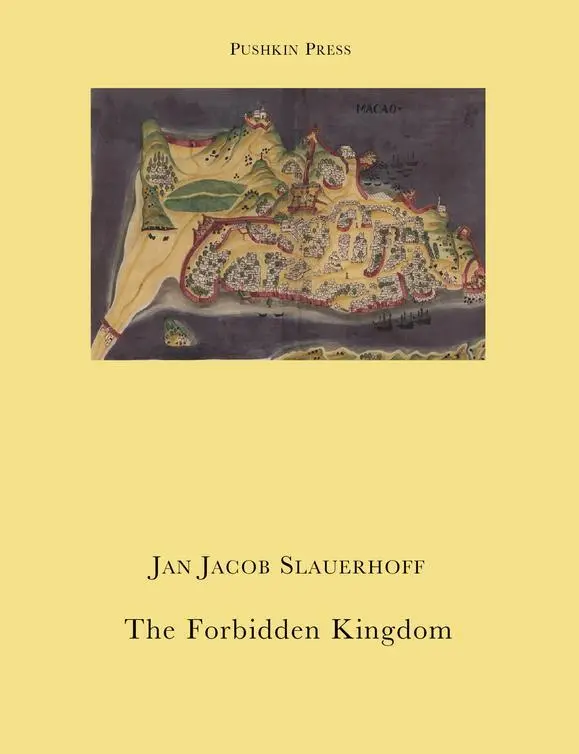
- Название:The Forbidden Kingdom
- Автор:
- Издательство:Pushkin Press
- Жанр:
- Год:2013
- ISBN:нет данных
- Рейтинг книги:5 / 5. Голосов: 1
-
Избранное:Добавить в избранное
- Отзывы:
-
Ваша оценка:
The Forbidden Kingdom: краткое содержание, описание и аннотация
Предлагаем к чтению аннотацию, описание, краткое содержание или предисловие (зависит от того, что написал сам автор книги «The Forbidden Kingdom»). Если вы не нашли необходимую информацию о книге — напишите в комментариях, мы постараемся отыскать её.
brings together the seemingly unrelated lives of a twentieth-century ship's radio operator and the sixteenth-century Portuguese poet-in-exile Luis Camoes.
Jacob Slauerhoff draws his reader into a dazzling world of exoticism, betrayal, and exile, where past and present merge and the possibility of death is never far away.
Born in The Netherlands in 1898, upon graduating from university
signed up as a ship's surgeon with the Dutch East India Company. He was at sea throughout his life, voyaging to the Far East, Latin America, and Africa.
The Forbidden Kingdom — читать онлайн бесплатно полную книгу (весь текст) целиком
Ниже представлен текст книги, разбитый по страницам. Система сохранения места последней прочитанной страницы, позволяет с удобством читать онлайн бесплатно книгу «The Forbidden Kingdom», без необходимости каждый раз заново искать на чём Вы остановились. Поставьте закладку, и сможете в любой момент перейти на страницу, на которой закончили чтение.
Интервал:
Закладка:
The waiting man stared at him blankly. Then the purser, who realized that the man did understand him , tried to explain that he must have a ticket if he wanted to sail on the boat. If he wanted to work as a porter, he must buttonhole the passengers coming from the rickshaws, but a white man couldn’t really do that. If on the other hand he didn’t want anything at all, it would be best if he didn’t hang around that post, where he was getting in everyone’s way, but instead sat on a bench in the park — that was no problem. The pariah did not go away. He replied — to the harbour-master’s renewed rage, again in English — that he had to get to Macao, and had money, but that no one would accept it. Even if they kicked him off the ship ten times, he would still jump back on an eleventh time. The purser was prepared to have a look at that non-legal tender and was shown a few coins that at first seemed to him to be copper, and he was about to return them contemptuously. But when he examined them more closely they looked like old gold coins from Macao, which he must have once seen in his grandfather’s coin collections. This man was someone who had been driven crazy by treasure-hunting, but he did seem to have found a hoard! Perhaps it was possible to get some more out of him.
“That thing isn’t worth anything. But for three I’ll let you have a third-class passage.”
“Must I, who was once a member of the great embassy to Beijing, be put in steerage?”
“That embassy didn’t do you any good. What was your job?”
It was as if the man had been seen through, caught cheating and he winced.
“And you’re not dressed for first-class travel. Come on, what kind of fancy-dress party did you steal those ceremonial clothes from?”
The man retreated a few paces, but came back, grabbed the post as if his life depended on it, hanging onto it as if he could no longer stand, as if he had no ground beneath his feet.
“Why don’t you speak your own language?” the purser continued in English. The man didn’t hear, gazed into the water, and tears ran down his sunken cheeks and were caught in his stubble.
“I’ll give you an empty cabin. But don’t show your face again before everyone has disembarked. Understood?” yelled the purser, who was again calculating how he could rob him en route of the secret of the treasure or whatever it was he had with him. He nodded and ran quickly towards the gangplank as if it were his last chance of rescue.
The purser took him forward to a cabin full of rotting life jackets, which had not been opened for months. Still, the man seemed happy to be alone, and gave the purser another coin, slumped onto the crumbling cork and no longer moved. The vermin, which had at first crawled away, gradually returned and marched over his feet, and later over his clothes, but the swarm soon abandoned this field of operations.
After an hour the ship began creaking and rocking; he gave a sigh and got up. Then the door opened and the fat purser stood in the doorway and behind him a boy with a tray. He asked to be left alone. But the boy put the tray at his feet, and the purser sat down opposite him on another pile. “Have some tiffin,” he offered hospitably. The man tried, but couldn’t eat.
“If you’ve got any more of those coins, I’ll change them for you. And if you want to play fan-tan, I’ll teach you a system that will do brilliantly compared with the bank’s ten per cent.”
The purser waited. He now hoped to hear something about the location of the coins. But the man opposite him said nothing, but simply took hold of the water jug, emptied it and sighed.
“Those coins won’t be any good to you in Macao either, if that’s what you’re thinking. The casinos won’t touch them.”
The man took another handful of coins out of his pocket.
“I don’t know what fan-tan is. That’s all I’ve got.”
“But where are the rest then? Where did you find them?”
“Oh, a long way away, a long way from here. No one can go there. And there aren’t any left.”
The purser put the coins in his pocket, gave the man ten Mexican dollars and regarded the business as concluded. Looking back, he thought he had been ridiculously honest. Had he felt sorry for the man?
II
THE NEXT MORNING the Sui An started to sail around the peninsula. On the upper deck a few white men in white suits were walking around. On the deck below the Chinese were milling about. Macao lay impassively and gazed resentfully at the arrival of the steamer over the hosts of junks choking the bay in dense flocks, a great suburb across the water. The Sui An went through a narrow channel between them and moored at the ramshackle jetty.
The whites went ashore first, stepping into the waiting carriages, leant back and drove off. Then the passengers from steerage spilt from the ship across the quay. And last of all he left the ship. The purser lost sight of him.
He went into town, passed various hotels and ended up in an old inn in a narrow street. He obtained a room for one of his dollars. There was nothing in it but a kang sleeping platform with a headrest — no mosquito net. The light entered through a narrow window, high up between wall and ceiling.
He pushed the headrest off the kang and put his bundle of clothes in its place, which was warmer but softer. He stretched out and lay still. A boy brought in a pot of tea without a sound. He did not seem to be thirsty. It was getting on for supper time. The sickly sweet odour of rotting meat and dried octopus penetrated the room through the window, together with the clatter of crockery and the squeals of children. He did not move; neither heat nor insects, neither stench nor noise bothered him. His spirit had left his miserable body lying there for now and had set out to explore the town, which had already started dying a century ago, and now scarcely existed any more.
And in that way he easily found his way to the past. It was as if he were descending into a mine, and seeing the successive strata in a dim light. He finally reached the time when the castle and the first cathedrals were built and Guia lighthouse shone its light across the bay to show ships the way, a light unknown elsewhere in Asia. He could get no further. Down below, though, he did see another landing, a few tents on a beach, grave crosses, fishermen’s huts, a temple among the rocks, but all this remained dim and he went back. One of the temples he had seen was on fire, and smoke flew ahead of the flames. Black masses of people moved about. He tried to climb higher, but could not, struggled, after being seized from all sides, and woke on the hard bed, drenched with fearful sweat. The stench and din were unbearable to him now. He tossed and turned and when darkness fell he left the inn.
Outside, however, the light was still bright, and so for the time being he roamed the narrow streets of the old town and avoided the ocean side. Chinese and Portuguese districts kept alternating, so intimately mixed was the blood of the two races in the veins of the people of Macao. Only the Praia Grande was as pure as the three or four old families, who lived around it in magnificent mansions.
The sea wind twisted dwarf willows around the edge and occasionally hurled a blob of foam over the balustrade. Coolies spaced at equal distances sat resting on the stones. Every so often a carriage rolled past. On the other side facing the island a few junks were rocking.
Sitting among the coolies, he rested from the afternoon’s bleak journey. Now everything could be viewed as in an old copper engraving. When it was completely dark, he intended to leave. But the moon rose over the Praia Grande, and the houses and roofs became visible again, now coloured antique gold, until a cloud again blotted everything out. This was repeated many times and in his memory the periods passed like high and low tide.
Читать дальшеИнтервал:
Закладка:
Похожие книги на «The Forbidden Kingdom»
Представляем Вашему вниманию похожие книги на «The Forbidden Kingdom» списком для выбора. Мы отобрали схожую по названию и смыслу литературу в надежде предоставить читателям больше вариантов отыскать новые, интересные, ещё непрочитанные произведения.









Обсуждение, отзывы о книге «The Forbidden Kingdom» и просто собственные мнения читателей. Оставьте ваши комментарии, напишите, что Вы думаете о произведении, его смысле или главных героях. Укажите что конкретно понравилось, а что нет, и почему Вы так считаете.