Jack London - Burning Daylight
Здесь есть возможность читать онлайн «Jack London - Burning Daylight» весь текст электронной книги совершенно бесплатно (целиком полную версию без сокращений). В некоторых случаях можно слушать аудио, скачать через торрент в формате fb2 и присутствует краткое содержание. Год выпуска: 1910, Жанр: Классическая проза, Природа и животные, Путешествия и география, на английском языке. Описание произведения, (предисловие) а так же отзывы посетителей доступны на портале библиотеки ЛибКат.
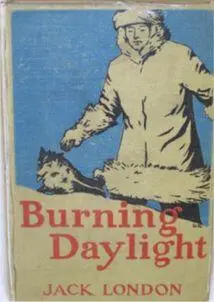
- Название:Burning Daylight
- Автор:
- Жанр:
- Год:1910
- ISBN:нет данных
- Рейтинг книги:5 / 5. Голосов: 1
-
Избранное:Добавить в избранное
- Отзывы:
-
Ваша оценка:
Burning Daylight: краткое содержание, описание и аннотация
Предлагаем к чтению аннотацию, описание, краткое содержание или предисловие (зависит от того, что написал сам автор книги «Burning Daylight»). Если вы не нашли необходимую информацию о книге — напишите в комментариях, мы постараемся отыскать её.
Burning Daylight — читать онлайн бесплатно полную книгу (весь текст) целиком
Ниже представлен текст книги, разбитый по страницам. Система сохранения места последней прочитанной страницы, позволяет с удобством читать онлайн бесплатно книгу «Burning Daylight», без необходимости каждый раз заново искать на чём Вы остановились. Поставьте закладку, и сможете в любой момент перейти на страницу, на которой закончили чтение.
Интервал:
Закладка:
A wildly exciting time was his during the week preceding Thursday the eighteenth. Not only was he gambling as he had never gambled before, but he was gambling at the biggest table in the world and for stakes so large that even the case-hardened habitues of that table were compelled to sit up. In spite of the unlimited selling, his persistent buying compelled Ward Valley steadily to rise, and as Thursday approached, the situation became acute. Something had to smash. How much Ward Valley was this Klondike gambler going to buy? How much could he buy? What was the Ward Valley crowd doing all this time? Daylight appreciated the interviews with them that appeared—interviews delightfully placid and non-committal. Leon Guggenhammer even hazarded the opinion that this Northland Croesus might possibly be making a mistake. But not that they cared, John Dowsett explained. Nor did they object. While in the dark regarding his intentions, of one thing they were certain; namely, that he was bulling Ward Valley. And they did not mind that. No matter what happened to him and his spectacular operations, Ward Valley was all right, and would remain all right, as firm as the Rock of Gibraltar. No; they had no Ward Valley to sell, thank you. This purely fictitious state of the market was bound shortly to pass, and Ward Valley was not to be induced to change the even tenor of its way by any insane stock exchange flurry. "It is purely gambling from beginning to end," were Nathaniel Letton's words; "and we refuse to have anything to do with it or to take notice of it in any way."
During this time Daylight had several secret meetings with his partners—one with Leon Guggenhammer, one with John Dowsett, and two with Mr. Howison. Beyond congratulations, they really amounted to nothing; for, as he was informed, everything was going satisfactorily.
But on Tuesday morning a rumor that was disconcerting came to Daylight's ears. It was also published in the Wall Street Journal, and it was to the effect, on apparently straight inside information, that on Thursday, when the directors of Ward Valley met, instead of the customary dividend being declared, an assessment would be levied. It was the first check Daylight had received. It came to him with a shock that if the thing were so he was a broken man. And it also came to him that all this colossal operating of his was being done on his own money. Dowsett, Guggenhammer, and Letton were risking nothing. It was a panic, short-lived, it was true, but sharp enough while it lasted to make him remember Holdsworthy and the brick-yard, and to impel him to cancel all buying orders while he rushed to a telephone.
"Nothing in it—only a rumor," came Leon Guggenhammer's throaty voice in the receiver. "As you know," said Nathaniel Letton, "I am one of the directors, and I should certainly be aware of it were such action contemplated." And John Dowsett: "I warned you against just such rumors. There is not an iota of truth in it—certainly not. I tell you on my honor as a gentleman."
Heartily ashamed of himself for his temporary loss of nerve, Daylight returned to his task. The cessation of buying had turned the Stock Exchange into a bedlam, and down all the line of stocks the bears were smashing. Ward Valley, as the ape, received the brunt of the shock, and was already beginning to tumble. Daylight calmly doubled his buying orders. And all through Tuesday and Wednesday, and Thursday morning, he went on buying, while Ward Valley rose triumphantly higher. Still they sold, and still he bought, exceeding his power to buy many times over, when delivery was taken into account. What of that? On this day the double dividend would be declared, he assured himself. The pinch of delivery would be on the shorts. They would be making terms with him.
And then the thunderbolt struck. True to the rumor, Ward Valley levied the assessment. Daylight threw up his arms. He verified the report and quit. Not alone Ward Valley, but all securities were being hammered down by the triumphant bears. As for Ward Valley, Daylight did not even trouble to learn if it had fetched bottom or was still tumbling. Not stunned, not even bewildered, while Wall Street went mad, Daylight withdrew from the field to think it over. After a short conference with his brokers, he proceeded to his hotel, on the way picking up the evening papers and glancing at the head-lines. BURNING DAYLIGHT CLEANED OUT, he read; DAYLIGHT GETS HIS; ANOTHER WESTERNER FAILS TO FIND EASY MONEY. As he entered his hotel, a later edition announced the suicide of a young man, a lamb, who had followed Daylight's play.
What in hell did he want to kill himself for? was Daylight's muttered comment.
He passed up to his rooms, ordered a Martini cocktail, took off his shoes, and sat down to think. After half an hour he roused himself to take the drink, and as he felt the liquor pass warmingly through his body, his features relaxed into a slow, deliberate, yet genuine grin. He was laughing at himself.
"Buncoed, by gosh!" he muttered.
Then the grin died away, and his face grew bleak and serious. Leaving out his interests in the several Western reclamation projects (which were still assessing heavily), he was a ruined man. But harder hit than this was his pride. He had been so easy. They had gold-bricked him, and he had nothing to show for it. The simplest farmer would have had documents, while he had nothing but a gentleman's agreement, and a verbal one at that. Gentleman's agreement. He snorted over it. John Dowsett's voice, just as he had heard it in the telephone receiver, sounded in his ears the words, "On my honor as a gentleman." They were sneak-thieves and swindlers, that was what they were, and they had given him the double-cross. The newspapers were right. He had come to New York to be trimmed, and Messrs. Dowsett, Letton, and Guggenhammer had done it. He was a little fish, and they had played with him ten days—ample time in which to swallow him, along with his eleven millions. Of course, they had been unloading on him all the time, and now they were buying Ward Valley back for a song ere the market righted itself. Most probably, out of his share of the swag, Nathaniel Letton would erect a couple of new buildings for that university of his. Leon Guggenhammer would buy new engines for that yacht, or a whole fleet of yachts. But what the devil Dowsett would do with his whack, was beyond him—most likely start another string of banks.
And Daylight sat and consumed cocktails and saw back in his life to Alaska, and lived over the grim years in which he had battled for his eleven millions. For a while murder ate at his heart, and wild ideas and sketchy plans of killing his betrayers flashed through his mind. That was what that young man should have done instead of killing himself. He should have gone gunning. Daylight unlocked his grip and took out his automatic pistol—a big Colt's .44. He released the safety catch with his thumb, and operating the sliding outer barrel, ran the contents of the clip through the mechanism. The eight cartridges slid out in a stream. He refilled the clip, threw a cartridge into the chamber, and, with the trigger at full cock, thrust up the safety ratchet. He shoved the weapon into the side pocket of his coat, ordered another Martini, and resumed his seat.
He thought steadily for an hour, but he grinned no more. Lines formed in his face, and in those lines were the travail of the North, the bite of the frost, all that he had achieved and suffered—the long, unending weeks of trail, the bleak tundra shore of Point Barrow, the smashing ice-jam of the Yukon, the battles with animals and men, the lean-dragged days of famine, the long months of stinging hell among the mosquitoes of the Koyokuk, the toil of pick and shovel, the scars and mars of pack-strap and tump-line, the straight meat diet with the dogs, and all the long procession of twenty full years of toil and sweat and endeavor.
Читать дальшеИнтервал:
Закладка:
Похожие книги на «Burning Daylight»
Представляем Вашему вниманию похожие книги на «Burning Daylight» списком для выбора. Мы отобрали схожую по названию и смыслу литературу в надежде предоставить читателям больше вариантов отыскать новые, интересные, ещё непрочитанные произведения.





Обсуждение, отзывы о книге «Burning Daylight» и просто собственные мнения читателей. Оставьте ваши комментарии, напишите, что Вы думаете о произведении, его смысле или главных героях. Укажите что конкретно понравилось, а что нет, и почему Вы так считаете.