Теодор Драйзер - The Genius
Здесь есть возможность читать онлайн «Теодор Драйзер - The Genius» весь текст электронной книги совершенно бесплатно (целиком полную версию без сокращений). В некоторых случаях можно слушать аудио, скачать через торрент в формате fb2 и присутствует краткое содержание. Год выпуска: 2014, Издательство: epubBooks Classics, Жанр: Классическая проза, на английском языке. Описание произведения, (предисловие) а так же отзывы посетителей доступны на портале библиотеки ЛибКат.
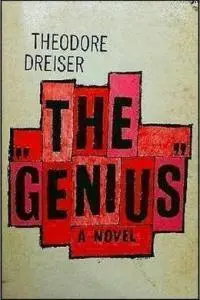
- Название:The Genius
- Автор:
- Издательство:epubBooks Classics
- Жанр:
- Год:2014
- ISBN:нет данных
- Рейтинг книги:4 / 5. Голосов: 1
-
Избранное:Добавить в избранное
- Отзывы:
-
Ваша оценка:
The Genius: краткое содержание, описание и аннотация
Предлагаем к чтению аннотацию, описание, краткое содержание или предисловие (зависит от того, что написал сам автор книги «The Genius»). Если вы не нашли необходимую информацию о книге — напишите в комментариях, мы постараемся отыскать её.
The Genius — читать онлайн бесплатно полную книгу (весь текст) целиком
Ниже представлен текст книги, разбитый по страницам. Система сохранения места последней прочитанной страницы, позволяет с удобством читать онлайн бесплатно книгу «The Genius», без необходимости каждый раз заново искать на чём Вы остановились. Поставьте закладку, и сможете в любой момент перейти на страницу, на которой закончили чтение.
Интервал:
Закладка:
Chapter XXVI
The situation which here presented itself was subject to no such gracious and generous development. Angela was the soul of watchfulness, insistence on duty, consideration for right conduct and for the privileges, opportunities and emoluments which belonged to her as the wife of a talented artist, temporarily disabled, it is true, but certain to be distinguished in the future. She was deluding herself that this recent experience of reverses had probably hardened and sharpened Eugene's practical instincts, made him less indifferent to the necessity of looking out for himself, given him keener instincts of self–protection and economy. He had done very well to live on so little she thought, but they were going to do better—they were going to save. She was going to give up those silly dreams she had entertained of a magnificent studio and hosts of friends, and she was going to start now saving a fraction of whatever they made, however small it might be, if it were only ten cents a week. If Eugene could only make nine dollars a week by working every day, they were going to live on that. He still had ninety–seven of the hundred dollars he had brought with him, he told her, and this was going in the bank. He did not tell her of the sale of one of his pictures and of the subsequent dissipation of the proceeds. In the bank, too, they were going to put any money from subsequent sales until he was on his feet again. One of these days if they ever made any money, they were going to buy a house somewhere in which they could live without paying rent. Some of the money in the bank, a very little of it, might go for clothes if worst came to worst, but it would not be touched unless it was absolutely necessary. She needed clothes now, but that did not matter. To Eugene's ninety–seven was added Angela's two hundred and twenty–eight which she brought with her, and this total sum of three hundred and twenty–five dollars was promptly deposited in the Bank of Riverwood.
Angela by personal energy and explanation found four rooms in the house of a furniture manufacturer; it had been vacated by a daughter who had married, and they were glad to let it to an artist and his wife for practically nothing so far as real worth was concerned, for this was a private house in a lovely lawn. Twelve dollars per month was the charge. Mrs. Witla seemed very charming to Mrs. Desenas, who was the wife of the manufacturer, and for her especial benefit a little bedroom on the second floor adjoining a bath was turned into a kitchen, with a small gas stove, and Angela at once began housekeeping operations on the tiny basis necessitated by their income. Some furniture had to be secured, for the room was not completely furnished, but Angela by haunting the second–hand stores in New York, looking through all the department stores, and visiting certain private sales, managed to find a few things which she could buy cheaply and which would fit in with the dressing table, library table, dining table and one bed which were already provided. The necessary curtains for the bath and kitchen windows she cut, decorated and hung for herself. She went down to the storage company where the unsold and undisplayed portion of Eugene's pictures were and brought back seven, which she placed in the general living–room and dining–room. All Eugene's clothes, his underwear and socks particularly, received her immediate attention, and she soon had his rather attenuated wardrobe in good condition. From the local market she bought good vegetables and a little meat and made delightful stews, ragouts, combinations of eggs and tasty meat juices after the French fashion. All her housekeeping art was employed to the utmost to make everything look clean and neat, to maintain a bountiful supply of varied food on the table and yet to keep the cost down, so that they could not only live on nine dollars a week, but set aside a dollar or more of that for what Angela called their private bank account. She had a little hollow brown jug, calculated to hold fifteen dollars in change, which could be opened when full, which she conscientiously endeavored to fill and refill. Her one desire was to rehabilitate her husband in the eyes of the world—this time to stay—and she was determined to do it.
For another thing, reflection and conversation with one person and another had taught her that it was not well for herself or for Eugene for her to encourage him in his animal passions. Some woman in Blackwood had pointed out a local case of locomotor–ataxia which had resulted from lack of self–control, and she had learned that it was believed that many other nervous troubles sprang from the same source. Perhaps Eugene's had. She had resolved to protect him from himself. She did not believe she could be injured, but Eugene was so sensitive, so emotional.
The trouble with the situation was that it was such a sharp change from his recent free and to him delightful mode of existence that it was almost painful. He could see that everything appeared to be satisfactory to her, that she thought all his days had been moral and full of hard work. Carlotta's presence in the background was not suspected. Her idea was that they would work hard together now along simple, idealistic lines to the one end—success for him, and of course, by reflection, for her.
Eugene saw the charm of it well enough, but it was only as something quite suitable for others. He was an artist. The common laws of existence could not reasonably apply to an artist. The latter should have intellectual freedom, the privilege of going where he pleased, associating with whom he chose. This marriage business was a galling yoke, cutting off all rational opportunity for enjoyment, and he was now after a brief period of freedom having that yoke heavily adjusted to his neck again. Gone were all the fine dreams of pleasure and happiness which so recently had been so real—the hope of living with Carlotta—the hope of associating with her on easy and natural terms in that superior world which she represented. Angela's insistence on the thought that he should work every day and bring home nine dollars a week, or rather its monthly equivalent, made it necessary for him to take sharp care of the little money he had kept out of the remainder of the three hundred in order to supply any deficiency which might occur from his taking time off. For there was no opportunity now of seeing Carlotta of an evening, and it was necessary to take a regular number of afternoons or mornings off each week, in order to meet her. He would leave the little apartment as usual at a quarter to seven in the morning, dressed suitably for possible out–door expeditions, for in anticipation of difficulty he had told Angela that it was his custom to do this, and sometimes he would go to the factory and sometimes he would not. There was a car line which carried him rapidly cityward to a rendezvous, and he would either ride or walk with her as the case might be. There was constant thought on his and her part of the risk involved, but still they persisted. By some stroke of ill or good fortune Norman Wilson returned from Chicago, so that Carlotta's movements had to be calculated to a nicety, but she did not care. She trusted most to the automobiles which she could hire at convenient garages and which would carry them rapidly away from the vicinity where they might be seen and recognized.
It was a tangled life, difficult and dangerous. There was no peace in it, for there is neither peace nor happiness in deception. A burning joy at one time was invariably followed by a disturbing remorse afterward. There was Carlotta's mother, Norman Wilson, and Angela, to guard against, to say nothing of the constant pricking of his own conscience.
It is almost a foregone conclusion in any situation of this kind that it cannot endure. The seed of its undoing is in itself. We think that our actions when unseen of mortal eyes resolve themselves into nothingness, but this is not true. They are woven indefinably into our being, and shine forth ultimately as the real self, in spite of all our pretences. One could almost accept the Brahmanistic dogma of a psychic body which sees and is seen where we dream all to be darkness. There is no other supposition on which to explain the facts of intuition. So many individuals have it. They know so well without knowing why they know.
Читать дальшеИнтервал:
Закладка:
Похожие книги на «The Genius»
Представляем Вашему вниманию похожие книги на «The Genius» списком для выбора. Мы отобрали схожую по названию и смыслу литературу в надежде предоставить читателям больше вариантов отыскать новые, интересные, ещё непрочитанные произведения.






Обсуждение, отзывы о книге «The Genius» и просто собственные мнения читателей. Оставьте ваши комментарии, напишите, что Вы думаете о произведении, его смысле или главных героях. Укажите что конкретно понравилось, а что нет, и почему Вы так считаете.