Теодор Драйзер - The Genius
Здесь есть возможность читать онлайн «Теодор Драйзер - The Genius» весь текст электронной книги совершенно бесплатно (целиком полную версию без сокращений). В некоторых случаях можно слушать аудио, скачать через торрент в формате fb2 и присутствует краткое содержание. Год выпуска: 2014, Издательство: epubBooks Classics, Жанр: Классическая проза, на английском языке. Описание произведения, (предисловие) а так же отзывы посетителей доступны на портале библиотеки ЛибКат.
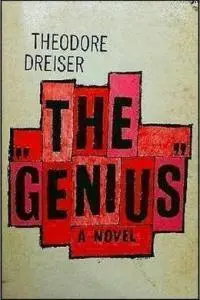
- Название:The Genius
- Автор:
- Издательство:epubBooks Classics
- Жанр:
- Год:2014
- ISBN:нет данных
- Рейтинг книги:4 / 5. Голосов: 1
-
Избранное:Добавить в избранное
- Отзывы:
-
Ваша оценка:
The Genius: краткое содержание, описание и аннотация
Предлагаем к чтению аннотацию, описание, краткое содержание или предисловие (зависит от того, что написал сам автор книги «The Genius»). Если вы не нашли необходимую информацию о книге — напишите в комментариях, мы постараемся отыскать её.
The Genius — читать онлайн бесплатно полную книгу (весь текст) целиком
Ниже представлен текст книги, разбитый по страницам. Система сохранения места последней прочитанной страницы, позволяет с удобством читать онлайн бесплатно книгу «The Genius», без необходимости каждый раз заново искать на чём Вы остановились. Поставьте закладку, и сможете в любой момент перейти на страницу, на которой закончили чтение.
Интервал:
Закладка:
The forty or fifty men who worked here trickled out like a little stream of black ants, and then, Eugene not appearing, Angela went over to the gate which Joseph Mews in the official capacity of gateman, after the whistle blew, was closing.
"Is Mr. Witla here?" asked Angela, peering through the bars at him. Eugene had described Joseph so accurately to her that she recognized him at sight.
"No, ma'am," replied Joseph, quite taken back by this attractive arrival, for good–looking women were not common at the shop gate of the factory. "He left four or five hours ago. I think he left at one o'clock, if I remember right. He wasn't working with us today. He was working out in the yard."
"You don't know where he went, do you?" asked Angela, who was surprised at this novel information. Eugene had not said anything about going anywhere. Where could he have gone?
"No'm, I don't," replied Joseph volubly. "He sometimes goes off this way—quite frequent, ma'am. His wife calls him up—er—now, maybe you're his wife."
"I am," said Angela; but she was no longer thinking of what she was saying, her words on the instant were becoming mechanical. Eugene going away frequently? He had never said anything to her! His wife calling him up! Could there be another woman! Instantly all her old suspicions, jealousies, fears, awoke, and she was wondering why she had not fixed on this fact before. That explained Eugene's indifference, of course. That explained his air of abstraction. He wasn't thinking of her, the miserable creature! He was thinking of someone else. Still she could not be sure, for she had no proof. Two adroit questions elicited the fact that no one in the shop had ever seen his wife. He had just gone out. A woman had called up.
Angela took her way home amid a whirling fire of conjecture. When she reached it Eugene was not there yet, for he sometimes delayed his coming, lingering, as he said, to look at the water. It was natural enough in an artist. She went upstairs and hung the broad–brimmed straw she had worn in the closet, and went into the kitchen to await his coming. Experience with him and the nature of her own temperament determined her to enact a rôle of subtlety. She would wait until he spoke, pretending that she had not been out. She would ask whether he had had a hard day, and see whether he disclosed the fact that he had been away from the factory. That would show her positively what he was doing and whether he was deliberately deceiving her.
Eugene came up the stairs, gay enough but anxious to deposit the scraps of paper where they would not be seen. No opportunity came for Angela was there to greet him.
"Did you have a hard job today?" she asked, noting that he made no preliminary announcement of any absence.
"Not very," he replied; "no. I don't look tired?"
"No," she said bitterly, but concealing her feelings; she wanted to see how thoroughly and deliberately he would lie. "But I thought maybe you might have. Did you stop to look at the water tonight?"
"Yes," he replied smoothly. "It's very lovely over there. I never get tired of it. The sun on the leaves these days now that they are turning yellow is so beautiful. They look a little like stained glass at certain angles."
Her first impulse after hearing this was to exclaim, "Why do you lie to me, Eugene?" for her temper was fiery, almost uncontrollable at times; but she restrained herself. She wanted to find out more—how she did not know, but time, if she could only wait a little, would help her. Eugene went to the bath, congratulating himself on the ease of his escape—the comfortable fact that he was not catechised very much; but in this temporary feeling of satisfaction he forgot the scraps of paper in his vest pocket—though not for long. He hung his coat and vest on a hook and started into the bedroom to get himself a fresh collar and tie. While he was in there Angela passed the bathroom door. She was always interested in Eugene's clothes, how they were wearing, but tonight there were other thoughts in her mind. Hastily and by intuition she went through his pockets, finding the torn scraps, then for excuse took his coat and vest down to clean certain spots. At the same moment Eugene thought of his letter. He came hurrying out to get it, or the pieces, rather, but Angela already had them and was looking at them curiously.
"What was that?" she asked, all her suspicious nature on the qui vive for additional proof. Why should he keep the torn fragments of a letter in his pocket? For days she had had a psychic sense of something impending. Everything about him seemed strangely to call for investigation. Now it was all coming out.
"Nothing," he said nervously. "A memorandum. Throw it in the paper box."
Angela noted the peculiarity of his voice and manner. She was taken by the guilty expression of his eyes. Something was wrong. It concerned these scraps of paper. Maybe it was in these she would be able to read the riddle of his conduct. The woman's name might be in here. Like a flash it came to her that she might piece these scraps together, but there was another thought equally swift which urged her to pretend indifference. That might help her. Pretend now and she would know more later. She threw them in the paper box, thinking to piece them together at her leisure. Eugene noted her hesitation, her suspicion. He was afraid she would do something, what he could not guess. He breathed more easily when the papers fluttered into the practically empty box, but he was nervous. If they were only burned! He did not think she would attempt to put them together, but he was afraid. He would have given anything if his sense of romance had not led him into this trap.
Chapter XXVII
Angela was quick to act upon her thought. No sooner had Eugene entered the bath than she gathered up the pieces, threw other bits of paper like them in their place and tried quickly to piece them together on the ironing board where she was. It was not difficult; the scraps were not small. On one triangular bit were the words, "Oh, Genie!" with a colon after it; on another the words, "The bridge," and on another "Roses." There was no doubt in her mind from this preliminary survey that this was a love note, and every nerve in her body tingled to the terrible import of it. Could it really be true? Could Eugene have found someone else? Was this the cause of his coolness and his hypocritical pretence of affection? and of his not wanting her to come to him? Oh, God! Would her sufferings never cease! She hurried into the front room, her face white, her hand clenching the tell–tale bits, and there set to work to complete her task. It did not take her long. In four minutes it was all together, and then she saw it all. A love note! From some demon of a woman. No doubt of it! Some mysterious woman in the background. "Ashes of Roses!" Now God curse her for a siren, a love thief, a hypnotizing snake, fascinating men with her evil eyes. And Eugene! The dog! The scoundrel! The vile coward! The traitor! Was there no decency, no morality, no kindness, no gratitude in his soul? After all her patience, all her suffering, all her loneliness, her poverty. To treat her like this! Writing that he was sick and lonely and unable to have her with him, and at the same time running around with a strange woman. "Ashes of Roses!" Oh, curses, curses, curses on her harlot's heart and brain! Might God strike her dead for her cynical, brutal seizing upon that sacred possession which belonged to another. She wrung her hands desperately.
Angela was fairly beside herself. Through her dainty little head ran a foaming torrent of rage, hate, envy, sorrow, self–commiseration, brutal desire for revenge. If she could only get at this woman! If she could only denounce Eugene now to his face! If she could only find them together and kill them! How she would like to strike her on the mouth! How tear her hair and her eyes out! Something of the forest cat's cruel rage shone in her gleaming eyes as she thought of her, for if she could have had Carlotta there alone she would have tortured her with hot irons, torn her tongue and teeth from their roots, beaten her into insensibility and an unrecognizable mass. She was a real tigress now, her eyes gleaming, her red lips wet. She would kill her! kill her!! kill her!!! As God was judge, she would kill her if she could find her, and Eugene and herself. Yes, yes, she would. Better death than this agony of suffering. Better a thousand times to be dead with this beast of a woman dead beside her and Eugene than to suffer this way. She didn't deserve it. Why did God torture her so? Why was she made to bleed at every step by this her sacrificial love? Had she not been a good wife? Had she not laid every tribute of tenderness, patience, self–abnegation, self–sacrifice and virtue on the altar of love? What more could God ask? What more could man want? Had she not waited on Eugene in sickness and health? She had gone without clothes, gone without friends, hidden herself away in Blackwood the seven months while he was here frittering away his health and time in love and immorality, and what was her reward? In Chicago, in Tennessee, in Mississippi, had she not waited on him, sat up with him of nights, walked the floor with him when he was nervous, consoled him in his fear of poverty and failure, and here she was now, after seven long months of patient waiting and watching—eating her lonely heart out—forsaken. Oh, the inconceivable inhumanity of the human heart! To think anybody could be so vile, so low, so unkind, so cruel! To think that Eugene with his black eyes, his soft hair, his smiling face, could be so treacherous, so subtle, so dastardly! Could he really be as mean as this note proved him to be? Could he be as brutal, as selfish? Was she awake or asleep? Was this a dream? Ah, God! no, no it was not a dream. It was a cold, bitter, agonizing reality. And the cause of all her suffering was there in the bathroom now shaving himself.
Читать дальшеИнтервал:
Закладка:
Похожие книги на «The Genius»
Представляем Вашему вниманию похожие книги на «The Genius» списком для выбора. Мы отобрали схожую по названию и смыслу литературу в надежде предоставить читателям больше вариантов отыскать новые, интересные, ещё непрочитанные произведения.






Обсуждение, отзывы о книге «The Genius» и просто собственные мнения читателей. Оставьте ваши комментарии, напишите, что Вы думаете о произведении, его смысле или главных героях. Укажите что конкретно понравилось, а что нет, и почему Вы так считаете.