Теодор Драйзер - The Genius
Здесь есть возможность читать онлайн «Теодор Драйзер - The Genius» весь текст электронной книги совершенно бесплатно (целиком полную версию без сокращений). В некоторых случаях можно слушать аудио, скачать через торрент в формате fb2 и присутствует краткое содержание. Год выпуска: 2014, Издательство: epubBooks Classics, Жанр: Классическая проза, на английском языке. Описание произведения, (предисловие) а так же отзывы посетителей доступны на портале библиотеки ЛибКат.
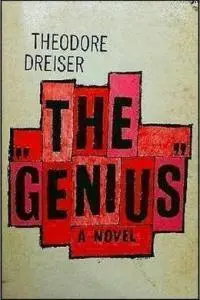
- Название:The Genius
- Автор:
- Издательство:epubBooks Classics
- Жанр:
- Год:2014
- ISBN:нет данных
- Рейтинг книги:4 / 5. Голосов: 1
-
Избранное:Добавить в избранное
- Отзывы:
-
Ваша оценка:
The Genius: краткое содержание, описание и аннотация
Предлагаем к чтению аннотацию, описание, краткое содержание или предисловие (зависит от того, что написал сам автор книги «The Genius»). Если вы не нашли необходимую информацию о книге — напишите в комментариях, мы постараемся отыскать её.
The Genius — читать онлайн бесплатно полную книгу (весь текст) целиком
Ниже представлен текст книги, разбитый по страницам. Система сохранения места последней прочитанной страницы, позволяет с удобством читать онлайн бесплатно книгу «The Genius», без необходимости каждый раз заново искать на чём Вы остановились. Поставьте закладку, и сможете в любой момент перейти на страницу, на которой закончили чтение.
Интервал:
Закладка:
"It's just possible that he may not know how to handle these fellows, after all," he said to Colfax, and then if anyone was discharged it was a sign of an unstable policy.
Colfax cautioned Eugene occasionally in accordance with White's suggestions, but Eugene was now so well aware of what was going on that he could see where they came from. He thought once of accusing White openly in front of Colfax, but he knew that this would not be of any advantage for he had no real evidence to go on. All White's protestations to Colfax were to the effect that he was trying to help him. So the battle lay.
In the meantime, Eugene, because of this or the thought rather that he might not always remain as powerful as he was, having no stock in the concern and not being able to buy any, had been interesting himself in a proposition which had since been brought to him by Mr. Kenyon C. Winfield, who, since that memorable conversation at the home of the Willebrands on Long Island, had not forgotten him. Winfield had thought of him for a long time in connection with a plan he had of establishing on the South Shore of Long Island, some thirty–five miles from New York, a magnificent seaside resort which should outrival Palm Beach and the better places of Atlantic City, and give to New York, close at hand, such a dream of beauty and luxury as would turn the vast tide of luxury–loving idlers and successful money grubbers from the former resorts to this. Considerable thought had been given by him as to just what its principal characteristics should be, but he had not worked it out to suit himself exactly, and he thought Eugene might be interested from the outlining point of view.
Unfortunately, on the face of it, this was just the sort of scheme which made an appeal to Eugene from all points of view, in spite of the fact that he already had his hands as full as they could be. Nothing interested him quite so much as beauty and luxury in some artistic combination. A summer resort of really imposing proportions, with hotels, casinos, pagodas, resident sections, club houses, a wide board or stone walk along the ocean, and possibly a gambling center which should outrival Monte Carlo, had long since occurred to him as something which might well spring up near New York. He and Angela had visited Palm Beach, Old Point Comfort, Virginia Hot Springs, Newport, Shelter Island, Atlantic City, and Tuxedo, and his impressions of what constituted luxury and beauty had long since widened to magnificent proportions. He liked the interiors of the Chamberlain at Old Point Comfort, and the Royal Ponciana at Palm Beach. He had studied with artistic curiosity the development of the hotel features at Atlantic City and elsewhere. It had occurred to him that a restricted territory might be had out on the Atlantic Ocean near Gravesend Bay possibly, which would include among other things islands, canals or inland waterways, a mighty sea beach, two or three great hotels, a casino for dancing, dining, gambling, a great stone or concrete walk to be laid out on a new plan parallel with the ocean, and at the back of all these things and between the islands and the ocean a magnificent seaside city where the lots should sell at so expensive a rate that only the well–to–do could afford to live there. His thought was of something so fine that it would attract all the prominent pleasure–lovers he had recently met. If they could be made to understand that such a place existed; that it was beautiful, showy, exclusive in a money sense, they would come there by the thousands.
"Nothing is so profitable as a luxury, if the luxury–loving public want it," Colfax had once said to him; and he believed it. He judged this truth by the things he had recently seen. People literally spent millions to make themselves comfortable. He had seen gardens, lawns, walks, pavilions, pergolas, laid out at an expense of thousands and hundreds of thousands of dollars, where few would ever see them. In St. Louis he had seen a mausoleum built upon the lines of the Taj Mahal, the lawn about which was undermined by a steam–heating plant in order that the flowers and shrubs displayed there might bloom all winter long. It had never occurred to him that the day would come when he would have anything to do with such a dream as this or its ultimate fruition, but his was the kind of mind that loved to dwell on things of the sort.
The proposition which Winfield now genially laid before him one day was simple enough. Winfield had heard that Eugene was making a good deal of money, that his salary was twenty–five thousand a year, if not more, that he had houses and lots and some nice stock investments, and it occurred to him, as it would have to anyone, that Eugene might be able to shoulder a comfortable investment in some kind of land speculation, particularly if he could see his way to make much more money in the long run. The idea Winfield had was as follows: He was going to organize a corporation to be known as The Sea Island Development Company, to be capitalized at ten million dollars, some two or three hundred thousand dollars of which was to be laid down or paid into the treasury at the start. Against this latter sum stock to the value of one million dollars, or five shares of one hundred dollars par value each, was to be issued. That is, whoever laid down one hundred dollars in cash was to receive in return three shares of common stock and two of preferred, valued at one hundred dollars each, bearing eight per cent. interest. This ratio was to be continued until $200,000 in cash was in the treasury. Then those who came afterward and were willing to buy were only to receive two shares of common and one of preferred, until one million in cash was in the treasury. After that the stock was to be sold at its face value, or more, as the situation might dictate.
The original sum of two hundred thousands dollars was to go to purchase for the corporation an undeveloped tract of land, half swamp, half island, and facing the Atlantic Ocean beyond Gravesend Bay, now owned by Winfield himself, where a beautiful rolling beach of white sand stretched some three miles in length and without flaw or interruption. This would clear Winfield of a piece of property which was worth, say $60,000, but at present unsaleable, and give him magnificent holdings in the new company besides. He proposed to take a mortgage on this and all improvements the company might make in order to protect himself. At the west end of this tract—inland from the sea—was a beautiful bay, which, though shallow, gave access to a series of inlets and a network of waterways, embracing nine small islands. These waterways, when dredged, would be amply deep enough for yachts and small craft of all descriptions, and the first important thought which occurred to Winfield was that the mud and sand so dredged could be used to fill in the low, marshy levels of soil between them and the sea and so make it all into high, dry, and valuable land. The next thing was to devise a beautiful scheme of improvement, and it was for this that he wished to talk to Eugene.
Chapter III
The matter was not difficult to arrange. Before Winfield had gone ten sentences, Eugene began to take the ideas out of his mind.
"I know something of that property," he said, studying a little outline map which Winfield had prepared. "I've been out there duck shooting with Colfax and some others. It's fine property, there's no doubt of it. How much do they want for it?"
"Well, as a matter of fact, I already own it," said Winfield. "It cost me sixty thousand dollars five years ago when it was a vast, inaccessible swamp. Nothing has been done to it since, but I will turn it over to the company for what it is worth now—two hundred thousand dollars—and take a mortgage for my protection. Then the company can do what it pleases with it; but as president, of course, I should direct the line of development. If you want to make a fortune and have fifty thousand dollars to spare, here is your chance. This land has increased in value from sixty to two hundred thousand dollars in five years. What do you fancy it will be worth in ten years from now the way New York is growing? It has pretty near four million people now. In twenty–five years it is safe to say that there will be fourteen or fifteen millions scattered over this territory which lies within twenty–five miles. Of course, this is thirty–two miles away on a direct line, but what of it? The Long Island Railroad will be glad to put a spur in there which would bring this territory within one hour of the city. Think of it—one of the finest beaches on the Atlantic Ocean within one hour of New York! I expect to interest Mr. Wiltsie, the President of the Long Island, very heavily in this property. I come to you now because I think your advertising and artistic advice are worth something. You can take it or leave it, but before you do anything, I want you to come out and look over the property with me."
Читать дальшеИнтервал:
Закладка:
Похожие книги на «The Genius»
Представляем Вашему вниманию похожие книги на «The Genius» списком для выбора. Мы отобрали схожую по названию и смыслу литературу в надежде предоставить читателям больше вариантов отыскать новые, интересные, ещё непрочитанные произведения.






Обсуждение, отзывы о книге «The Genius» и просто собственные мнения читателей. Оставьте ваши комментарии, напишите, что Вы думаете о произведении, его смысле или главных героях. Укажите что конкретно понравилось, а что нет, и почему Вы так считаете.