Теодор Драйзер - The Genius
Здесь есть возможность читать онлайн «Теодор Драйзер - The Genius» весь текст электронной книги совершенно бесплатно (целиком полную версию без сокращений). В некоторых случаях можно слушать аудио, скачать через торрент в формате fb2 и присутствует краткое содержание. Год выпуска: 2014, Издательство: epubBooks Classics, Жанр: Классическая проза, на английском языке. Описание произведения, (предисловие) а так же отзывы посетителей доступны на портале библиотеки ЛибКат.
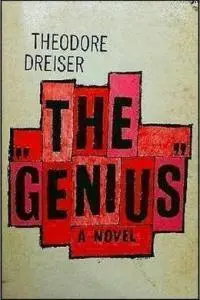
- Название:The Genius
- Автор:
- Издательство:epubBooks Classics
- Жанр:
- Год:2014
- ISBN:нет данных
- Рейтинг книги:4 / 5. Голосов: 1
-
Избранное:Добавить в избранное
- Отзывы:
-
Ваша оценка:
The Genius: краткое содержание, описание и аннотация
Предлагаем к чтению аннотацию, описание, краткое содержание или предисловие (зависит от того, что написал сам автор книги «The Genius»). Если вы не нашли необходимую информацию о книге — напишите в комментариях, мы постараемся отыскать её.
The Genius — читать онлайн бесплатно полную книгу (весь текст) целиком
Ниже представлен текст книги, разбитый по страницам. Система сохранения места последней прочитанной страницы, позволяет с удобством читать онлайн бесплатно книгу «The Genius», без необходимости каждый раз заново искать на чём Вы остановились. Поставьте закладку, и сможете в любой момент перейти на страницу, на которой закончили чтение.
Интервал:
Закладка:
All told, in stocks, land, free money in the banks, and what he might save in a year or two, Eugene had about fifty thousand dollars of good hard cash which he could lay his hands on at a pinch. He was well satisfied that Winfield was putting before him one of those golden opportunities which, prudently managed, would make him a rich man. Nevertheless, his fifty thousand was fifty thousand, and he had it. Never again, however, once this other thing was under way, if it were true, would he have to worry about a position, or whether he would be able to maintain his present place in society. One could not possibly say what an investment like this might not lead to. Winfield, so he told Eugene, expected eventually to clear six or eight million dollars himself. He was going to take stock in some of the hotels, casinos, and various other enterprises, which would be organized. He could clearly see how, later, once this land was properly drained and laid out, it would be worth from three to fifteen thousand dollars per lot of one hundred by one hundred feet—the smallest portions to be sold. There were islands which for clubs or estates should bring splendid returns. Think of the leases to yacht and boat clubs alone! The company would own all the land.
"I would develop this myself if I had the capital," said Winfield, "but I want to see it done on a gigantic scale, and I haven't the means. I want something here which will be a monument to me and to all connected with it. I am willing to take my chances pro rata with those who now enter, and to prove my good faith I am going to buy as many shares as I possibly can on the five–for–one basis. You or anyone else can do the same thing. What do you think?"
"It's a great idea," said Eugene. "It seems as though a dream which had been floating about in the back of my head for years had suddenly come to life. I can scarcely believe that it is true, and yet I know that it is, and that you will get away with it just as you are outlining it here. You want to be very careful how you lay out this property, though. You have the chance of a lifetime. For goodness' sake, don't make any mistakes! Let's have one resort that will be truly, beautifully right."
"That's precisely the way I feel about it," answered Winfield, "and that's why I am talking to you. I want you to come in on this, for I think your imagination will be worth something. You can help me lay this thing out right and advertise it right."
They talked on about one detail and another until finally Eugene, in spite of all his caution, saw his dreams maturing in this particular proposition. Fifty thousand dollars invested here would give him two thousand five hundred shares—one thousand preferred, and fifteen hundred common—whose face value, guaranteed by this magnificent piece of property, would be $250,000. Think of it, $250,000—a quarter of a million and that subject to a natural increase which might readily carry him into the millionaire class! His own brains would be of some value here, for Winfield was anxious to have him lay this out, and this would bring him in touch with not only one of the best real estate men in the city, but would bring him into contact with a whole host of financiers in business, people who would certainly become interested in this venture. Winfield talked easily of architects, contractors, railroad men, presidents of construction companies, all of whom would take stock for the business opportunities it would bring to them later and also of the many strings to be pulled which later would bring great gains to the company and save it from expenditures which would otherwise mean millions in outlay. Thus this proposed extension by the Long Island which would cost that railroad two hundred thousand dollars would cost the Sea Island Company nothing and would bring thousands of lovers of beauty there the moment conveniences were established to receive them. This was true of hotels to be built. Each would bring business for everything else. The company would lease the ground. The great hotel men would do their own building according to restrictions and plans laid down by the Sea Island Company. The only real expenditure would be for streets, sewers, lights, water, walks, trees, and the great one hundred foot wide boardwalk with concrete ornaments which would be the finest sea stroll in the world. But these could be undertaken by degrees.
Eugene saw it all. It was a vision of empire. "I don't know about this," he said cautiously. "It's a great thing, but I may not have the means to dip into it. I want to think it over. Meanwhile, I'll be glad to go out there and look over the ground with you."
Winfield could see that he had Eugene fascinated. It would be an easy matter to land him once he had his plans perfected. Eugene would be the type of man who would build a house and come and live there in the summer. He would interest many people whom he knew. He went away feeling that he had made a good start, and he was not mistaken.
Eugene talked the matter over with Angela—his one recourse in these matters—and as usual she was doubtful, but not entirely opposed. Angela had considerable caution, but no great business vision. She could not really tell him what he ought to do. Thus far his judgment, or rather his moves, had been obviously successful. He had been going up apparently because he was valuable as an assistant, not because he was a born leader.
"You'll have to judge for yourself, Eugene," Angela finally said. "I don't know. It looks fine. You certainly don't want to work for Mr. Colfax all your life, and if, as you say, they are beginning to plot against you, you had better prepare to get out sometime. We have enough now, really, to live on, if you want to return to your art."
Eugene smiled. "My art. My poor old art! A lot I've done to develop my art."
"I don't think it needs developing. You have it. I'm sorry sometimes I ever let you leave it. We have lived better, but your work hasn't counted for as much. What good has it done you outside the money to be a successful publisher? You were as famous as you are now before you ever started in on this line, and more so. More people know you even now as Eugene Witla, the artist, than as Eugene Witla, the magazine man."
Eugene knew this to be so. His art achievements had never forsaken him. They had grown in fame always. Pictures that he had sold for two hundred and four hundred had gone up to as high as three and four thousand in value, and they were still rising. He was occasionally approached by an art dealer to know if he never intended to paint any more. In social circles it was a constant cry among the elect, "Why don't you paint any longer?" "What a shame you ever left the art world!" "Those pictures of yours, I can never forget them."
"My dear lady," Eugene once said solemnly, "I can't live by painting pictures as I am living by directing magazines. Art is very lovely. I am satisfied to believe that I am a great painter. Nevertheless, I made little out of it, and since then I have learned to live. It's sad, but it's true. If I could see my way to live in half the comfort I am living in now and not run the risk of plodding the streets with a picture under my arm, I would gladly return to art. The trouble is the world is always so delightfully ready to see the other fellow make the sacrifice for art or literature's sake. Selah! I won't do it. So there!"
"It's a pity! It's a pity!" said this observer, but Eugene was not vastly distressed. Similarly Mrs. Dale had reproached him, for she had seen and heard of his work.
"Some time. Some time," he said grandly; "wait."
Now at length this land proposition seemed to clear the way for everything. If Eugene embarked upon it, he might gradually come to the point at which he could take some official position in connection with it. Anyhow, think of a rising income from $250,000! Think of the independence, the freedom! Surely then he could paint or travel, or do as he pleased.
Читать дальшеИнтервал:
Закладка:
Похожие книги на «The Genius»
Представляем Вашему вниманию похожие книги на «The Genius» списком для выбора. Мы отобрали схожую по названию и смыслу литературу в надежде предоставить читателям больше вариантов отыскать новые, интересные, ещё непрочитанные произведения.






Обсуждение, отзывы о книге «The Genius» и просто собственные мнения читателей. Оставьте ваши комментарии, напишите, что Вы думаете о произведении, его смысле или главных героях. Укажите что конкретно понравилось, а что нет, и почему Вы так считаете.