Теодор Драйзер - The Genius
Здесь есть возможность читать онлайн «Теодор Драйзер - The Genius» весь текст электронной книги совершенно бесплатно (целиком полную версию без сокращений). В некоторых случаях можно слушать аудио, скачать через торрент в формате fb2 и присутствует краткое содержание. Год выпуска: 2014, Издательство: epubBooks Classics, Жанр: Классическая проза, на английском языке. Описание произведения, (предисловие) а так же отзывы посетителей доступны на портале библиотеки ЛибКат.
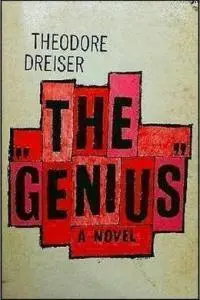
- Название:The Genius
- Автор:
- Издательство:epubBooks Classics
- Жанр:
- Год:2014
- ISBN:нет данных
- Рейтинг книги:4 / 5. Голосов: 1
-
Избранное:Добавить в избранное
- Отзывы:
-
Ваша оценка:
The Genius: краткое содержание, описание и аннотация
Предлагаем к чтению аннотацию, описание, краткое содержание или предисловие (зависит от того, что написал сам автор книги «The Genius»). Если вы не нашли необходимую информацию о книге — напишите в комментариях, мы постараемся отыскать её.
The Genius — читать онлайн бесплатно полную книгу (весь текст) целиком
Ниже представлен текст книги, разбитый по страницам. Система сохранения места последней прочитанной страницы, позволяет с удобством читать онлайн бесплатно книгу «The Genius», без необходимости каждый раз заново искать на чём Вы остановились. Поставьте закладку, и сможете в любой момент перейти на страницу, на которой закончили чтение.
Интервал:
Закладка:
"Oh, I can't tell you so easily. I mean, I can't find the words, you know. I know how it is, though. Familiarly, I suppose I mean. Will you have one lump or two?"
"Three an thou pleasest. Didn't your mother tell me you sang or played?"
"Oh, you mustn't believe anything ma–ma´ says about me! She's apt to say anything. Tee! Hee! It makes me laugh"—she pronounced it laaf—"to think of my playing. My teacher says he would like to strike my knuckles. Oh, dear!" (She went into a gale of giggles.) "And sing! Oh, dear, dear! That is too good!"
Eugene watched her pretty face intently. Her mouth and nose and eyes fascinated him. She was so sweet! He noted the configuration of her lips and cheeks and chin. The nose was delicate, beautifully formed, fat, not sensitive. The ears were small, the eyes large and wide set, the forehead naturally high, but so concealed by curls that it seemed low. She had a few freckles and a very small dimple in her chin.
"Now you mustn't laugh like that," he said mock solemnly. "It's very serious business, this laughing. In the first place, it's against the rules of this apartment. No one is ever, ever, ever supposed to laugh here, particularly young ladies who pour tea. Tea, Epictetus well says, involves the most serious conceptions of one's privileges and duties. It is the high–born prerogative of tea servers to grin occasionally, but never, never, never under any circumstances whatsoever―" Suzanne's lips were beginning to part ravishingly in anticipation of a burst of laughter.
"What's all the excitement about, Witla?" asked Skalger, who had drifted to his side. "Why this sudden cessation of progress?"
"Tea, my son, tea!" said Eugene. "Have a cup with me?"
"I will."
"He's trying to tell me, Mr. Skalger, that I should never laaf. I must only grin." Her lips parted and she laughed joyously. Eugene laughed with her. He could not help it. "Ma–ma´ says I giggle all the time. I wouldn't do very well here, would I?"
She always pronounced it "ma–ma´."
She turned to Eugene again with big smiling eyes.
"Exceptions, exceptions. I might make exceptions—one exception—but not more."
"Why one?" she asked archly.
"Oh, just to hear a natural laugh," he said a little plaintively. "Just to hear a real joyous laugh. Can you laugh joyously?"
She giggled again at this, and he was about to tell her how joyously she did laugh when Angela called him away to hear Florence Reel, who was going to sing again for his especial benefit. He parted from Miss Dale reluctantly, for she seemed some delicious figure as delicately colorful as Royal Dresden, as perfect in her moods as a spring evening, as soft, soulful, enticing as a strain of music heard through the night at a distance or over the water. He went over to where Florence Reel was standing, listening in a sympathetic melancholy vein to a delightful rendering of "The Summer Winds Are Blowing, Blowing." All the while he could not help thinking of Suzanne—letting his eyes stray in that direction. He talked to Mrs. Dale, to Henrietta Tenmon, to Luke Severas, Mr. and Mrs. Dula, Payalei Stone, now a writer of special articles, and others, but he couldn't help longing to go back to her. How sweet she was! How very delightful! If he could only, once more in his life, have the love of a girl like that!
The guests began to depart. Angela and Eugene bustled about the farewells. Because of the duties of her daughter, which continued to the end, Mrs. Dale stayed, talking to Arthur Skalger. Eugene was in and out between the studio and cloak room off the entry way. Now and then he caught glimpses of Suzanne demurely standing by her tea cups and samovar. For years he had seen nothing so fresh and young as her body. She was like a new grown wet white lily pod in the dawn of the year. She seemed to have the texture of the water chestnut and the lush, fat vegetables of the spring. Her eyes were as clear as water; her skin as radiant new ivory. There was no sign of weariness about her, nor any care, nor any thought of evil, nor anything except health and happiness. "Such a face!" he thought casually in passing. "She is as sweet as any girl could be. As radiant as light itself."
Incidentally the personality of Frieda Roth came back, and—long before her—Stella Appleton.
"Youth! Youth! What in this world could be finer—more acceptable! Where would you find its equal? After all the dust of the streets and the spectacle of age and weariness—the crow's feet about people's eyes, the wrinkles in their necks, the make–believe of rouge and massage, and powder and cosmetics, to see real youth, not of the body but of the soul also—the eyes, the smile, the voice, the movements—all young. Why try to imitate that miracle? Who could? Who ever had?"
He went on shaking hands, bowing, smiling, laughing, jesting, making believe himself, but all the while the miracle of the youth and beauty of Suzanne Dale was running in his mind.
"What are you thinking about, Eugene?" asked Angela, coming to the window where he had drawn a rocking–chair and was sitting gazing out on the silver and lavender and gray of the river surface in the fading light. Some belated gulls were still flying about. Across the river the great manufactory was sending off a spiral of black smoke from one of its tall chimneys. Lamps were beginning to twinkle in its hundred–windowed wall. A great siren cry broke from its whistle as six o'clock tolled from a neighboring clock tower. It was still late February and cold.
"Oh, I was thinking of the beauty of this scene," he said wearily.
Angela did not believe it. She was conscious of something, but they never quarreled about what he was thinking nowadays. They had come too far along in comfort and solidity. What was it, though, she wondered, that he was thinking about?
Suzanne Dale had no particular thought of him. He was nice—pleasant, good–looking. Mrs. Witla was quite nice and young.
"Ma–ma," she said, "did you look out of the window at Mr. Witla's?"
"Yes, my dear!"
"Wasn't that a beautiful view?"
"Charming."
"I should think you might like to live on the Drive sometime, ma–ma."
"We may sometime."
Mrs. Dale fell to musing. Certainly Eugene was an attractive man—young, brilliant, able. What a mistake all the young men made, marrying so early. Here he was successful, introduced to society, attractive, the world really before him, and he was married to someone who, though a charming little woman, was not up to his possibilities.
"Oh, well," she thought, "so goes the world. Why worry? Everyone must do the best they can."
Then she thought of a story she might write along this line and get Eugene to publish it in one of his magazines.
Chapter II
While these various events were occurring the work of the United Magazines Corporation had proceeded apace. By the end of the first year after Eugene's arrival it had cleared up so many of its editorial and advertising troubles that he was no longer greatly worried about them, and by the end of the second year it was well on the way toward real success. Eugene had become so much of a figure about the place that everyone in the great building, in which there were over a thousand employed, knew him at sight. The attendants were most courteous and obsequious, as much so almost as they were to Colfax and White, though the latter with the improvement of the general condition of the company had become more dominating and imposing than ever. White with his large salary of twenty–five thousand a year and his title of vice–president was most anxious that Eugene should not become more powerful than he had already. It irritated him greatly to see the airs Eugene gave himself, for the latter had little real tact, and instead of dissembling his importance before his superiors was inclined to flaunt it. He was forever retailing to Colfax some new achievement in the advertising, circulation, and editorial fields, and that in White's presence, for he did not take the latter very seriously, telling of a new author of importance captured for the book department; a new manuscript feature secured for one or another of the magazines, a new circulation scheme or connection devised, or a new advertising contract of great money value manipulated. His presence in Colfax's office was almost invariably a signal for congratulation or interest, for he was driving things hard and Colfax knew it. White came to hate the sight of him.
Читать дальшеИнтервал:
Закладка:
Похожие книги на «The Genius»
Представляем Вашему вниманию похожие книги на «The Genius» списком для выбора. Мы отобрали схожую по названию и смыслу литературу в надежде предоставить читателям больше вариантов отыскать новые, интересные, ещё непрочитанные произведения.



Обсуждение, отзывы о книге «The Genius» и просто собственные мнения читателей. Оставьте ваши комментарии, напишите, что Вы думаете о произведении, его смысле или главных героях. Укажите что конкретно понравилось, а что нет, и почему Вы так считаете.