Теодор Драйзер - The Genius
Здесь есть возможность читать онлайн «Теодор Драйзер - The Genius» весь текст электронной книги совершенно бесплатно (целиком полную версию без сокращений). В некоторых случаях можно слушать аудио, скачать через торрент в формате fb2 и присутствует краткое содержание. Год выпуска: 2014, Издательство: epubBooks Classics, Жанр: Классическая проза, на английском языке. Описание произведения, (предисловие) а так же отзывы посетителей доступны на портале библиотеки ЛибКат.
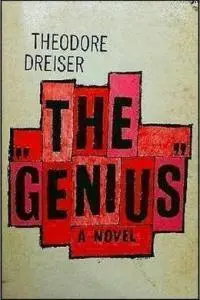
- Название:The Genius
- Автор:
- Издательство:epubBooks Classics
- Жанр:
- Год:2014
- ISBN:нет данных
- Рейтинг книги:4 / 5. Голосов: 1
-
Избранное:Добавить в избранное
- Отзывы:
-
Ваша оценка:
The Genius: краткое содержание, описание и аннотация
Предлагаем к чтению аннотацию, описание, краткое содержание или предисловие (зависит от того, что написал сам автор книги «The Genius»). Если вы не нашли необходимую информацию о книге — напишите в комментариях, мы постараемся отыскать её.
The Genius — читать онлайн бесплатно полную книгу (весь текст) целиком
Ниже представлен текст книги, разбитый по страницам. Система сохранения места последней прочитанной страницы, позволяет с удобством читать онлайн бесплатно книгу «The Genius», без необходимости каждый раз заново искать на чём Вы остановились. Поставьте закладку, и сможете в любой момент перейти на страницу, на которой закончили чтение.
Интервал:
Закладка:
"You needn't look at him closely," he observed gaily, "he's married."
"That simply makes him all the more interesting," she rippled, and extended her hand.
Eugene took it. "I'm glad a poor married man can find shelter somewhere," he said, smartly.
"You should rejoice," she replied. "It's at once your liberty and your protection. Think how safe you are!"
"I know, I know," he said. "All the slings and arrows of Miss Fortune hurtling by."
"And you in no danger of being hurt."
He offered her his arm, and they strolled through a window onto a veranda.
The day was just the least bit dull for Mrs. Dale. Bridge was in progress in the card room, a company of women and girls gambling feverishly. Eugene was not good at bridge, not quick enough mentally, and Mrs. Dale did not care much for it.
"I have been trying to stir up enough interest to bring to pass a motor ride, but it doesn't work," she said. "They all have the gambling fever today. Are you as greedy as the others?"
"I'm greedy I assure you, but I can't play. The greediest thing I can do is to stay away from the tables. I save most. That sharp Faraday has cleaned me and two others out of four hundred dollars. It's astonishing the way some people can play. They just look at the cards or make mystic signs and the wretched things range themselves in serried ranks to suit them. It's a crime. It ought to be a penitentiary offense, particularly to beat me. I'm such an inoffensive specimen of the non–bridge playing family."
"A burnt child, you know. Stay away. Let's sit here. They can't come out here and rob you."
They sat down in green willow chairs, and after a time a servant offered them coffee. Mrs. Dale accepted. They drifted conversationally from bridge to characters in society—a certain climber by the name of Bristow, a man who had made a fortune in trunks—and from him to travel and from travel to Mrs. Dale's experiences with fortune hunters. The automobile materialized through the intervention of others, but Eugene found great satisfaction in this woman's company and sat beside her. They talked books, art, magazines, the making of fortunes and reputations. Because he was or seemed to be in a position to assist her in a literary way she was particularly nice to him. When he was leaving she asked, "Where are you in New York?"
"Riverside Drive is our present abode," he said.
"Why don't you bring Mrs. Witla and come down to see us some week–end? I usually have a few people there, and the house is roomy. I'll name you a special day if you wish."
"Do. We'll be delighted. Mrs. Witla will enjoy it, I'm sure."
Mrs. Dale wrote to Angela ten days later as to a particular date, and in this way the social intimacy began.
It was never of a very definite character, though. When Mrs. Dale met Angela she liked her quite well as an individual, whatever she may have thought of her as a social figure. Neither Eugene nor Angela saw Suzanne nor any of the other children on this occasion, all of them being away. Eugene admired the view tremendously and hinted at being invited again. Mrs. Dale was delighted. She liked him as a man entirely apart from his position but particularly because of his publishing station. She was ambitious to write. Others had told her that he was the most conspicuous of the rising figures in the publishing world. Being friendly with him would give her exceptional standing with all his editors. She was only too pleased to be gracious to him. He was invited again and a third time, with Angela, and it seemed as though they were reaching, or might at least reach, something much more definite than a mere social acquaintance.
It was about six months after Eugene had first met Mrs. Dale that Angela gave a tea, and Eugene, in assisting her to prepare the list of invitations, had suggested that those who were to serve the tea and cakes should be two exceptionally pretty girls who were accustomed to come to the Witla apartment, Florence Reel, the daughter of a well–known author of that name and Marjorie Mac Tennan, the daughter of a well–known editor, both beautiful and talented, one with singing and the other with art ambitions. Angela had seen a picture of Suzanne Dale in her mother's room at Daleview on Grimes Hill, and had been particularly taken with her girlish charm and beauty.
"I wonder," she said, "if Mrs. Dale would object to having Suzanne come and help serve that day. She would like it, I'm sure, there are going to be so many clever people here. We haven't seen her, but that doesn't matter. It would be a nice way to introduce herself."
"That's a good idea, I should say," observed Eugene judicially. He had seen the photo of Suzanne and liked it, though he was not over–impressed. Photos to him were usually gross deceivers. He accepted them always with reservations. Angela forthwith wrote to Mrs. Dale, who agreed. She would be glad to come herself. She had seen the Witla apartment, and had been very much pleased with it. The reception day came and Angela begged Eugene to come home early.
"I know you don't like to be alone with a whole roomful of people, but Mr. Goodrich is coming, and Frederick Allen (one of their friends who had taken a fancy to Eugene), Arturo Scalchero is going to sing and Bonavita to play." Scalchero was none other than Arthur Skalger, of Port Jervis, New Jersey, but he assumed this corruption of his name in Italy to help him to success. Bonavita was truly a Spanish pianist of some repute who was flattered to be invited to Eugene's home.
"Well, I don't care much about it," replied Eugene. "But I will come."
He frequently felt that afternoon teas and receptions were ridiculous affairs, and that he had far better be in his office attending to his multitudinous duties. Still he did leave early, and at five–thirty was ushered into a great roomful of chattering, gesticulating, laughing people. A song by Florence Reel had just been concluded. Like all girls of ambition, vivacity and imagination, she took an interest in Eugene, for in his smiling face she found a responsive gleam.
"Oh, Mr. Witla!" she exclaimed. "Now here you are and you just missed my song. And I wanted you to hear it, too."
"Don't grieve, Florrie," he said familiarly, holding her hand and looking momentarily in her eyes. "You're going to sing it again for me. I heard part of it as I came up on the elevator." He relinquished her hand. "Why, Mrs. Dale! Delighted, I'm sure. So nice of you. And Arturo Scalchero—hullo, Skalger, you old frost! Where'd you get the Italian name? Bonavita! Fine! Am I going to hear you play? All over? Alas! Marjorie Mac Tennan! Gee, but you look sweet! If Mrs. Witla weren't watching me, I'd kiss you. Oh, the pretty bonnet! And Frederick Allen! My word! What are you trying to grab off, Allen? I'm on to you. No bluffs! Nix! Nix! Why, Mrs. Schenck—delighted! Angela, why didn't you tell me Mrs. Schenck was coming? I'd have been home at three."
By this time he had reached the east end of the great studio room, farthest from the river. Here a tea table was spread with a silver tea service, and behind it a girl, oval–faced, radiantly healthy, her full lips parted in a ripe smile, her blue–gray eyes talking pleasure and satisfaction, her forehead laid about by a silver filigree band, beneath which her brown chestnut curls protruded. Her hands, Eugene noted, were plump and fair. She stood erect, assured, with the least touch of quizzical light in her eye. A white, pink–bordered dress draped her girlish figure.
"I don't know," he said easily, "but I wager a guess that this is—that this is—this is Suzanne Dale—what?"
"Yes, this is," she replied laughingly. "Can I give you a cup of tea, Mr. Witla? I know you are Mr. Witla from ma–ma´'s description and the way in which you talk to everybody."
"And how do I talk to everybody, may I ask, pleasum?"
Читать дальшеИнтервал:
Закладка:
Похожие книги на «The Genius»
Представляем Вашему вниманию похожие книги на «The Genius» списком для выбора. Мы отобрали схожую по названию и смыслу литературу в надежде предоставить читателям больше вариантов отыскать новые, интересные, ещё непрочитанные произведения.




Обсуждение, отзывы о книге «The Genius» и просто собственные мнения читателей. Оставьте ваши комментарии, напишите, что Вы думаете о произведении, его смысле или главных героях. Укажите что конкретно понравилось, а что нет, и почему Вы так считаете.