Теодор Драйзер - The Genius
Здесь есть возможность читать онлайн «Теодор Драйзер - The Genius» весь текст электронной книги совершенно бесплатно (целиком полную версию без сокращений). В некоторых случаях можно слушать аудио, скачать через торрент в формате fb2 и присутствует краткое содержание. Год выпуска: 2014, Издательство: epubBooks Classics, Жанр: Классическая проза, на английском языке. Описание произведения, (предисловие) а так же отзывы посетителей доступны на портале библиотеки ЛибКат.
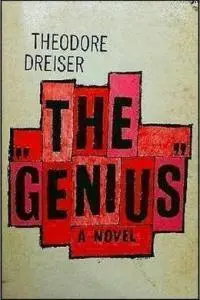
- Название:The Genius
- Автор:
- Издательство:epubBooks Classics
- Жанр:
- Год:2014
- ISBN:нет данных
- Рейтинг книги:4 / 5. Голосов: 1
-
Избранное:Добавить в избранное
- Отзывы:
-
Ваша оценка:
The Genius: краткое содержание, описание и аннотация
Предлагаем к чтению аннотацию, описание, краткое содержание или предисловие (зависит от того, что написал сам автор книги «The Genius»). Если вы не нашли необходимую информацию о книге — напишите в комментариях, мы постараемся отыскать её.
The Genius — читать онлайн бесплатно полную книгу (весь текст) целиком
Ниже представлен текст книги, разбитый по страницам. Система сохранения места последней прочитанной страницы, позволяет с удобством читать онлайн бесплатно книгу «The Genius», без необходимости каждый раз заново искать на чём Вы остановились. Поставьте закладку, и сможете в любой момент перейти на страницу, на которой закончили чтение.
Интервал:
Закладка:
Here was no sickness, no weariness apparently, no ill health or untoward circumstances. All the troubles, disorders and imperfections of existence were here carefully swept aside and one saw only the niceness, the health and strength of being. He was more and more impressed as he came farther and farther along in the scale of comfort, with the force and eagerness with which life seems to minister to the luxury–love of the human mind. He learned of so many, to him, lovely things, large, wellkept, magnificent country places, scenes of exquisite beauty where country clubs, hotels, seaside resorts of all descriptions had been placed. He found sport, amusement, exercise, to be tremendously well organized and that there were thousands of people who were practically devoting their lives to this. Such a state of social ease was not for him yet, but he could sit at the pleasures, so amply spread, between his hours of work and dream of the time to come when possibly he might do nothing at all. Yachting, motoring, golfing, fishing, hunting, riding, playing tennis and polo, there were experts in all these fields he found. Card playing, dancing, dining, lounging, these seemed to occupy many people's days constantly. He could only look in upon it all as upon a passing show, but that was better than nothing. It was more than he had ever done before. He was beginning to see clearly how the world was organized, how far were its reaches of wealth, its depths of poverty. From the lowest beggar to the topmost scene—what a distance!
Angela scarcely kept pace with him in all these mental peregrinations. It was true that now she went to the best dressmakers only, bought charming hats, the most expensive shoes, rode in cabs and her husband's auto, but she did not feel about it as he did. It seemed very much like a dream to her—like something that had come so suddenly and so exuberantly that it could not be permanent. There was running in her mind all the time that Eugene was neither a publisher, nor an editor, nor a financier at heart, but an artist and that an artist he would remain. He might attain great fame and make much money out of his adopted profession, but some day in all likelihood he would leave it and return to art. He seemed to be making sound investments—at least, they seemed sound to her, and their stocks and bank accounts, principally convertible stocks, seemed a safe enough margin for the future to guarantee peace of mind, but they were not saving so much, after all. It was costing them something over eight thousand dollars a year to live, and their expenses were constantly growing larger rather than smaller. Eugene appeared to become more and more extravagant.
"I think we are doing too much entertaining," Angela had once protested, but he waived the complaint aside. "I can't do what I'm doing and not entertain. It's building me up. People in our position have to." He threw open the doors finally to really remarkable crowds and most of the cleverest people in all walks of life—the really exceptionally clever—came to eat his meals, to drink his wines, to envy his comfort and wish they were in his shoes.
During all this time Eugene and Angela instead of growing closer together, were really growing farther and farther apart. She had never either forgotten or utterly forgiven that one terrific lapse, and she had never believed that Eugene was utterly cured of his hedonistic tendencies. Crowds of beautiful women came to Angela's teas, lunches and their joint evening parties and receptions. Under Eugene's direction they got together interesting programmes, for it was no trouble now for him to command musical, theatrical, literary and artistic talent. He knew men and women who could make rapid charcoal or crayon sketches of people, could do feats in legerdemain, and character representation, could sing, dance, play, recite and tell humorous stories in a droll and off–hand way. He insisted that only exceptionally beautiful women be invited, for he did not care to look at the homely ones, and curiously he found dozens, who were not only extremely beautiful, but singers, dancers, composers, authors, actors and playwrights in the bargain. Nearly all of them were brilliant conversationalists and they helped to entertain themselves—made their own entertainment, in fact. His table very frequently was a glittering spectacle. One of his "Stunts" as he called it was to bundle fifteen or twenty people into three or four automobiles after they had lingered in his rooms until three o'clock in the morning and motor out to some out–of–town inn for breakfast and "to see the sun rise." A small matter like a bill for $75.00 for auto hire or thirty–five dollars for a crowd for breakfast did not trouble him. It was a glorious sensation to draw forth his purse and remove four or five or six yellow backed ten dollar bills, knowing that it made little real difference. More money was coming to him from the same source. He could send down to the cashier at any time and draw from five hundred to a thousand dollars. He always had from one hundred and fifty to three hundred dollars in his purse in denominations of five, ten and twenty dollar bills. He carried a small check book and most frequently paid by check. He liked to assume that he was known and frequently imposed this assumption on others.
"Eugene Witla! Eugene Witla! George! he's a nice fellow,"—or "it's remarkable how he has come up, isn't it?" "I was at the Witlas' the other night. Did you ever see such a beautiful apartment? It's perfect! That view!"
People commented on the interesting people he entertained, the clever people you met there, the beautiful women, the beautiful view. "And Mrs. Witla is so charming."
But down at the bottom of all this talk there was also much envy and disparagement and never much enthusiasm for the personality of Mrs. Witla. She was not as brilliant as Eugene—or rather the comment was divided. Those who liked clever people, show, wit, brilliance, ease, liked Eugene and not Angela quite so much. Those who liked sedateness, solidity, sincerity, the commoner virtues of faithfulness and effort, admired Angela. All saw that she was a faithful handmaiden to her husband, that she adored the ground he walked on.
"Such a nice little woman—so homelike. It's curious that he should have married her, though, isn't it? They are so different. And yet they appear to have lots of things in common, too. It's strange—isn't it?"
Chapter XLIV
It was in the course of his final upward progress that Eugene came once more into contact with Kenyon C. Winfield, Ex–State Senator of New York, President of the Long Island Realty Company, land developer, real estate plunger, financier, artist, what not—a man very much of Eugene's own type and temperament, who at this time was doing rather remarkable things in a land speculative way. Winfield was tall and thin, black haired, black eyed, slightly but not offensively hook nosed, dignified, gracious, intellectual, magnetic, optimistic. He was forty–eight years of age. Winfield was a very fair sample of your man of the world who has ideas, dreams, fancies, executive ability, a certain amount of reserve and judgment, sufficient to hold his own in this very complicated mortal struggle. He was not really a great man, but he was so near it that he gave the impression to many of being so. His deep sunken black eyes burned with a peculiar lustre, one might almost have fancied a tint of red in them. His pale, slightly sunken face had some of the characteristics of your polished Mephisto, though not too many. He was not at all devilish looking in the true sense of the word, but keen, subtle, artistic. His method was to ingratiate himself with men who had money in order to get from them the vast sums which he found it necessary to borrow to carry out the schemes or rather dreams he was constantly generating. His fancies were always too big for his purse, but he had such lovely fancies that it was a joy to work with them and him.
Читать дальшеИнтервал:
Закладка:
Похожие книги на «The Genius»
Представляем Вашему вниманию похожие книги на «The Genius» списком для выбора. Мы отобрали схожую по названию и смыслу литературу в надежде предоставить читателям больше вариантов отыскать новые, интересные, ещё непрочитанные произведения.




Обсуждение, отзывы о книге «The Genius» и просто собственные мнения читателей. Оставьте ваши комментарии, напишите, что Вы думаете о произведении, его смысле или главных героях. Укажите что конкретно понравилось, а что нет, и почему Вы так считаете.