Теодор Драйзер - The Genius
Здесь есть возможность читать онлайн «Теодор Драйзер - The Genius» весь текст электронной книги совершенно бесплатно (целиком полную версию без сокращений). В некоторых случаях можно слушать аудио, скачать через торрент в формате fb2 и присутствует краткое содержание. Год выпуска: 2014, Издательство: epubBooks Classics, Жанр: Классическая проза, на английском языке. Описание произведения, (предисловие) а так же отзывы посетителей доступны на портале библиотеки ЛибКат.
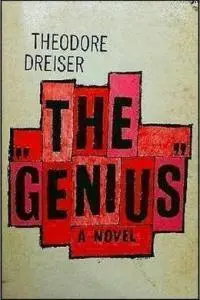
- Название:The Genius
- Автор:
- Издательство:epubBooks Classics
- Жанр:
- Год:2014
- ISBN:нет данных
- Рейтинг книги:4 / 5. Голосов: 1
-
Избранное:Добавить в избранное
- Отзывы:
-
Ваша оценка:
The Genius: краткое содержание, описание и аннотация
Предлагаем к чтению аннотацию, описание, краткое содержание или предисловие (зависит от того, что написал сам автор книги «The Genius»). Если вы не нашли необходимую информацию о книге — напишите в комментариях, мы постараемся отыскать её.
The Genius — читать онлайн бесплатно полную книгу (весь текст) целиком
Ниже представлен текст книги, разбитый по страницам. Система сохранения места последней прочитанной страницы, позволяет с удобством читать онлайн бесплатно книгу «The Genius», без необходимости каждый раз заново искать на чём Вы остановились. Поставьте закладку, и сможете в любой момент перейти на страницу, на которой закончили чтение.
Интервал:
Закладка:
The one trouble with White, and this was something which would affect any man who should come in through Davis' auspices, was that he knew nothing of art, literature, or science, and cared less, his only interest being in manufacture. He had risen so rapidly on the executive side that his power had outrun his financial means. Davis, the present head above him, had no means beyond his own depreciated share. Because of poor editorial judgment, the books and magazines were tottering through a serious loss of prestige to eventual failure. Something had to be done, for at that time the expenditure for three years past had been much greater than the receipts.
So Marshall P. Colfax, the father of Hiram Colfax, had been appealed to, because of his interest in reform ideas which might be to a certain extent looked upon as related to literature, and because he was reported to be a man of great wealth. Rumor reported his fortune as being anywhere between six and eight millions. The proposition which Davis had to put before him was this: that he buy from the various heirs and assigns the whole of the stock outside his (Davis') own, which amounted to somewhere about sixty–five per cent, and then come in as managing director and reorganize the company to suit himself. Davis was old. He did not want to trouble himself about the future of this company or risk his own independent property. He realized as well as anyone that what the company needed was new blood. A receivership at this juncture would injure the value of the house imprint very much indeed. White had no money, and besides he was so new and different that Davis scarcely understood what his ambitions or his true importance might be. There was no real intellectual sympathy between them. In the main, he did not like White's temperament, and so in considering what might be done for the company he passed him by.
Various consultations were held. Colfax was greatly flattered to think that this proposition should be brought to his attention at all. He had three sons, only one of whom was interested in the soap business. Edward and Hiram, the two youngest, wanted nothing to do with it. He thought this might be an outlet for the energies of one or both of them, preferably Hiram, who was more of an intellectual and scientific turn than the others, though his chief interests were financial; and besides these books and publications would give him the opportunity which he had long been seeking. His personal prestige might be immensely heightened thereby. He examined carefully into the financial phases of the situation, using his son Hiram, whose financial judgment he had faith in, as an accountant and mouthpiece, and finally, after seeing that he could secure the stock on a long–time consideration for a very moderate valuation—$1,500,000, while it was worth $3,000,000—he had his son Hiram elected director and president and proceeded to see what could be done with the company.
In this approaching transaction Florence J. White had seen his opportunity and seized it. He had realized on sight that Hiram would need and possibly appreciate all the information and assistance he could get, and being in a position to know he had laid all the facts in connection with the house plainly before him. He saw clearly where the trouble lay, the warring factions, the lack of editorial judgment, the poor financial manipulations. He knew exactly where the stock was and by what representations it could be best frightened and made to release itself cheaply. He worked vigorously for Hiram because he liked him and the latter reciprocated his regard.
"You've been a prince in this transaction, White," he said to that individual one day. "You've put things practically in my hands. I'm not going to forget it."
"Don't mention it," said White. "It's to my interest to see a real live man come in here."
"When I become president, you become vice–president, and that means twenty–five thousand a year." White was then getting twelve.
"When I become vice–president nothing will ever happen to your interests," returned the other man grimly. White was six feet tall, lean, savage, only semi–articulate. Colfax was small, wiry, excitable, with enough energy to explode a cartridge by yelling at it. He was eager, vainglorious, in many respects brilliant. He wanted to shine in the world, and he did not know how to do it as yet exactly.
The two shook hands firmly.
Some three months later Colfax was duly elected director and president, and the same meeting that elected him president elected Florence J. White vice–president. The latter was for clearing out all the old elements and letting in new blood. Colfax was for going slow, until he could see for himself what he wanted to do. One or two men were eliminated at once, an old circulation man and an old advertising man. In six months, while they were still contemplating additional changes and looking for new men, Colfax senior died, and the Swinton–Scudder–Davis Company, or at least Mr. Colfax's control of it, was willed to Hiram. So he sat there, accidentally president, and in full charge, wondering how he should make it a great success, and Florence J. White was his henchman and sworn ally.
At the time that Colfax first heard of Eugene he had been in charge of the Swinton–Scudder–Davis Company (which he was planning to reincorporate as "The United Magazines Corporation") for three years. He had made a number of changes, some radical, some conservative. He had put in an advertising man whom he was now finding unsatisfactory, and had made changes in the art and editorial departments which were more the result of the suggestions of others, principally of White, than the thoughts of his own brain. Martin W. Davis had retired. He was old and sick, and unwilling to ruminate in a back–room position. Such men as the editor of the National Review , Swinton's Magazine , and Scudder's Weekly were the only figures of importance about the place, and they were now of course immensely subsidiary to Hiram Colfax and Florence White.
The latter had introduced a rather hard, bitter atmosphere into the place. He had been raised under difficult conditions himself in a back street in Brooklyn, and had no sympathy with the airs and intellectual insipidities which characterized the editorial and literary element which filled the place. He had an Irishman's love of organization and politics, but far and away above that he had an Irishman's love of power. Because of the trick he had scored in winning the favor of Hiram Colfax at the time when the tremendous affairs of the concern were in a state of transition, he had become immensely ambitious. He wanted to be not nominally but actually director of the affairs of this house under Colfax, and he saw his way clear to do it by getting editors, art directors, department heads and assistants generally who were agreeable to him. But unfortunately he could not do this directly, for while Colfax cared little about the details of the business his hobby was just this one thing—men. Like Obadiah Kalvin, of the Kalvin Publishing Company, who, by the way, was now his one great rival, Colfax prided himself on his ability to select men. His general idea was that if he could find one more man as good as Florence White to take charge of the art, editorial and book end of the business, not from the manufacturing and commercial, but from the intellectual and spiritual ends—a man with ideas who would draw to him authors, editors, scientific writers and capable assistants generally—the fortune of the house would be made. He thought, sanely enough from some points of view, that this publishing world could be divided in this way. White bringing the inside manufacturing, purchasing and selling interests to a state of perfection; the new man, whoever he might be, bringing the ideas of the house and their literary and artistic representation up to such a state of efficiency that the whole country would know that it was once more powerful and successful. He wanted to be called the foremost publisher of his day, and then he could retire gracefully or devote himself to other financial matters as he pleased.
Читать дальшеИнтервал:
Закладка:
Похожие книги на «The Genius»
Представляем Вашему вниманию похожие книги на «The Genius» списком для выбора. Мы отобрали схожую по названию и смыслу литературу в надежде предоставить читателям больше вариантов отыскать новые, интересные, ещё непрочитанные произведения.




Обсуждение, отзывы о книге «The Genius» и просто собственные мнения читателей. Оставьте ваши комментарии, напишите, что Вы думаете о произведении, его смысле или главных героях. Укажите что конкретно понравилось, а что нет, и почему Вы так считаете.