Теодор Драйзер - The Genius
Здесь есть возможность читать онлайн «Теодор Драйзер - The Genius» весь текст электронной книги совершенно бесплатно (целиком полную версию без сокращений). В некоторых случаях можно слушать аудио, скачать через торрент в формате fb2 и присутствует краткое содержание. Год выпуска: 2014, Издательство: epubBooks Classics, Жанр: Классическая проза, на английском языке. Описание произведения, (предисловие) а так же отзывы посетителей доступны на портале библиотеки ЛибКат.
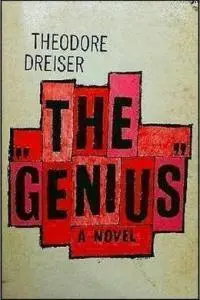
- Название:The Genius
- Автор:
- Издательство:epubBooks Classics
- Жанр:
- Год:2014
- ISBN:нет данных
- Рейтинг книги:4 / 5. Голосов: 1
-
Избранное:Добавить в избранное
- Отзывы:
-
Ваша оценка:
The Genius: краткое содержание, описание и аннотация
Предлагаем к чтению аннотацию, описание, краткое содержание или предисловие (зависит от того, что написал сам автор книги «The Genius»). Если вы не нашли необходимую информацию о книге — напишите в комментариях, мы постараемся отыскать её.
The Genius — читать онлайн бесплатно полную книгу (весь текст) целиком
Ниже представлен текст книги, разбитый по страницам. Система сохранения места последней прочитанной страницы, позволяет с удобством читать онлайн бесплатно книгу «The Genius», без необходимости каждый раз заново искать на чём Вы остановились. Поставьте закладку, и сможете в любой момент перейти на страницу, на которой закончили чтение.
Интервал:
Закладка:
Angela decided that she would, for curiosity's sake, and in case she wished to act in the matter some time; and was informed by the wiseacre who examined her that in his opinion there was no doubt that she could. She would have to subject herself to a strict regimen. Her muscles would have to be softened by some form of manipulation. Otherwise, she was apparently in a healthy, normal condition and would suffer no intolerable hardship. This pleased and soothed Angela greatly. It gave her a club wherewith to strike her lord—a chain wherewith to bind him. She did not want to act at once. It was too serious a matter. She wanted time to think. But it was pleasant to know that she could do this. Unless Eugene sobered down now―
During the time in which he had been working for the Summerfield Company and since then for the Kalvin Company here in Philadelphia, Eugene, in spite of the large salary he was receiving—more each year—really had not saved so much money. Angela had seen to it that some of his earnings were invested in Pennsylvania Railroad stock, which seemed to her safe enough, and in a plot of ground two hundred by two hundred feet at Upper Montclair, New Jersey, near New York, where she and Eugene might some day want to live. His business engagements had necessitated considerable personal expenditures, his opportunity to enter the Baltusrol Golf Club, the Yere Tennis Club, the Philadelphia Country Club, and similar organizations had taken annual sums not previously contemplated, and the need of having a modest automobile, not a touring car, was obvious. His short experience with that served as a lesson, however, for it was found to be a terrific expense, entirely disproportionate to his income. After paying for endless repairs, salarying a chauffeur wearisomely, and meeting with an accident which permanently damaged the looks of his machine, he decided to give it up. They could rent autos for all the uses they would have. And so that luxury ended there.
It was curious, too, how during this time their Western home relations fell rather shadowily into the background. Eugene had not been home now for nearly two years, and Angela had seen only David of all her family since she had been in Philadelphia. In the fall of their third year there Angela's mother died and she returned to Blackwood for a short time. The following spring Eugene's father died. Myrtle moved to New York; her husband, Frank Bangs, was connected with a western furniture company which was maintaining important show rooms in New York. Myrtle had broken down nervously and taken up Christian Science, Eugene heard. Henry Burgess, Sylvia's husband, had become president of the bank with which he had been so long connected, and had sold his father's paper, the Alexandria Appeal , when the latter suddenly died. Marietta was promising to come to Philadelphia next year, in order, as she said, that Eugene might get her a rich husband; but Angela informed him privately that Marietta was now irrevocably engaged and would, the next year, marry a wealthy Wisconsin lumber man. Everyone was delighted to hear that Eugene was doing so well, though all regretted the lapse of his career as an artist. His fame as an advertising man was growing, and he was thought to have considerable weight in the editorial direction of the North American Weekly . So he flourished.
Chapter XXXVIII
It was in the fall of the third year that the most flattering offer of any was made him, and that without any seeking on his part, for he was convinced that he had found a fairly permanent berth and was happy among his associates. Publishing and other trade conditions were at this time in a peculiar condition, in which lieutenants of any importance in any field might well be called to positions of apparently extraordinary prominence and trust. Most of the great organizations of Eugene's day were already reaching a point where they were no longer controlled by the individuals who had founded and constructed them, but had passed into the hands of sons or holding companies, or groups of stockholders, few of whom knew much, if anything, of the businesses which they were called to engineer and protect.
Hiram C. Colfax was not a publisher at all at heart. He had come into control of the Swinton–Scudder–Davis Company by one of those curious manipulations of finance which sometimes give the care of sheep into the hands of anything but competent or interested shepherds. Colfax was sufficiently alert to handle anything in such a way that it would eventually make money for him, even if that result were finally attained by parting with it. In other words, he was a financier. His father had been a New England soap manufacturer, and having accumulated more or less radical ideas along with his wealth, had decided to propagandize in favor of various causes, the Single Tax theory of Henry George for one, Socialism for another, the promotion of reform ideas in politics generally. He had tried in various ways to get his ideas before the public, but had not succeeded very well. He was not a good speaker, not a good writer, simply a good money maker and fairly capable thinker, and this irritated him. He thought once of buying or starting a newspaper in Boston, but investigation soon showed him that this was a rather hazardous undertaking. He next began subsidizing small weeklies which should advocate his reforms, but this resulted in little. His interest in pamphleteering did bring his name to the attention of Martin W. Davis of the Swinton–Scudder–Davis Company, whose imprint on books, magazines and weeklies was as common throughout the length and breadth of the land as that of Oxford is upon the English bible.
The Swinton–Scudder–Davis Company was in sad financial straits. Intellectually, for various reasons, it had run to seed. John Jacob Swinton and Owen V. Scudder, the men with book, magazine and true literary instincts, were long since dead. Mr. Davis had tried for the various heirs and assigns involved to run it intelligently and honestly, but intelligence and honesty were of little value in this instance without great critical judgment. This he had not. The house had become filled with editors, readers, critics, foremen of manufacturing and printing departments, business managers, art directors, traveling salesmen and so on without end, each of whom might be reasonably efficient if left alone, but none of whom worked well together and all of whom used up a great deal of money.
The principal literary publication, a magazine of great prestige, was in the hands of an old man who had been editor for nearly forty years. A weekly was being run by a boy, comparatively, a youth of twenty–nine. A second magazine, devoted to adventure fiction, was in the hands of another young man of twenty–six, a national critical monthly was in the hands of salaried critics of great repute and uncompromising attitude. The book department was divided into the hands of a juvenile editor, a fiction editor, a scientific and educational editor and so on. It was Mr. Davis' task to see that competent overseers were in charge of all departments so that they might flourish and work harmoniously under him, but he was neither sufficiently wise or forceful to fill the rôle. He was old and was veered about first by one theory and then by another, and within the house were rings and cliques. One of the most influential of these—the most influential, in fact—was one which was captained and led by Florence J. White, an Irish–American, who as business manager (and really more than that, general manager under Davis) was in charge of the manufacturing and printing departments, and who because of his immense budgets for paper, ink, printing, mailing and distribution generally, was in practical control of the business.
He it was who with Davis' approval said how much was to be paid for paper, ink, composition, press work, and salaries generally. He it was who through his henchman, the head of the printing department, arranged the working schedules by which the magazines and books were to reach the presses, with the practical power to say whether they were to be on time or not. He it was who through another superintendent supervised the mailing and the stock room, and by reason of his great executive ability was coming to have a threatening control over the advertising and circulation departments.
Читать дальшеИнтервал:
Закладка:
Похожие книги на «The Genius»
Представляем Вашему вниманию похожие книги на «The Genius» списком для выбора. Мы отобрали схожую по названию и смыслу литературу в надежде предоставить читателям больше вариантов отыскать новые, интересные, ещё непрочитанные произведения.




Обсуждение, отзывы о книге «The Genius» и просто собственные мнения читателей. Оставьте ваши комментарии, напишите, что Вы думаете о произведении, его смысле или главных героях. Укажите что конкретно понравилось, а что нет, и почему Вы так считаете.