Теодор Драйзер - The Genius
Здесь есть возможность читать онлайн «Теодор Драйзер - The Genius» весь текст электронной книги совершенно бесплатно (целиком полную версию без сокращений). В некоторых случаях можно слушать аудио, скачать через торрент в формате fb2 и присутствует краткое содержание. Год выпуска: 2014, Издательство: epubBooks Classics, Жанр: Классическая проза, на английском языке. Описание произведения, (предисловие) а так же отзывы посетителей доступны на портале библиотеки ЛибКат.
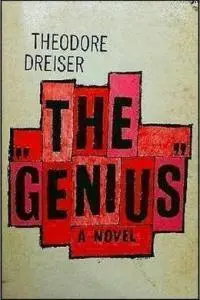
- Название:The Genius
- Автор:
- Издательство:epubBooks Classics
- Жанр:
- Год:2014
- ISBN:нет данных
- Рейтинг книги:4 / 5. Голосов: 1
-
Избранное:Добавить в избранное
- Отзывы:
-
Ваша оценка:
The Genius: краткое содержание, описание и аннотация
Предлагаем к чтению аннотацию, описание, краткое содержание или предисловие (зависит от того, что написал сам автор книги «The Genius»). Если вы не нашли необходимую информацию о книге — напишите в комментариях, мы постараемся отыскать её.
The Genius — читать онлайн бесплатно полную книгу (весь текст) целиком
Ниже представлен текст книги, разбитый по страницам. Система сохранения места последней прочитанной страницы, позволяет с удобством читать онлайн бесплатно книгу «The Genius», без необходимости каждый раз заново искать на чём Вы остановились. Поставьте закладку, и сможете в любой момент перейти на страницу, на которой закончили чтение.
Интервал:
Закладка:
"I thought once of hiring him myself here not long ago," he told Fredericks. "He has ideas, you can see that."
The next thing was a private letter from Mr. Fredericks to Mr. Witla asking if by any chance he could come over to Philadelphia the following Saturday afternoon, indicating that there was a business proposition of considerable importance which he wished to lay before him.
From the paper on which it was written Eugene could see that there was something important in the wind, and laid the matter before Angela. The latter's eyes glistened.
"I'd certainly go if I were you," she advised. "He might want to make you business manager or art director or something. You can be sure they don't intend to offer you less than you're getting now, and Mr. Summerfield certainly has not treated you very well, anyhow. You've worked like a slave for him, and he's never kept his agreement to raise your salary as much as he said he would. It may mean our having to leave New York; but that doesn't make any difference for a while. You don't intend to stay in this field, anyhow. You only want to stay long enough to get a good sound income of your own."
Angela's longing for Eugene's art career was nevertheless being slightly stilled these days by the presence and dangled lure of money. It was a great thing to be able to go downtown and buy dresses and hats to suit the seasons. It was a fine thing to be taken by Eugene Saturday afternoons and Sundays in season to Atlantic City, to Spring Lake, and Shelter Island.
"I think I will go over," he said; and he wrote Mr. Fredericks a favorable reply.
The latter met him at the central station in Philadelphia with his auto and took him out to his country place in the Haverford district. On the way he talked of everything but business—the state of the weather, the condition of the territory through which they were traveling, the day's news, the nature and interest of Eugene's present work. When they were in the Fredericks house, where they arrived in time for dinner, and while they were getting ready for it, Mr. Obadiah Kalvin dropped in—ostensibly to see his partner, but really to look at Eugene without committing himself. He was introduced to Eugene, and shook hands with him cordially. During the meal he talked with Eugene a little, though not on business, and Eugene wondered why he had been called. He suspected, knowing as he did that Kalvin was the president of the company, that the latter was there to look at him. After dinner Mr. Kalvin left, and Eugene noted that Mr. Fredericks was then quite ready to talk with him.
"The thing that I wanted you to come over and see me about is in regard to our weekly and the advertising department. We have a great paper over here, as you know," he said. "We are intending to do much more with it in the future than we have in the past even. Mr. Kalvin is anxious to get just the man to take charge of the advertising department. We have been looking for someone for quite a little while. Several people have suggested your name, and I'm rather inclined to think that Mr. Kalvin would be pleased to see you take it. His visit here today was purely accidental, but it was fortunate. He had a chance to look at you, so that if I should propose your name he will know just who you are. I think you would find this company a fine background for your efforts. We have no penny–wise–and–pound–foolish policy over here. We know that any successful thing is made by the men behind it, and we are willing to pay good money for good men. I don't know what you are getting where you are, and I don't care very much. If you are interested I should like to talk to Mr. Kalvin about you, and if he is interested I should like to bring you two together for a final conference. The salary will be made right, you needn't worry about that. Mr. Kalvin isn't a small man. If he likes a man—and I think he might like you—he'll offer you what he thinks you're worth and you can take it or leave it. I never heard anyone complain about the salary he offered."
Eugene listened with extreme self–gratulation. He was thrilling from head to toe. This was the message he had been expecting to hear for so long. He was getting five thousand now, he had been offered six thousand. Mr. Kalvin could do no less than offer him seven or eight—possibly ten. He could easily ask seven thousand five hundred.
"I must say," he said innocently, "the proposition sounds attractive to me. It's a different kind of thing—somewhat—from what I have been doing, but I think I could handle it successfully. Of course, the salary will determine the whole thing. I'm not at all badly placed where I am. I've just got comfortably settled in New York, and I'm not anxious to move. But I would not be opposed to coming. I have no contract with Mr. Summerfield. He has never been willing to give me one."
"Well, we are not keen upon contracts ourselves," said Mr. Fredericks. "It's not a very strong reed to lean upon, anyhow, as you know. Still a contract might be arranged if you wish it. Supposing we talk a little further to Mr. Kalvin today. He doesn't live so far from here," and with Eugene's consent he went to the phone.
The latter had supposed that the conversation with Mr. Kalvin was something which would necessarily have to take place at some future date; but from the conversation then and there held over the phone it appeared not. Mr. Fredericks explained elaborately over the phone—as though it was necessary—that he had been about the work of finding an advertising manager for some time, as Mr. Kalvin knew, and that he had some difficulty in finding the right man.
"I have been talking to Mr. Witla, whom you met here today, and he is interested in what I have been telling him about the Weekly . He strikes me from my talk with him here as being possibly the man you are looking for. I thought that you might like to talk with him further."
Mr. Kalvin evidently signified his assent, for the machine was called out and they traveled to his house, perhaps a mile away. On the way Eugene's mind was busy with the possibilities of the future. It was all so nebulous, this talk of a connection with the famous Kalvin Publishing Company; but at the same time it was so significant, so potential. Could it be possible that he was going to leave Summerfield, after all, and under such advantageous circumstances? It seemed like a dream.
Mr. Kalvin met them in the library of his house, which stood in a spacious lawn and which save for the lights in the library was quite dark and apparently lonely. And here their conversation was continued. He was a quiet man—small, gray–haired, searching in his gaze. He had, as Eugene noted, little hands and feet, and appeared as still and composed as a pool in dull weather. He said slowly and quietly that he was glad that Eugene and Mr. Fredericks had had a talk. He had heard a little something of Eugene in the past; not much. He wanted to know what Eugene thought of current advertising policies, what he thought of certain new developments in advertising method, and so on, at some length.
"So you think you might like to come with us," he observed drily toward the end, as though Eugene had proposed coming.
"I don't think I would object to coming under certain conditions," he replied.
"And what are those conditions?"
"Well, I would rather hear what you have to suggest, Mr. Kalvin. I really am not sure that I want to leave where I am. I'm doing pretty well as it is."
"Well, you seem a rather likely young man to me," said Mr. Kalvin. "You have certain qualities which I think I need. I'll say eight thousand for this year, and if everything is satisfactory one year from this time I'll make it ten. After that we'll let the future take care of itself."
"Eight thousand! Ten next year!" thought Eugene. The title of advertising manager of a great publication! This was certainly a step forward!
Читать дальшеИнтервал:
Закладка:
Похожие книги на «The Genius»
Представляем Вашему вниманию похожие книги на «The Genius» списком для выбора. Мы отобрали схожую по названию и смыслу литературу в надежде предоставить читателям больше вариантов отыскать новые, интересные, ещё непрочитанные произведения.






Обсуждение, отзывы о книге «The Genius» и просто собственные мнения читателей. Оставьте ваши комментарии, напишите, что Вы думаете о произведении, его смысле или главных героях. Укажите что конкретно понравилось, а что нет, и почему Вы так считаете.