Теодор Драйзер - The Genius
Здесь есть возможность читать онлайн «Теодор Драйзер - The Genius» весь текст электронной книги совершенно бесплатно (целиком полную версию без сокращений). В некоторых случаях можно слушать аудио, скачать через торрент в формате fb2 и присутствует краткое содержание. Год выпуска: 2014, Издательство: epubBooks Classics, Жанр: Классическая проза, на английском языке. Описание произведения, (предисловие) а так же отзывы посетителей доступны на портале библиотеки ЛибКат.
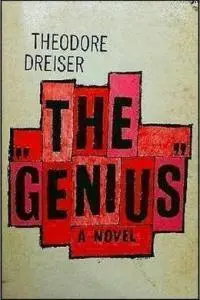
- Название:The Genius
- Автор:
- Издательство:epubBooks Classics
- Жанр:
- Год:2014
- ISBN:нет данных
- Рейтинг книги:4 / 5. Голосов: 1
-
Избранное:Добавить в избранное
- Отзывы:
-
Ваша оценка:
The Genius: краткое содержание, описание и аннотация
Предлагаем к чтению аннотацию, описание, краткое содержание или предисловие (зависит от того, что написал сам автор книги «The Genius»). Если вы не нашли необходимую информацию о книге — напишите в комментариях, мы постараемся отыскать её.
The Genius — читать онлайн бесплатно полную книгу (весь текст) целиком
Ниже представлен текст книги, разбитый по страницам. Система сохранения места последней прочитанной страницы, позволяет с удобством читать онлайн бесплатно книгу «The Genius», без необходимости каждый раз заново искать на чём Вы остановились. Поставьте закладку, и сможете в любой момент перейти на страницу, на которой закончили чтение.
Интервал:
Закладка:
"Well, that isn't so bad," he said, after a moment's apparent reflection. "I'd be willing to take that, I think."
"I thought you would," said Mr. Kalvin, with a dry smile. "Well, you and Mr. Fredericks can arrange the rest of the details. Let me wish you good luck," and he extended his hand cordially.
Eugene took it.
It did not seem as he rode back in the machine with Mr. Fredericks to the latter's house—for he was invited to stay for the night—that it could really be true. Eight thousand a year! Was he eventually going to become a great business man instead of an artist? He could scarcely flatter himself that this was true, but the drift was strange. Eight thousand this year! Ten the next if he made good; twelve, fifteen, eighteen― He had heard of such salaries in the advertising field alone, and how much more would his investments bring him. He foresaw an apartment on Riverside Drive in New York, a house in the country perhaps, for he fancied he would not always want to live in the city. An automobile of his own, perhaps; a grand piano for Angela; Sheraton or Chippendale furniture; friends, fame—what artist's career could compare to this? Did any artist he knew enjoy what he was enjoying now, even? Why should he worry about being an artist? Did they ever get anywhere? Would the approval of posterity let him ride in an automobile now? He smiled as he recalled Dula's talk about class superiority—the distinction of being an artist, even though poor. Poverty be hanged! Posterity could go to the devil! He wanted to live now—not in the approval of posterity.
Chapter XXXVII
The best positions are not always free from the most disturbing difficulties, for great responsibility goes with great opportunity; but Eugene went gaily to this new task, for he knew that it could not possibly be much more difficult than the one he was leaving. Truly, Summerfield had been a terrible man to work for. He had done his best by petty nagging, insisting on endless variations, the most frank and brutal criticism, to break down Eugene's imperturbable good nature and make him feel that he could not reasonably hope to handle the situation without Summerfield's co–operation and assistance. But he had only been able, by so doing, to bring out Eugene's better resources. His self–reliance, coolness under fire, ability to work long and ardently even when his heart was scarcely in it, were all strengthened and developed.
"Well, luck to you, Witla," he said, when Eugene informed him one morning that he was going to leave and wished to give him notice.
"You needn't take me into consideration. I don't want you to stay if you're going to go. The quicker the better. These long drawn–out agonies over leaving don't interest me. There's nothing in that. Clinch the job today if you want it. I'll find someone."
Eugene resented his indifference, but he only smiled a cordial smile in reply. "I'll stay a little while if you want me to—one or two weeks—I don't want to tie up your work in any way."
"Oh, no, no! You won't tie up my work. On your way, and good luck!"
"The little devil!" thought Eugene; but he shook hands and said he was sorry. Summerfield grinned imperturbably. He wound up his affairs quickly and got out. "Thank God," he said the day he left, "I'm out of that hell hole!" But he came to realize afterward that Summerfield had rendered him a great service. He had forced him to do his best and utmost, which no one had ever done before. It had told in his character, his spiritual make–up, his very appearance. He was no longer timid and nervous, but rather bold and determined–looking. He had lost that fear of very little things, for he had been sailing through stormy seas. Little storms did not—could never again—really frighten him. He had learned to fight. That was the one great thing Summerfield had done for him.
In the offices of the Kalvin Company it was radically different. Here was comparative peace and quiet. Kalvin had not fought his way up by clubbing little people through little difficulties, but had devoted himself to thinking out a few big things, and letting them because of their very bigness and newness make their own way and his. He believed in big men, honest men—the biggest and most honest he could find. He saw something in Eugene, a tendency toward perfection perhaps which attracted him.
The formalities of this new arrangement were soon concluded, and Eugene came into his new and beautiful offices, heralded by the word recently passed about that he was a most charming man. He was greeted by the editor, Townsend Miller, in the most cordial manner. He was met by his assembled staff in the most friendly spirit. It quite took Eugene's breath away to realize that he was the responsible head of some fifteen capable advertising men here in Philadelphia alone, to say nothing of eight more in a branch office in Chicago and traveling canvassers in the different parts of the country—the far West, the South, the Southwest, the Canadian Northwest. His material surroundings were much more imposing than they had been with the Summerfield Company. The idea of all these men was to follow up business, to lay interesting propositions before successful merchants and manufacturers who had not yet tried the columns of the North American Weekly , to make contracts which should be mutually advantageous to the advertiser and the Weekly , and to gain and retain good–will according to the results rendered. It was no very difficult task in connection with the North American Weekly to do this, because owing to a novel and appealing editorial policy it was already in possession of a circulation of five hundred thousand a week, and was rapidly gaining more. It was not difficult, as Eugene soon found, to show advertisers in most cases that this was a proposition in which worth–while results could be obtained. What with Eugene's fertility in suggesting new methods of advertising, his suaveness of approach and geniality in laying before the most recalcitrant his very desirable schemes, his ability to get ideas and suggestions out of his men in conference, he was really in no danger of not being able to hold his own, and indeed was destined to make a rather remarkable showing.
Eugene and Angela settled into what might have been deemed a fixed attitude of comfort and refinement. Without much inconvenience to himself and with little friction among those about, he had succeeded in reorganizing his staff along lines which were eminently satisfactory to himself. Some men who were formerly with the Summerfield Company were now with him. He had brought them because he found he could inculcate in them the spirit of sympathetic relationship and good understanding such as Kalvin desired. He was not making the progress which Summerfield was making with really less means at his command, but then, on the other hand, this was a rich company which did not ask or expect any such struggle as that which Summerfield had been and was still compelled to make for himself. The business ethics of this company were high. It believed in clean methods, good salaries, honest service. Kalvin liked him, and he had one memorable conversation with Eugene some time after he came there—almost a year—which stuck in his memory and did him much good. Kalvin saw clearly wherein both his strength and his weakness lay, and once said to Fredericks, his business manager: "The one thing I like about that man is his readiness with ideas. He always has one, and he's the most willing man to try I ever knew. He has imagination. He needs to be steadied in the direction of sober thought, so that he doesn't promise more than he can fulfil. Outside this I see nothing the matter with him."
Fredericks agreed. He liked Eugene also. He did as much as he could to make things smooth, but of course Eugene's task was personal and to be worked out by him solely. Kalvin said to him when it became necessary to raise his salary:
Читать дальшеИнтервал:
Закладка:
Похожие книги на «The Genius»
Представляем Вашему вниманию похожие книги на «The Genius» списком для выбора. Мы отобрали схожую по названию и смыслу литературу в надежде предоставить читателям больше вариантов отыскать новые, интересные, ещё непрочитанные произведения.






Обсуждение, отзывы о книге «The Genius» и просто собственные мнения читателей. Оставьте ваши комментарии, напишите, что Вы думаете о произведении, его смысле или главных героях. Укажите что конкретно понравилось, а что нет, и почему Вы так считаете.