Теодор Драйзер - The Genius
Здесь есть возможность читать онлайн «Теодор Драйзер - The Genius» весь текст электронной книги совершенно бесплатно (целиком полную версию без сокращений). В некоторых случаях можно слушать аудио, скачать через торрент в формате fb2 и присутствует краткое содержание. Год выпуска: 2014, Издательство: epubBooks Classics, Жанр: Классическая проза, на английском языке. Описание произведения, (предисловие) а так же отзывы посетителей доступны на портале библиотеки ЛибКат.
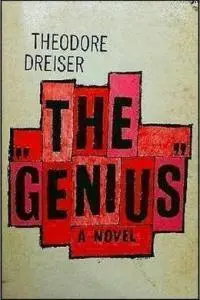
- Название:The Genius
- Автор:
- Издательство:epubBooks Classics
- Жанр:
- Год:2014
- ISBN:нет данных
- Рейтинг книги:4 / 5. Голосов: 1
-
Избранное:Добавить в избранное
- Отзывы:
-
Ваша оценка:
The Genius: краткое содержание, описание и аннотация
Предлагаем к чтению аннотацию, описание, краткое содержание или предисловие (зависит от того, что написал сам автор книги «The Genius»). Если вы не нашли необходимую информацию о книге — напишите в комментариях, мы постараемся отыскать её.
The Genius — читать онлайн бесплатно полную книгу (весь текст) целиком
Ниже представлен текст книги, разбитый по страницам. Система сохранения места последней прочитанной страницы, позволяет с удобством читать онлайн бесплатно книгу «The Genius», без необходимости каждый раз заново искать на чём Вы остановились. Поставьте закладку, и сможете в любой момент перейти на страницу, на которой закончили чтение.
Интервал:
Закладка:
His head was fairly seething and ringing with all he had seen and heard. Colfax was a great man, he thought, greater in some respects than Kalvin. He was more forceful, more enthusiastic, younger—more like himself, than Kalvin. He could never fail, he was too rich. He would make a success of this great corporation—a tremendous success—and if he went he might help make it with him. What a thing that would be! Very different from working for a corporation with whose success he had never had anything to do. Should he ignore this offer? New York, a true art and literary standing; a great executive and social standing; fame; money—all these were calling. Why, on eighteen or twenty–five thousand he could have a splendid studio apartment of his own, say on Riverside Drive; he could entertain magnificently; he could keep an automobile without worrying about it. Angela would cease feeling that they had to be careful. It would be the apex of lieutenantship for him. Beyond that he would take stock in the company, or a business of his own. What a long distance he had come from the days when, here as a boy, he had walked the streets, wondering where he would find a $3 room, and when as an art failure he carried his paintings about and sold them for ten and fifteen dollars. Dear Heaven, what peculiar tricks fortune could play!
The discussion with Angela of this proposition led to some additional uncertainty, for although she was greatly impressed with what Colfax offered, she was afraid Eugene might be making a mistake in leaving Kalvin. The latter had been so nice to Eugene. He had never associated with him in any intimate way, but he and Angela had been invited to his home on several formal occasions, and Eugene had reported that Kalvin was constantly giving him good advice. His attitude in the office was not critical but analytic and considerate.
"He's been mighty nice to me," Eugene said to her one morning at breakfast; "they all have. It's a shame to leave him. And yet, now that I look at it, I can see very plainly that there is never going to be the field here that there will be with the United Company. They have the publications and the book business, and the Kalvin Company hasn't and won't have. Kalvin is too old. They're in New York, too; that's one thing I like about it. I'd like to live in New York again. Wouldn't you?"
"It would be fine," said Angela, who had never really cared for Philadelphia and who saw visions of tremendous superiority in this situation. Philadelphia had always seemed a little out of the way of things after New York and Paris. Only Eugene's good salary and the comforts they had experienced here had made it tolerable. "Why don't you speak to Mr. Kalvin and tell him just what Mr. Colfax says," she asked. "It may be that he'll offer to raise your salary so much that you'll want to stay when he hears of this."
"No danger," replied Eugene. "He may raise it a bit, but he never can pay me twenty–five thousand dollars a year. There isn't any reason for paying it. It takes a corporation like the United to do it. There isn't a man in our place gets that, unless it is Fredericks. Besides, I could never be anything more here, or much more, than advertising manager. Miller has that editorial job sewed up. He ought to have it, too, he's a good man. This thing that Colfax offers lets me out into a new field. I don't want to be an advertising manager all my days if I can help it!"
"I don't want you to be, either, Eugene," sighed Angela. "It's a shame you can't quit entirely and take up your art work. I've always thought that if you were to stop now and go to painting you would make a success of it. There's nothing the matter with your nerves now. It's just a question of whether we want to live more simply for a while and let you work at that. I'm sure you'd make a big success of it."
"Art doesn't appeal to me so much as it did once," replied Eugene. "I've lived too well and I know a lot more about living than I once did. Where could I make twelve thousand a year painting? If I had a hundred thousand or a couple of hundred thousand laid aside, it would be a different thing, but I haven't. All we have is that Pennsylvania Railroad stock and those lots in Montclair eating their merry little heads off in taxes, and that Steel common stock. If we go back to New York we ought to build on that Montclair property, and rent it if we don't want to live in it. If I quit now we wouldn't have more than two thousand dollars a year outside of what I could earn, and what sort of a life can you live on that?"
Angela saw, disappearing under those circumstances, the rather pleasant world of entertainment in which they were disporting themselves. Art distinction might be delightful, but would it furnish such a table as they were sitting at this morning? Would they have as nice a home and as many friends? Art was glorious, but would they have as many rides and auto trips as they had now? Would she be able to dress as nicely? It took money to produce a variety of clothing—house, street, evening, morning and other wear. Hats at thirty–five and forty dollars were not in the range of artists' wives, as a rule. Did she want to go back to a simpler life for his art's sake? Wouldn't it be better to have him go with Mr. Colfax and make $25,000 a year for a while and then have him retire?
"You'd better talk to Mr. Kalvin," she counseled. "You'll have to do that, anyhow. See what he says. After that you can decide what you must do."
Eugene hesitated, but after thinking it all over he decided that he would.
One morning not long after, when he met Mr. Kalvin in the main hall on the editorial floor, he said, "I'd like to talk to you for a few moments some time today alone, Mr. Kalvin, if you can spare me the time."
"Certainly. I'm not busy now," returned the president. "Come right down. What is it you want to see me about?"
"Well, I'll tell you," said Eugene, when they had reached the former's office and he had closed the door. "I've had an offer that I feel that I ought to talk to you about. It's a pretty fascinating proposition and it's troubling me. I owe it to you as well as to myself to speak about it."
"Yes; what is it?" said Kalvin considerately.
"Mr. Colfax of the United Magazines Corporation came to me not long ago and wanted to know if I would not come with him. He offers me eighteen thousand dollars a year as advertising manager to begin with, and a chance to take charge of all the art and editorial ends as well a little later at twenty–five thousand dollars. He calls it the managing–publishing end of the business. I've been thinking of it seriously, for I've handled the art and advertising ends here and at the Summerfield Company, and I have always imagined that I knew something of the book and magazine business. I know it's a rather large proposition, but I'm not at all sure that I couldn't handle it.".
Mr. Kalvin listened quietly. He saw what Colfax's scheme was and liked it as a proposition. It was a good idea, but needed an exceptional man for the position. Was Eugene the man? He wasn't sure of that, and yet perchance he might be. Colfax, he thought, was a man of excellent financial if not publishing judgment. He might, if he could get the proper person, make an excellent success of his business. Eugene interested him, perhaps more at first flash than he would later. This man before him had a most promising appearance. He was clean, quick, with an alert mind and eye. He could see how, because of Eugene's success here, Colfax was thinking of him being even more exceptional than he was. He was a good man, a fine man, under direction. Would Colfax have the patience, the interest, the sympathy, to work with and understand him?
"Now, let's think about that a little, Witla," he said quietly. "It's a flattering offer. You'd be foolish if you didn't give it careful consideration. Do you know anything about the organization of that place over there?"
Читать дальшеИнтервал:
Закладка:
Похожие книги на «The Genius»
Представляем Вашему вниманию похожие книги на «The Genius» списком для выбора. Мы отобрали схожую по названию и смыслу литературу в надежде предоставить читателям больше вариантов отыскать новые, интересные, ещё непрочитанные произведения.






Обсуждение, отзывы о книге «The Genius» и просто собственные мнения читателей. Оставьте ваши комментарии, напишите, что Вы думаете о произведении, его смысле или главных героях. Укажите что конкретно понравилось, а что нет, и почему Вы так считаете.