Теодор Драйзер - The Genius
Здесь есть возможность читать онлайн «Теодор Драйзер - The Genius» весь текст электронной книги совершенно бесплатно (целиком полную версию без сокращений). В некоторых случаях можно слушать аудио, скачать через торрент в формате fb2 и присутствует краткое содержание. Год выпуска: 2014, Издательство: epubBooks Classics, Жанр: Классическая проза, на английском языке. Описание произведения, (предисловие) а так же отзывы посетителей доступны на портале библиотеки ЛибКат.
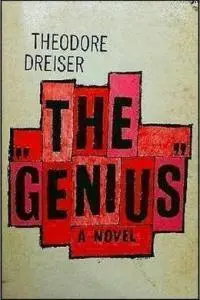
- Название:The Genius
- Автор:
- Издательство:epubBooks Classics
- Жанр:
- Год:2014
- ISBN:нет данных
- Рейтинг книги:4 / 5. Голосов: 1
-
Избранное:Добавить в избранное
- Отзывы:
-
Ваша оценка:
The Genius: краткое содержание, описание и аннотация
Предлагаем к чтению аннотацию, описание, краткое содержание или предисловие (зависит от того, что написал сам автор книги «The Genius»). Если вы не нашли необходимую информацию о книге — напишите в комментариях, мы постараемся отыскать её.
The Genius — читать онлайн бесплатно полную книгу (весь текст) целиком
Ниже представлен текст книги, разбитый по страницам. Система сохранения места последней прочитанной страницы, позволяет с удобством читать онлайн бесплатно книгу «The Genius», без необходимости каждый раз заново искать на чём Вы остановились. Поставьте закладку, и сможете в любой момент перейти на страницу, на которой закончили чтение.
Интервал:
Закладка:
Angela was really not very much opposed to the change, though her natural conservatism made her worry and hesitate to approve. It was a great step forward if Eugene succeeded, but if he failed it would be such a loss.
"Colfax has so much faith in me," he told her. "He's convinced that I can do it, and faith like that is a great help. I'd like to try it, anyhow. It can't do me any harm. If I think I can't handle the publishing proposition I'll stick to the advertising end."
"All right," said Angela, "but I scarcely know what to advise. They've been so nice to you over here."
"I'll try it," said Eugene determinedly. "Nothing venture, nothing have," and he informed Kalvin the same day.
The latter looked at him solemnly, his keen gray eyes contemplating the situation from all points of view. "Well, Eugene," he said, "you're shouldering a great responsibility. It's difficult. Think carefully of everything that you do. I'm sorry to see you go. Good–bye."
He had the feeling that Eugene was making a mistake—that he would do better to rest a while where he was; but persuasion was useless. It would only give Eugene the notion that he was more important than he was—make matters more difficult in the future.
Kalvin had heard a number of things concerning Colfax recently, and he fancied that Eugene might find it hard to deal with him later. The general impression was that he was subject to sudden likes and dislikes which did not bear the test of time. He was said to be scarcely human enough to be the effective head of a great working corporation.
The truth was that this general opinion was quite correct. Colfax was as hard as steel but of a smiling and delightful presence to those he fancied. Vanity was really his other name, and ambition with him knew no bounds. He hoped to make a tremendous success of his life, to be looked up to as an imposing financier, and he wanted men —only strong men about him. Eugene seemed to Colfax to be a strong man, and the day he finally communicated with him saying that he thought that he would accept his offer but that he wished to talk to him further, Colfax threw his hat up in the air, slapped his side partner White on the back, and exclaimed: "Whee! Florrie! There's a trick I've scored for this corporation. There's a man, unless I am greatly mistaken, will do something here. He's young but he's all right. He's got the looks on you and me, Florrie, but we can stand that, can't we?"
White eyed him, with a show of joy and satisfaction which was purely simulated. He had seen many editors and many advertising men in his time. To his judgment they were nearly all lightweights, men who were easily satisfied with the little toy wherewith he or anyone might decide to gratify their vanity. This was probably another case in point, but if a real publisher were coming in here it would not be so well with him. He might attempt to crowd in on his authority or at least divide it with him. That did not appeal to his personal vanity. It really put a stumbling block in his path, for he hoped to rule here some day alone. Why was it that Colfax was so eager to have the authority in this house divided? Was it because he was somewhat afraid of him? He thought so, and he was exceedingly close to the truth when he thought so.
"Florrie's a good lieutenant," Colfax said to himself, "but he needs to be counterbalanced here by someone who will represent the refinements and that intellectual superiority which the world respects."
He wanted this refinement and intellectual superiority to be popular with the public, and to produce results in the shape of increased circulation for his magazines and books. These two would then act as checks each to the other, thus preventing the house from becoming overweighted in either direction. Then he could drive this team as a grand master—the man who had selected both, whose ideas they represented, and whose judgment they respected. The world of finance and trade would know they were nothing without him.
What Eugene thought and what White thought of this prospective situation was that the other would naturally be the minor figure, and that he under Colfax would be the shining light. Eugene was convinced that the house without proper artistic and intellectual dominance was nothing. White was convinced that without sane commercial management it was a failure and that this was the thing to look to. Money could buy brains.
Colfax introduced Eugene to White on the morning he arrived to take charge, for on the previous occasions when he had been there White was absent. The two looked at each other and immediately suspended judgment, for both were able men. Eugene saw White as an interesting type—tall, leathery, swaggering, a back–street bully evolved into the semblance of a gentleman. White saw in Eugene a nervous, refined, semi–emotional literary and artistic type who had, however, a curious versatility and virility not common among those whom he had previously encountered. He was exceedingly forceful but not poised. That he could eventually undermine him if he could not dominate him he did not doubt. Still he was coming in with the backing of Colfax and a great reputation, and it might not be easy. Eugene made him feel nervous. He wondered as he looked at him whether Colfax would really make him general literary, artistic and advertising administrator, or whether he would remain simply advertising manager as he now entered. Colfax had not accepted Eugene for more than that.
"Here he is, Florrie," Colfax had said of Eugene, in introducing him to White. "This is the man I've been talking about. Witla—Mr. White. White—Mr. Witla. You two want to get together for the good of this house in the future. What do you think of each other?"
Eugene had previously noted the peculiarity of this rowdy, rah! rah! attitude on the part of Colfax. He seemed to have no sense of the conventions of social address and conference at any time.
"Now, by God," Colfax exclaimed, striking his right fist against his left palm, "unless I am greatly mistaken, this house is going to begin to move! I'm not positive that I have the man I want, but I think I have. White, let's stroll around and introduce him."
White swaggered to the office door.
"Sure," he said quietly. "An exceptional man," he said to himself.
Colfax was almost beside himself with satisfaction, for he was subject to emotional flushes which, however, related to self–aggrandizement only. He walked with a great stride (little as he was), which was his wont when he was feeling particularly satisfied. He talked in a loud voice, for he wanted everyone to know that he, Hiram Colfax, was about and as forceful as the lord of so great an institution should be. He could yell and scream something like a woman in a paroxysm of rage when he was thwarted or irritated. Eugene did not know that as yet.
"Here's one of the printing floors," he said to Eugene, throwing open a door which revealed a room full of thundering presses of giant size. "Where's Dodson, boy? Where's Dodson? Tell him to come here. He's foreman of our printing department," he added, turning to Eugene, as the printer's devil, who had been working at a press, scurried away to find his master. "I told you, I guess, that we have thirty of these presses. There are four more floors just like this."
"So you did," replied Eugene. "It certainly is a great concern. I can see that the possibilities of a thing like this are almost limitless."
"Limitless—I should say! It depends on what you can do with this," and he tapped Eugene's forehead. "If you do your part right, and he does his"—turning to White—"there won't be any limit to what this house can do. That remains to be seen."
Just then Dodson came bustling up, a shrewd, keen henchman of White's, and looked at Eugene curiously.
"Dodson, Mr. Witla, the new advertising manager. He's going to try to help pay for all this wasteful presswork you're doing. Witla, Mr. Dodson, manager of the printing department."
Читать дальшеИнтервал:
Закладка:
Похожие книги на «The Genius»
Представляем Вашему вниманию похожие книги на «The Genius» списком для выбора. Мы отобрали схожую по названию и смыслу литературу в надежде предоставить читателям больше вариантов отыскать новые, интересные, ещё непрочитанные произведения.




Обсуждение, отзывы о книге «The Genius» и просто собственные мнения читателей. Оставьте ваши комментарии, напишите, что Вы думаете о произведении, его смысле или главных героях. Укажите что конкретно понравилось, а что нет, и почему Вы так считаете.