Antony Burgess - A Clockwork Orange
Здесь есть возможность читать онлайн «Antony Burgess - A Clockwork Orange» весь текст электронной книги совершенно бесплатно (целиком полную версию без сокращений). В некоторых случаях можно слушать аудио, скачать через торрент в формате fb2 и присутствует краткое содержание. Год выпуска: 1986, ISBN: 1986, Издательство: W. W. Norton & Company, Жанр: Классическая проза, на английском языке. Описание произведения, (предисловие) а так же отзывы посетителей доступны на портале библиотеки ЛибКат.
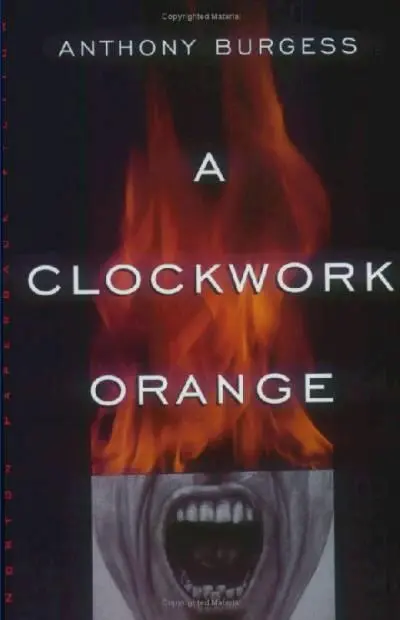
- Название:A Clockwork Orange
- Автор:
- Издательство:W. W. Norton & Company
- Жанр:
- Год:1986
- ISBN:0393312836
- Рейтинг книги:4 / 5. Голосов: 1
-
Избранное:Добавить в избранное
- Отзывы:
-
Ваша оценка:
A Clockwork Orange: краткое содержание, описание и аннотация
Предлагаем к чтению аннотацию, описание, краткое содержание или предисловие (зависит от того, что написал сам автор книги «A Clockwork Orange»). Если вы не нашли необходимую информацию о книге — напишите в комментариях, мы постараемся отыскать её.
Or rather Alex and his three droogs tolchock an old veck, razrez his books, pull off his outer platties and take a malenky bit of cutter.
For Alex’s confessions are written in ‘nadsat’—the teenage argot of a not-too-distant future.
Because of his delinquent excesses, Alex is jailed and made subject to “Ludovico’s Technique,” a chilling experiment in Reclamation Treatment…
Horror farce? Social prophecy? Penetrating study of human choice between good and evil? A “Clockwork Orange” is all three, dazzling proof of Anthony Burgess’s vast talents.
A Clockwork Orange — читать онлайн бесплатно полную книгу (весь текст) целиком
Ниже представлен текст книги, разбитый по страницам. Система сохранения места последней прочитанной страницы, позволяет с удобством читать онлайн бесплатно книгу «A Clockwork Orange», без необходимости каждый раз заново искать на чём Вы остановились. Поставьте закладку, и сможете в любой момент перейти на страницу, на которой закончили чтение.
Интервал:
Закладка:
“First-class,” creeched out this Dr. Brodsky. “You’re doing really well. Just one more and then we’re finished.”
What it was now was the starry 1939–45 War again, and it was a very blobby and liny and crackly film you could viddy had been made by the Germans. It opened with German eagles and the Nazi flag with that like crooked cross that all malchicks at school love to draw, and then there were very haughty and nadmenny like German officers walking through streets that were all dust and bomb-holes and broken buildings. Then you were allowed to viddy lewdies being shot against walls, officers giving the orders, and also horrible nagoy plotts left lying in gutters, all like cages of bare ribs and white thin nogas. Then there were lewdies being dragged off creeching though not on the sound-track, my brothers, the only sound being music, and being tolchocked while they were dragged off. Then I noticed, in all my pain and sickness, what music it was that like crackled and boomed on the sound-track, and it was Ludwig van, the last movement of the Fifth Symphony, and I creeched like bezoomny at that. “Stop!” I creeched. “Stop, you grahzny disgusting sods. It’s a sin, that’s what it is, a filthy unforgivable sin, you bratchnies!” They didn’t stop right away, because there was only a minute or two more to go—lewdies being beaten up and all krovvy, then more firing squads, then the old Nazi flag and THE END. But when the lights came on this Dr. Brodsky and also Dr. Branom were standing in front of me, and Dr. Brodsky said:
“What’s all this about sin, eh?”
“That,” I said, very sick. “Using Ludwig van like that. He did no harm to anyone. Beethoven just wrote music.” And then I was really sick and they had to bring a bowl that was in the shape of like a kidney.
“Music,” said Dr. Brodsky, like musing. “So you’re keen on music. I know nothing about it myself. It’s a useful emotional heightener, that’s all I know. Well, well. What do you think about that, eh, Branom?”
“It can’t be helped,” said Dr. Branom. “Each man kills the thing he loves, as the poet-prisoner said. Here’s the punishment element, perhaps. The Governor ought to be pleased.”
“Give me a drink,” I said, “for Bog’s sake.”
“Loosen him,” ordered Dr. Brodsky. “Fetch him a carafe of ice-cold water.” So then these under-vecks got to work and soon I was peeting gallons and gallons of water and it was like heaven, O my brothers. Dr. Brodsky said:
“You seem a sufficiently intelligent young man. You seem, too, to be not without taste. You’ve just got this violence thing, haven’t you? Violence and theft, theft being an aspect of violence.” I didn’t govoreet a single slovo, brothers, I was still feeling sick, though getting a malenky bit better now. But it had been a terrible day. “Now then,” said Dr. Brodsky, “how do you think this is done? Tell me, what do you think we’re doing to you?”
“You’re making me feel ill. I’m ill when I look at those filthy pervert films of yours. But it’s not really the films that’s doing it. But I feel that if you’ll stop these films I’ll stop feeling ill.”
“Right,” said Dr. Brodsky. “It’s association, the oldest educational method in the world. And what really causes you to feel ill?”
“These grahzny sodding veshches that come out of my gulliver and my plott,” I said, “that’s what it is.”
“Quaint,” said Dr. Brodsky, like smiling, “the dialect of the tribe. Do you know anything of its provenance, Branom?”
“Odd bits of old rhyming slang,” said Dr. Branom, who did not look quite so much like a friend any more. “A bit of gipsy talk, too. But most of the roots are Slav. Propaganda. Subliminal penetration.”
“All right, all right, all right,” said Dr. Brodsky, like impatient and not interested any more. “Well,” he said to me, “it isn’t the wires. It’s nothing to do with what’s fastened to you. Those are just for measuring your reactions. What is it, then?”
I viddied then, of course, what a bezoomny shoot I was not to notice that it was the hypodermic shots in the rooker.
“Oh,” I creeched, “oh, I viddy all now. A filthy cally vonny trick. An act of treachery, sod you, and you won’t do it again.”
“I’m glad you’ve raised your objections now,” said Dr. Brodsky. “Now we can be perfectly clear about it. We can get this stuff of Ludovico’s into your system in many different ways. Orally, for instance. But the subcutaneous method is the best. Don’t fight against it, please. There’s no point in your fighting. You can’t get the better of us.”
“Grahzny bratchnies,” I said, like snivelling. Then I said: “I don’t mind about the ultra-violence and all that cal. I put up with that. But it’s not fair on the music. It’s not fair I should feel ill when I’m slooshying lovely Ludwig van and G. F. Handel and others. All that shows you’re an evil lot of bastards and I shall never forgive you, sods.”
They both looked a bit like thoughtful. Then Dr. Brodsky said: “Delimitation is always difficult. The world is one, life is one. The sweetest and most heavenly of activities partake in some measure of violence—the act of love, for instance; music, for instance. You must take your chance, boy. The choice has been all yours.” I didn’t understand all these slovos, but now I said:
“You needn’t take it any further, sir.” I’d changed my tune a malenky bit in my cunning way. “You’ve proved to me that all this dratsing and ultra-violence and killing is wrong wrong and terribly wrong. I’ve learned my lesson, sirs. I see now what I’ve never seen before. I’m cured, praise God.” And I raised my glazzies in a like holy way to the ceiling. But both these doctors shook their gullivers like sadly and Dr. Brodsky said:
“You’re not cured yet. There’s still a lot to be done. Only when your body reacts promptly and violently to violence, as to a snake, without further help from us, without medication, only then—” I said:
“But, sir, sirs, I see that it’s wrong. It’s wrong because it’s against like society, it’s wrong because every veck on earth has the right to live and be happy without being beaten and tolchocked and knifed. I’ve learned a lot, oh really I have.”
But Dr. Brodsky had a loud long smeck at that, showing all his white zoobies, and said:
“The heresy of an age of reason,” or some such slovos. “I see what is right and approve, but I do what is wrong. No, no, my boy, you must leave it all to us. But be cheerful about it. It will soon be all over. In less than a fortnight now you’ll be a free man.” Then he patted me on the pletcho.
Less than a fortnight, O my brothers and friends, it was like an age. It was like from the beginning of the world to the end of it. To finish the fourteen years without remission in the Staja would have been nothing to it. Every day it was the same. When the devotchka with the hypodermic came round, though, four days after this govoreeting with Dr. Brodsky and Dr. Branom, I said: “Oh, no you won’t,” and tolchocked her on the rooker, and the syringe went tinkle clatter on to the floor. That was like to viddy what they would do. What they did was to get four or five real bolshy white-coated bastards of under-vecks to hold me down on the bed, tolchocking me with grinny litsos close to mine, and then this nurse ptitsa said: “You wicked naughty little devil, you,” while she jabbed my rooker with another syringe and squirted this stuff in real brutal and nasty. And then I was wheeled off exhausted to this like hell sinny as before.
Every day, my brothers, these films were like the same, all kicking and tolchocking and red red krovvy dripping off of litsos and plotts and spattering all over the camera lenses. It was usually grinning and smecking malchicks in the heighth of nadsat fashion, or else teeheeheeing Jap torturers or brutal Nazi kickers and shooters. And each day the feeling of wanting to die with the sickness and gulliver pains and aches in the zoobies and horrible horrible thirst grew really worse. Until one morning I tried to defeat the bastards by crash crash crashing my gulliver against the wall so that I should tolchock myself unconscious, but all that happened was I felt sick with viddying that this kind of violence was like the violence in the films, so I was just exhausted and was given the injection and was wheeled off like before.
Читать дальшеИнтервал:
Закладка:
Похожие книги на «A Clockwork Orange»
Представляем Вашему вниманию похожие книги на «A Clockwork Orange» списком для выбора. Мы отобрали схожую по названию и смыслу литературу в надежде предоставить читателям больше вариантов отыскать новые, интересные, ещё непрочитанные произведения.




Обсуждение, отзывы о книге «A Clockwork Orange» и просто собственные мнения читателей. Оставьте ваши комментарии, напишите, что Вы думаете о произведении, его смысле или главных героях. Укажите что конкретно понравилось, а что нет, и почему Вы так считаете.