Jerome Jerome - Paul Kelver
Здесь есть возможность читать онлайн «Jerome Jerome - Paul Kelver» весь текст электронной книги совершенно бесплатно (целиком полную версию без сокращений). В некоторых случаях можно слушать аудио, скачать через торрент в формате fb2 и присутствует краткое содержание. Город: New York, Год выпуска: 1902, Издательство: Dodd, Mead & Company, Жанр: Классическая проза, на английском языке. Описание произведения, (предисловие) а так же отзывы посетителей доступны на портале библиотеки ЛибКат.
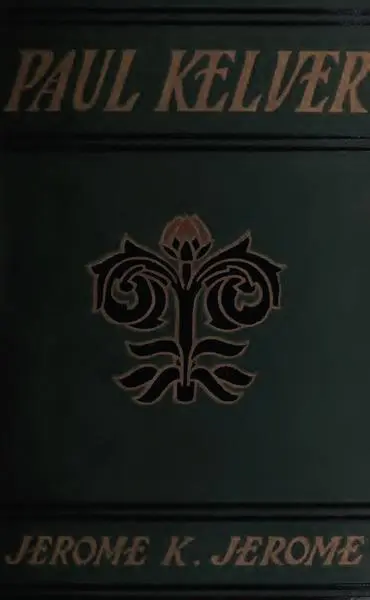
- Название:Paul Kelver
- Автор:
- Издательство:Dodd, Mead & Company
- Жанр:
- Год:1902
- Город:New York
- ISBN:нет данных
- Рейтинг книги:3 / 5. Голосов: 1
-
Избранное:Добавить в избранное
- Отзывы:
-
Ваша оценка:
Paul Kelver: краткое содержание, описание и аннотация
Предлагаем к чтению аннотацию, описание, краткое содержание или предисловие (зависит от того, что написал сам автор книги «Paul Kelver»). Если вы не нашли необходимую информацию о книге — напишите в комментариях, мы постараемся отыскать её.
Paul Kelver — читать онлайн бесплатно полную книгу (весь текст) целиком
Ниже представлен текст книги, разбитый по страницам. Система сохранения места последней прочитанной страницы, позволяет с удобством читать онлайн бесплатно книгу «Paul Kelver», без необходимости каждый раз заново искать на чём Вы остановились. Поставьте закладку, и сможете в любой момент перейти на страницу, на которой закончили чтение.
Интервал:
Закладка:
He had large, fishy eyes, with which he looked me up and down. For such a length of time he remained thus regarding me in silence that a massive gentleman sitting near, who had overheard, took it upon himself to reply in the affirmative, adding that from what he knew of Butterworth we would all of us be waiting here a damned sight longer than any gentleman should keep other ladies and gentlemen waiting for no reason at all.
“I think it exceedingly bad form,” observed the fishy-eyed gentleman, in deep contralto tones, “for any gentleman to take it upon himself to reply to a remark addressed to quite another gentleman.”
“I beg your pardon,” retorted the large gentleman. “I thought you were asleep.”
“I think it very ill manners,” remarked the small gentlemen in the same slow and impressive tones, “for any gentleman to tell another gentleman, who happens to be wide awake, that he thought he was asleep.”
“Sir,” returned the massive gentleman, assuming with the help of a large umbrella a quite Johnsonian attitude, “I decline to alter my manners to suit your taste.”
“If you are satisfied with them,” replied the small gentleman, “I cannot help it. But I think you are making a mistake.”
“Does anybody know what the opera is about?” asked a bright little woman at the other end of the room.
“Does anybody ever know what a comic opera is about?” asked another lady, whose appearance suggested experience.
“I once asked the author,” observed a weary-looking gentleman, speaking from a corner. “His reply was: 'Well, if you had asked me at the beginning of the rehearsals I might have been able to tell you, but damned if I could now!'”
“It wouldn't surprise me,” observed a good-looking gentleman in a velvet coat, “if there occurred somewhere in the proceedings a drinking chorus for male voices.”
“Possibly, if we are good,” added a thin lady with golden hair, “the heroine will confide to us her love troubles, which will interest us and excite us.”
The door at the further end of the room opened and a name was called. An elderly lady rose and went out.
“Poor old Gertie!” remarked sympathetically the thin lady with the golden hair. “I'm told that she really had a voice once.”
“When poor young Bond first came to London,” said the massive gentleman who was sitting on my left, “I remember his telling me he applied to Lord Barrymore's 'tiger,' Alexander Lee, I mean, of course, who was then running the Strand Theatre, for a place in the chorus. Lee heard him sing two lines, and then jumped up. 'Thanks, that'll do; good morning,' says Lee. Bond knew he had got a good voice, so he asked Lee what was wrong. 'What's wrong?' shouts Lee. 'Do you think I hire a chorus to show up my principals?'”
“Having regard to the company present,” commented the fishy-eyed gentleman, “I consider that anecdote as distinctly lacking in tact.”
The feeling of the company appeared to be with the fish-eyed young man.
For the next half hour the door at the further end of the room continued to open and close, devouring, ogre-fashion, each time some dainty human morsel, now chorus gentleman, now chorus lady. Conversation among our thinning ranks became more fitful, a growing anxiety making for silence.
At length, “Mr. Horace Moncrieff” called the voice of the unseen Charon. In common with the rest, I glanced round languidly to see what sort of man “Mr. Horace Moncrieff” might be. The door was pushed open further. Charon, now revealed as a pale-faced young man with a drooping moustache, put his head into the room and repeated impatiently his invitation to the apparently coy Moncrieff. It suddenly occurred to me that I was Mr. Horace Moncrieff.
“So glad you've found yourself,” said the pale-faced young man, as I joined him at the door. “Please don't lose yourself again; we're rather pressed for time.”
I crossed with him through a deserted refreshment bar—one of the saddest of sights—into a room beyond. A melancholy-looking gentleman was seated at the piano. Beside him stood a tall, handsome man, who was opening and reading rapidly from a bundle of letters he held in his hand. A big, burly, bored-looking gentleman was making desperate efforts to be amused at the staccato conversation of a sharp-faced, restless-eyed gentleman, whose peculiarity was that he never by any chance looked at the person to whom he was talking, but always at something or somebody else.
“Moncrieff?” enquired the tall, handsome man—whom I later discovered to be Mr. Hodgson, the manager—without raising his eyes from his letters.
The pale-faced gentleman responded for me.
“Fire away,” said Mr. Hodgson.
“What is it?” asked of me wearily the melancholy gentleman at the piano.
“'Sally in Our Alley,'” I replied.
“What are you?” interrupted Mr. Hodgson. He had never once looked at me, and did not now.
“A tenor,” I replied. “Not a full tenor,” I added, remembering the O'Kelly's instructions.
“Utterly impossible to fill a tenor,” remarked the restless-eyed gentleman, looking at me and speaking to the worried-looking gentleman. “Ever tried?”
Everybody laughed, with the exception of the melancholy gentleman at the piano, Mr. Hodgson throwing in his contribution without raising his eyes from his letters. Throughout the proceedings the restless-eyed gentleman continued to make humorous observations of this nature, at which everybody laughed, excepting always the melancholy pianist—a short, sharp, mechanical laugh, devoid of the least suggestion of amusement. The restless-eyed gentleman, it appeared, was the leading low comedian of the theatre.
“Go on,” said the melancholy gentleman, and commenced the accompaniment.
“Tell me when he's going to begin,” remarked Mr. Hodgson at the conclusion of the first verse.
“He has a fair voice,” said my accompanist. “He's evidently nervous.”
“There is a prejudice throughout theatrical audiences,” observed Mr. Hodgson, “in favour of a voice they can hear. That is all I am trying to impress upon him.”
The second verse, so I imagined, I sang in the voice of a trumpet. The burly gentleman—the translator of the French libretto, as he turned out to be; the author of the English version, as he preferred to be called—acknowledged to having distinctly detected a sound. The restless-eyed comedian suggested an announcement from the stage requesting strict silence during my part of the performance.
The sickness of fear was stealing over me. My voice, so it seemed to me, disappointed at the effect it had produced, had retired, sulky, into my boots, whence it refused to emerge.
“Your voice is all right—very good,” whispered the musical conductor. “They want to hear the best you can do, that's all.”
At this my voice ran up my legs and out of my mouth. “Thirty shillings a week, half salary for rehearsals. If that's all right, Mr. Catchpole will give you your agreement. If not, very much obliged. Good morning,” said Mr. Hodgson, still absorbed in his correspondence.
With the pale-faced young man I retired to a desk in the corner, where a few seconds sufficed for the completion of the business. Leaving, I sought to catch the eye of my melancholy friend, but he appeared too sunk in dejection to notice anything. The restless-eyed comedian, looking at the author of the English version and addressing me as Boanerges, wished me good morning, at which the everybody laughed; and, informed as to the way out by the pale-faced Mr. Catchpole, I left.
The first “call” was for the following Monday at two o'clock. I found the theatre full of life and bustle. The principals, who had just finished their own rehearsal, were talking together in a group. We ladies and gentlemen of the chorus filled the centre of the stage. I noticed the lady I had heard referred to as Gertie; as also the thin lady with the golden hair. The massive gentleman and the fishy-eyed young man were again in close proximity; so long as I knew them they always were together, possessed, apparently, of a sympathetic antipathy for each other. The fishy-eyed young gentleman was explaining the age at which he thought decayed chorus singers ought, in justice to themselves and the public, to retire from the profession; the massive gentleman, the age and size at which he thought parcels of boys ought to be learning manners across their mother's knee.
Читать дальшеИнтервал:
Закладка:
Похожие книги на «Paul Kelver»
Представляем Вашему вниманию похожие книги на «Paul Kelver» списком для выбора. Мы отобрали схожую по названию и смыслу литературу в надежде предоставить читателям больше вариантов отыскать новые, интересные, ещё непрочитанные произведения.









Обсуждение, отзывы о книге «Paul Kelver» и просто собственные мнения читателей. Оставьте ваши комментарии, напишите, что Вы думаете о произведении, его смысле или главных героях. Укажите что конкретно понравилось, а что нет, и почему Вы так считаете.