Jerome Jerome - Paul Kelver
Здесь есть возможность читать онлайн «Jerome Jerome - Paul Kelver» весь текст электронной книги совершенно бесплатно (целиком полную версию без сокращений). В некоторых случаях можно слушать аудио, скачать через торрент в формате fb2 и присутствует краткое содержание. Город: New York, Год выпуска: 1902, Издательство: Dodd, Mead & Company, Жанр: Классическая проза, на английском языке. Описание произведения, (предисловие) а так же отзывы посетителей доступны на портале библиотеки ЛибКат.
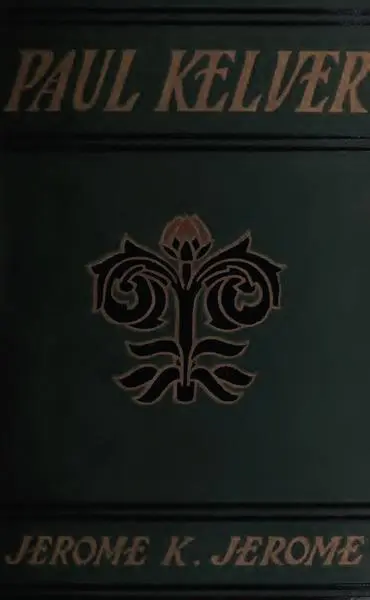
- Название:Paul Kelver
- Автор:
- Издательство:Dodd, Mead & Company
- Жанр:
- Год:1902
- Город:New York
- ISBN:нет данных
- Рейтинг книги:3 / 5. Голосов: 1
-
Избранное:Добавить в избранное
- Отзывы:
-
Ваша оценка:
Paul Kelver: краткое содержание, описание и аннотация
Предлагаем к чтению аннотацию, описание, краткое содержание или предисловие (зависит от того, что написал сам автор книги «Paul Kelver»). Если вы не нашли необходимую информацию о книге — напишите в комментариях, мы постараемся отыскать её.
Paul Kelver — читать онлайн бесплатно полную книгу (весь текст) целиком
Ниже представлен текст книги, разбитый по страницам. Система сохранения места последней прочитанной страницы, позволяет с удобством читать онлайн бесплатно книгу «Paul Kelver», без необходимости каждый раз заново искать на чём Вы остановились. Поставьте закладку, и сможете в любой момент перейти на страницу, на которой закончили чтение.
Интервал:
Закладка:
The watery-eyed Joseph remarked that it had been a fine day between the showers, and hoped that the morrow would be either wet or dry; upon which the lean young lady, having slapped him, asked admiringly of the fat young lady if he wasn't a “silly fool;” to which the fat young lady replied, with somewhat unnecessary severity, I thought, that no one could help being what they were born. To this the lean young lady retorted that it was with precisely similar reflection that she herself controlled her own feelings when tempted to resent the fat young lady's “nasty jealous temper.”
The threatened quarrel was nipped in the bud by the discretion of Miss Sellars, who took the opportunity of the fat young lady's momentary speechlessness to introduce me promptly to both of them. They also, I learned, were cousins. The lean girl said she had “erd on me,” and immediately fell into an uncontrollable fit of giggles; of which the watery-eyed Joseph requested me to take no notice, explaining that she always went off like that at exactly three-quarters to the half-hour every evening, Sundays and holidays excepted; that she had taken everything possible for it without effect, and that what he himself advised was that she should have it off.
The fat girl, seizing the chance afforded her, remarked genteelly that she too had “heard hof me,” with emphasis upon the “hof.” She also remarked it was a long walk from Blackfriars Bridge.
“All depends upon the company, eh? Bet they didn't find it too long.”
This came from a loud-voiced, red-faced man sitting on the sofa beside a somewhat melancholy-looking female dressed in bright green. These twain I discovered to be Uncle and Aunt Gutton. From an observation dropped later in the evening concerning government restrictions on the sale of methylated spirit, and hastily smothered, I gathered that their line was oil and colour.
Mr. Gutton's forte appeared to be badinage. He it was who, on my explaining my heightened colour as due to the closeness of the evening, congratulated his niece on having secured so warm a partner.
“Will be jolly handy,” shouted Uncle Gutton, “for Rosina, seeing she's always complaining of her cold feet.”
Here the lank young man attempted to squeeze himself into the room, but found his entrance barred by the square, squat figure of the watery-eyed young man.
“Don't push,” advised the watery-eyed young man. “Walk over me quietly.”
“Well, why don't yer get out of the way,” growled the lank young man, now coated, but still aggressive.
“Where am I to get to?” asked the watery-eyed young man, with some reason. “Say the word and I'll 'ang myself up to the gas bracket.”
“In my courting days,” roared Uncle Gutton, “the girls used to be able to find seats, even if there wasn't enough chairs to go all round.”
The sentiment was received with varying degrees of approbation. The watery-eyed young man, sitting down, put the lean young lady on his knee, and in spite of her struggles and sounding slaps, heroically retained her there.
“Now, then, Rosie,” shouted Uncle Gutton, who appeared to have constituted himself master of the ceremonies, “don't stand about, my girl; you'll get tired.”
Left to herself, I am inclined to think my fiancee would have spared me; but Uncle Gutton, having been invited to a love comedy, was not to be cheated of any part of the performance, and the audience clearly being with him, there was nothing for it but compliance. I seated myself, and amid plaudits accommodated the ample and heavy Rosina upon my knee.
“Good-bye,” called out to me the watery-eyed young man, as behind the fair Rosina I disappeared from his view. “See you again later on.”
“I used to be a plump girl myself before I married,” observed Aunt Gutton. “Plump as butter I was at one time.”
“It isn't what one eats,” said the maternal Sellars. “I myself don't eat enough to keep a fly, and my legs—”
“That'll do, Mar,” interrupted the filial Sellars, tartly.
“I was only going to say, my dear—”
“We all know what you was going to say, Mar,” retorted Miss Sellars. “We've heard it before, and it isn't interesting.”
Mrs. Sellars relapsed into silence.
“'Ard work and plenty of it keeps you thin enough, I notice,” remarked the lank young man, with bitterness. To him I was now introduced, he being Mr. George Sellars. “Seen 'im before,” was his curt greeting.
At supper—referred to by Mrs. Sellars again in the tone of one remembering a lesson, as a cold col-la-tion, with the accent on the “tion”—I sat between Miss Sellars and the lean young lady, with Aunt and Uncle Gutton opposite to us. It was remarked with approval that I did not appear to be hungry.
“Had too many kisses afore he started,” suggested Uncle Gutton, with his mouth full of cold roast pork and pickles. “Wonderfully nourishing thing, kisses, eh? Look at mother and me. That's all we live on.”
Aunt Gutton sighed, and observed that she had always been a poor feeder.
The watery-eyed young man, observing he had never tasted them himself—at which sally there was much laughter—said he would not mind trying a sample if the lean young lady would kindly pass him one.
The lean young lady opined that, not being used to high living, it might disagree with him.
“Just one,” pleaded the watery-eyed young man, “to go with this bit of cracklin'.”
The lean young lady, amid renewed applause, first thoughtfully wiping her mouth, acceded to his request.
The watery-eyed young man turned it over with the air of a gourmet.
“Not bad,” was his verdict. “Reminds me of onions.” At this there was another burst of laughter.
“Now then, ain't Paul goin' to have one?” shouted Uncle Gutton, when the laughter had subsided.
Amid silence, feeling as wretched as perhaps I have ever felt in my life before or since, I received one from the gracious Miss Sellars, wet and sounding.
“Looks better for it already,” commented the delighted Uncle Gutton. “He'll soon get fat on 'em.”
“Not too many at first,” advised the watery-eyed young man. “Looks to me as if he's got a weak stomach.”
I think, had the meal lasted much longer, I should have made a dash for the street; the contemplation of such step was forming in my mind. But Miss Sellars, looking at her watch, declared we must be getting home at once, for the which I could have kissed her voluntarily; and, being a young lady of decision, at once rose and commenced leave-taking. Polite protests were attempted, but these, with enthusiastic assistance from myself, she swept aside.
“Don't want any one to walk home with you?” suggested Uncle Gutton. “Sure you won't feel lonely by yourselves, eh?”
“We shan't come to no harm,” assured him Miss Sellars.
“P'raps you're right,” agreed Uncle Gutton. “There don't seem to be much of the fiery and untamed about him, so far as I can see.”
“'Slow waters run deep,'” reminded us Aunt Gutton, with a waggish shake of her head.
“No question about the slow,” assented Uncle Gutton. “If you don't like him—” observed Miss Sellars, speaking with dignity.
“To be quite candid with you, my girl, I don't,” answered Uncle Gutton, whose temper, maybe as the result of too much cold pork and whiskey, seemed to have suddenly changed.
“Well, he happens to be good enough for me,” recommenced Miss Sellars.
“I'm sorry to hear a niece of mine say so,” interrupted Uncle Gutton. “If you want my opinion of him—”
“If ever I do I'll call round some time when you're sober and ast you for it,” returned Miss Sellars. “And as for being your niece, you was here when I came, and I don't see very well as how I could have got out of it. You needn't throw that in my teeth.”
Читать дальшеИнтервал:
Закладка:
Похожие книги на «Paul Kelver»
Представляем Вашему вниманию похожие книги на «Paul Kelver» списком для выбора. Мы отобрали схожую по названию и смыслу литературу в надежде предоставить читателям больше вариантов отыскать новые, интересные, ещё непрочитанные произведения.









Обсуждение, отзывы о книге «Paul Kelver» и просто собственные мнения читателей. Оставьте ваши комментарии, напишите, что Вы думаете о произведении, его смысле или главных героях. Укажите что конкретно понравилось, а что нет, и почему Вы так считаете.