Jerome Jerome - Paul Kelver
Здесь есть возможность читать онлайн «Jerome Jerome - Paul Kelver» весь текст электронной книги совершенно бесплатно (целиком полную версию без сокращений). В некоторых случаях можно слушать аудио, скачать через торрент в формате fb2 и присутствует краткое содержание. Город: New York, Год выпуска: 1902, Издательство: Dodd, Mead & Company, Жанр: Классическая проза, на английском языке. Описание произведения, (предисловие) а так же отзывы посетителей доступны на портале библиотеки ЛибКат.
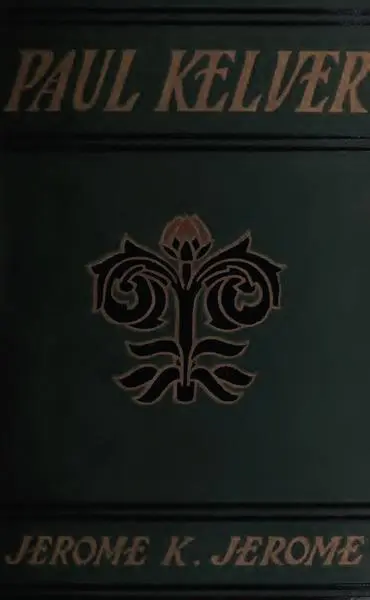
- Название:Paul Kelver
- Автор:
- Издательство:Dodd, Mead & Company
- Жанр:
- Год:1902
- Город:New York
- ISBN:нет данных
- Рейтинг книги:3 / 5. Голосов: 1
-
Избранное:Добавить в избранное
- Отзывы:
-
Ваша оценка:
Paul Kelver: краткое содержание, описание и аннотация
Предлагаем к чтению аннотацию, описание, краткое содержание или предисловие (зависит от того, что написал сам автор книги «Paul Kelver»). Если вы не нашли необходимую информацию о книге — напишите в комментариях, мы постараемся отыскать её.
Paul Kelver — читать онлайн бесплатно полную книгу (весь текст) целиком
Ниже представлен текст книги, разбитый по страницам. Система сохранения места последней прочитанной страницы, позволяет с удобством читать онлайн бесплатно книгу «Paul Kelver», без необходимости каждый раз заново искать на чём Вы остановились. Поставьте закладку, и сможете в любой момент перейти на страницу, на которой закончили чтение.
Интервал:
Закладка:
“Artful things, girls,” commented Minikin.
“Can't blame 'em,” returned Jarman, with generosity; “it's their business. Got to dispose of themselves somehow. Oughtn't to be binding without a written order dated the next morning; that'd make it all right.”
“Couldn't prove a prior engagement?” suggested Minikin.
“She'd want to see the girl first before she'd believe it—only natural,” returned Jarman.
“Couldn't get a girl?” urged Minikin.
“Who could you trust?” asked the cautious Jarman. “Besides, there ain't time. She's letting 'im rest to-day; to-morrow evening she'll be down on 'im.”
“Don't see anything for it,” said Minikin, “but for him to do a bunk.”
“Not a bad idea that,” mused Jarman; “only where's 'e to bunk to?”
“Needn't go far,” said Minikin.
“She'd find 'im out and follow 'im,” said Jarman. “She can look after herself, mind you. Don't you go doing 'er any injustice.”
“He could change his name,” suggested Minikin.
“'Ow could 'e get a crib?” asked Jarman; “no character, no references.”
“I've got it,” cried Jarman, starting up; “the stage!”
“Can he act?” asked Minikin.
“Can do anything,” retorted my supporter, “that don't want too much sense. That's 'is sanctuary, the stage. No questions asked, no character wanted. Lord! why didn't I think of it before?”
“Wants a bit of getting on to, doesn't it?” suggested Minikin.
“Depends upon where you want to get,” replied Jarman. For the first time since the commencement of the discussion he turned to me. “Can you sing?” he asked me.
I replied that I could a little, though I had never done so in public.
“Sing something now,” demanded Jarman; “let's 'ear you. Wait a minute!” he cried.
He slipped out of the room. I heard him pause upon the landing below and knock at the door of the fair Rosina's room. The next minute he returned.
“It's all right,” he explained; “she's not in yet. Now, sing for all you're worth. Remember, it's for life and freedom.”
I sang “Sally in Our Alley,” not with much spirit, I am inclined to think. With every mention of the lady's name there rose before me the abundant form and features of my fiancee , which checked the feeling that should have trembled through my voice. But Jarman, though not enthusiastic, was content.
“It isn't what I call a grand opera voice,” he commented, “but it ought to do all right for a chorus where economy is the chief point to be considered. Now, I'll tell you what to do. You go to-morrow straight to the O'Kelly, and put the whole thing before 'im. 'E's a good sort; 'e'll touch you up a bit, and maybe give you a few introductions. Lucky for you, this is just the right time. There's one or two things comin' on, and if Fate ain't dead against you, you'll lose your amorita, or whatever it's called, and not find 'er again till it's too late.”
I was not in the mood that evening to feel hopeful about anything; but I thanked both of them for their kind intentions and promised to think the suggestion over on the morrow, when, as it was generally agreed, I should be in a more fitting state to bring cool judgment to bear upon the subject; and they rose to take their departure.
Leaving Minikin to descend alone, Jarman returned the next minute. “Consols are down a bit this week,” he whispered, with the door in his hand. “If you want a little of the ready to carry you through, don't go sellin' out. I can manage a few pounds. Suck a couple of lemons and you'll be all right in the morning. So long.”
I followed his advice regarding the lemons, and finding it correct, went to the office next morning as usual. Lott & Co., in consideration of my agreeing to a deduction of two shillings on the week's salary, allowed himself to overlook the matter. I had intended acting on Jarman' S advice, to call upon the O'Kelly at his address of respectability in Hampstead that evening, and had posted him a note saying I was coming. Before leaving the office, however, I received a reply to the effect that he would be out that evening, and asking me to make it the following Friday instead. Disappointed, I returned to my lodgings in a depressed state of mind. Jarman 's scheme, which had appeared hopeful and even attractive during the daytime, now loomed shadowy and impossible before me. The emptiness of the first floor parlour as I passed its open door struck a chill upon me, reminding me of the disappearance of a friend to whom, in spite of moral disapproval, I had during these last few months become attached. Unable to work, the old pain of loneliness returned upon me. I sat for awhile in the darkness, listening to the scratching of the pen of my neighbour, the old law-writer, and the sense of despair that its sound always communicated to me encompassed me about this evening with heavier weight than usual.
After all, was not the sympathy of the Lady 'Ortensia, stimulated for personal purposes though it might be, better than nothing? At least, here was some living creature to whom I belonged, to whom my existence or nonexistence was of interest, who, if only for her own sake, was bound to share my hopes, my fears.
It was in this mood that I heard a slight tap at the door. In the dim passage stood the small slavey, holding out a note. I took it, and returning, lighted my candle. The envelope was pink and scented. It was addressed, in handwriting not so bad as I had expected, to “Paul Kelver, Esquire.” I opened it and read:
“Dr mr. Paul—I herd as how you was took hill hafter the party. I feer you are not strong. You must not work so hard or you will be hill and then I shall be very cros with you. I hop you are well now. If so I am going for a wark and you may come with me if you are good. With much love. From your affechonat ROSIE.”
In spite of the spelling, a curious, tingling sensation stole over me as I read this my first love-letter. A faint mist swam before my eyes. Through it, glorified and softened, I saw the face of my betrothed, pasty yet alluring, her large white fleshy arms stretched out invitingly toward me. Moved by a sudden hot haste that seized me, I dressed myself with trembling hands; I appeared to be anxious to act without giving myself time for thought. Complete, with a colour in my cheeks unusual to them, and a burning in my eyes, I descended and knocked with a nervous hand at the door of the second floor back.
“Who's that?” came in answer Miss Sellars' sharp tones.
“It is I—Paul.”
“Oh, wait a minute, dear.” The tone was sweeter. There followed the sound of scurried footsteps, a rustling of clothes, a banging of drawers, a few moments' dead silence, and then:
“You can come in now, dear.”
I entered. It was a small, untidy room, smelling of smoky lamp; but all I saw distinctly at the moment was Miss Sellars with her arms above her head, pinning her hat upon her straw-coloured hair.
With the sight of her before me in the flesh, my feelings underwent a sudden revulsion. During the few minutes she had kept me waiting outside the door I had suffered from an almost uncontrollable desire to turn the handle and rush in. Now, had I acted on impulse, I should have run out. Not that she was an unpleasant-looking girl by any means; it was the atmosphere of coarseness, of commonness, around her that repelled me. The fastidiousness—finikinness; if you will—that would so often spoil my rare chop, put before me by a waitress with dirty finger-nails, forced me to disregard the ample charms she no doubt did possess, to fasten my eyes exclusively upon her red, rough hands and the one or two warts that grew thereon.
“You're a very naughty boy,” told me Miss Sellars, finishing the fastening of her hat. “Why didn't you come in and see me in the dinner- h our? I've a great mind not to kiss you.”
Читать дальшеИнтервал:
Закладка:
Похожие книги на «Paul Kelver»
Представляем Вашему вниманию похожие книги на «Paul Kelver» списком для выбора. Мы отобрали схожую по названию и смыслу литературу в надежде предоставить читателям больше вариантов отыскать новые, интересные, ещё непрочитанные произведения.









Обсуждение, отзывы о книге «Paul Kelver» и просто собственные мнения читателей. Оставьте ваши комментарии, напишите, что Вы думаете о произведении, его смысле или главных героях. Укажите что конкретно понравилось, а что нет, и почему Вы так считаете.