Jerome Jerome - Paul Kelver
Здесь есть возможность читать онлайн «Jerome Jerome - Paul Kelver» весь текст электронной книги совершенно бесплатно (целиком полную версию без сокращений). В некоторых случаях можно слушать аудио, скачать через торрент в формате fb2 и присутствует краткое содержание. Город: New York, Год выпуска: 1902, Издательство: Dodd, Mead & Company, Жанр: Классическая проза, на английском языке. Описание произведения, (предисловие) а так же отзывы посетителей доступны на портале библиотеки ЛибКат.
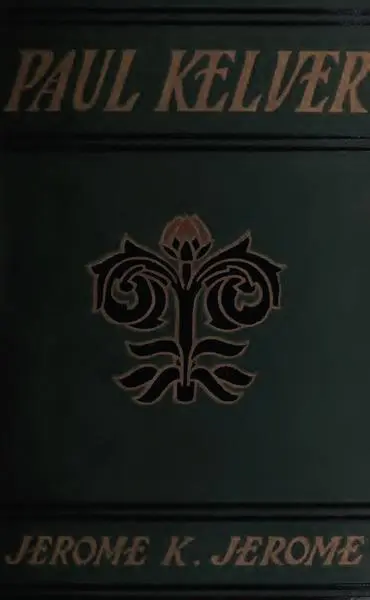
- Название:Paul Kelver
- Автор:
- Издательство:Dodd, Mead & Company
- Жанр:
- Год:1902
- Город:New York
- ISBN:нет данных
- Рейтинг книги:3 / 5. Голосов: 1
-
Избранное:Добавить в избранное
- Отзывы:
-
Ваша оценка:
Paul Kelver: краткое содержание, описание и аннотация
Предлагаем к чтению аннотацию, описание, краткое содержание или предисловие (зависит от того, что написал сам автор книги «Paul Kelver»). Если вы не нашли необходимую информацию о книге — напишите в комментариях, мы постараемся отыскать её.
Paul Kelver — читать онлайн бесплатно полную книгу (весь текст) целиком
Ниже представлен текст книги, разбитый по страницам. Система сохранения места последней прочитанной страницы, позволяет с удобством читать онлайн бесплатно книгу «Paul Kelver», без необходимости каждый раз заново искать на чём Вы остановились. Поставьте закладку, и сможете в любой момент перейти на страницу, на которой закончили чтение.
Интервал:
Закладка:
The powder she had evidently dabbed on hastily was plainly visible upon her face; the round, soft arms were hidden beneath ill-fitting sleeves of some crapey material, the thought of which put my teeth on edge. I wished her intention had been stronger. Instead, relenting, she offered me her flowery cheek, which I saluted gingerly, the taste of it reminding me of certain pale, thin dough-cakes manufactured by the wife of our school porter and sold to us in playtime at four a penny, and which, having regard to their satisfying quality, had been popular with me in those days.
At the top of the kitchen stairs Miss Sellars paused and called down shrilly to Mrs. Peedles, who in course of time appeared, panting.
“Oh, me and Mr. Kelver are going out for a short walk, Mrs. Peedles. I shan't want any supper. Good night.”
“Oh, good night, my dear,” replied Mrs. Peedles. “Hope you'll enjoy yourselves. Is Mr. Kelver there?”
“He's round the corner,” I heard Miss Sellars explain in a lower voice; and there followed a snigger.
“He's a bit shy, ain't he?” suggested Mrs. Peedles in a whisper.
“I've had enough of the other sort,” was Miss Sellars' answer in low tones.
“Ah, well; it's the shy ones that come out the strongest after a bit—leastways, that's been my experience.”
“He'll do all right. So long.”
Miss Sellars, buttoning a burst glove, rejoined me.
“I suppose you've never had a sweetheart before?” asked Miss Sellars, as we turned into the Blackfriars Road.
I admitted that this was my first experience.
“I can't a-bear a flirty man,” explained Miss Sellars. “That's why I took to you from the beginning. You was so quiet.”
I began to wish that nature had bestowed upon me a noisier temperament.
“Anybody could see you was a gentleman,” continued Miss Sellars. “Heaps and heaps of hoffers I've had— h undreds you might almost say. But what I've always told 'em is, 'I like you very much indeed as a friend, but I'm not going to marry any one but a gentleman.' Don't you think I was right?”
I murmured it was only what I should have expected of her.
“You may take my harm, if you like,” suggested Miss Sellars, as we crossed St. George's Circus; and linked, we pursued our way along the Kennington Park Road.
Fortunately, there was not much need for me to talk. Miss Sellars was content to supply most of the conversation herself, and all of it was about herself.
I learned that her instincts since childhood had been toward gentility. Nor was this to be wondered at, seeing that her family—on her mother's side, at all events,—were connected distinctly with “the h ighest in the land.” Mesalliances , however, are common in all communities, and one of them, a particularly flagrant specimen—her “Mar” had, alas! contracted, having married—what did I think? I should never guess—a waiter! Miss Sellars, stopping in the act of crossing Newington Butts to shudder at the recollection of her female parent's shame, was nearly run down by a tramcar.
Mr. and Mrs. Sellars did not appear to have “hit it off” together. Could one wonder: Mrs. Sellars with an uncle on the Stock Exchange, and Mr. Sellars with one on Peckham Rye? I gathered his calling to have been, chiefly, “three shies a penny.” Mrs. Sellars was now, however, happily dead; and if no other good thing had come out of the catastrophe, it had determined Miss Sellars to take warning by her mother's error and avoid connection with the lowly born. She it was who, with my help, would lift the family back again to its proper position in society.
“It used to be a joke against me,” explained Miss Sellars, “heven when I was quite a child. I never could tolerate anything low. Why, one day when I was only seven years old, what do you think happened?”
I confessed my inability to guess.
“Well, I'll tell you,” said Miss Sellars; “it'll just show you. Uncle Joseph—that was father's uncle, you understand?”
I assured Miss Sellars that the point was fixed in my mind.
“Well, one day when he came to see us he takes a cocoanut out of his pocket and offers it to me. 'Thank you,' I says; 'I don't heat cocoanuts that have been shied at by just anybody and missed!' It made him so wild. After that,” explained Miss Sellars, “they used to call me at home the Princess of Wales.”
I murmured it was a pretty fancy.
“Some people,” replied Miss Sellars, with a giggle, “says it fits me; but, of course, that's only their nonsense.”
Not knowing what to reply, I remained silent, which appeared to somewhat disappoint Miss Sellars.
Out of the Clapham Road we turned into a by-street of two-storeyed houses.
“You'll come in and have a bit of supper?” suggested Miss Sellars. “Mar's quite hanxious to see you.”
I found sufficient courage to say I was not feeling well, and would much rather return home.
“Oh, but you must just come in for five minutes, dear. It'll look so funny if you don't. I told 'em we was coming.”
“I would really rather not,” I urged; “some other evening.” I felt a presentiment, I confided to her, that on this particular evening I should not shine to advantage.
“Oh, you mustn't be so shy,” said Miss Sellars. “I don't like shy fellows—not too shy. That's silly.” And Miss Sellars took my arm with a decided grip, making it clear to me that escape could be obtained only by an unseemly struggle in the street; not being prepared for which, I meekly yielded.
We knocked at the door of one of the small houses, Miss Sellars retaining her hold upon me until it had been opened to us by a lank young man in his shirt-sleeves and closed behind us.
“Don't gentlemen wear coats of a hevening nowadays?” asked Miss Sellars, tartly, of the lank young man. “New fashion just come in?”
“I don't know what gentlemen wear in the evening or what they don't,” retorted the lank young man, who appeared to be in an aggressive mood. “If I can find one in this street, I'll ast him and let you know.”
“Mother in the droaring-room?” enquired Miss Sellars, ignoring the retort.
“They're all of 'em in the parlour, if that's what you mean,” returned the lank young man, “the whole blooming shoot. If you stand up against the wall and don't breathe, there'll just be room for you.”
Sweeping by the lank young man, Miss Sellars opened the parlour door, and towing me in behind her, shut it.
“Well, Mar, here we are,” announced Miss Sellars. An enormously stout lady, ornamented with a cap that appeared to have been made out of a bandanna handkerchief, rose to greet us, thus revealing the fact that she had been sitting upon an extremely small horsehair-covered easy-chair, the disproportion between the lady and her support being quite pathetic.
“I am charmed, Mr.—”
“Kelver,” supplied Miss Sellars.
“Kelver, to make your ac-quain-tance,” recited Mrs. Sellars in the tone of one repeating a lesson.
I bowed, and murmured that the honour was entirely mine.
“Don't mention it,” replied Mrs. Sellars. “Pray be seated.”
Mrs. Sellars herself set the example by suddenly giving way and dropping down into her chair, which thus again became invisible. It received her with an agonised groan.
Indeed, the insistence with which this article of furniture throughout the evening called attention to its sufferings was really quite distracting. With every breath that Mrs. Sellars took it moaned wearily. There were moments when it literally shrieked. I could not have accepted Mrs. Sellars' offer had I wished, there being no chair vacant and no room for another. A young man with watery eyes, sitting just behind me between a fat young lady and a lean one, rose and suggested my taking his place. Miss Sellars introduced me to him as her cousin Joseph something or other, and we shook hands.
Читать дальшеИнтервал:
Закладка:
Похожие книги на «Paul Kelver»
Представляем Вашему вниманию похожие книги на «Paul Kelver» списком для выбора. Мы отобрали схожую по названию и смыслу литературу в надежде предоставить читателям больше вариантов отыскать новые, интересные, ещё непрочитанные произведения.










Обсуждение, отзывы о книге «Paul Kelver» и просто собственные мнения читателей. Оставьте ваши комментарии, напишите, что Вы думаете о произведении, его смысле или главных героях. Укажите что конкретно понравилось, а что нет, и почему Вы так считаете.