Gabriel Chevallier - Fear
Здесь есть возможность читать онлайн «Gabriel Chevallier - Fear» весь текст электронной книги совершенно бесплатно (целиком полную версию без сокращений). В некоторых случаях можно слушать аудио, скачать через торрент в формате fb2 и присутствует краткое содержание. Город: New York, Год выпуска: 2014, Издательство: New York Review Books, Жанр: Классическая проза, на английском языке. Описание произведения, (предисловие) а так же отзывы посетителей доступны на портале библиотеки ЛибКат.
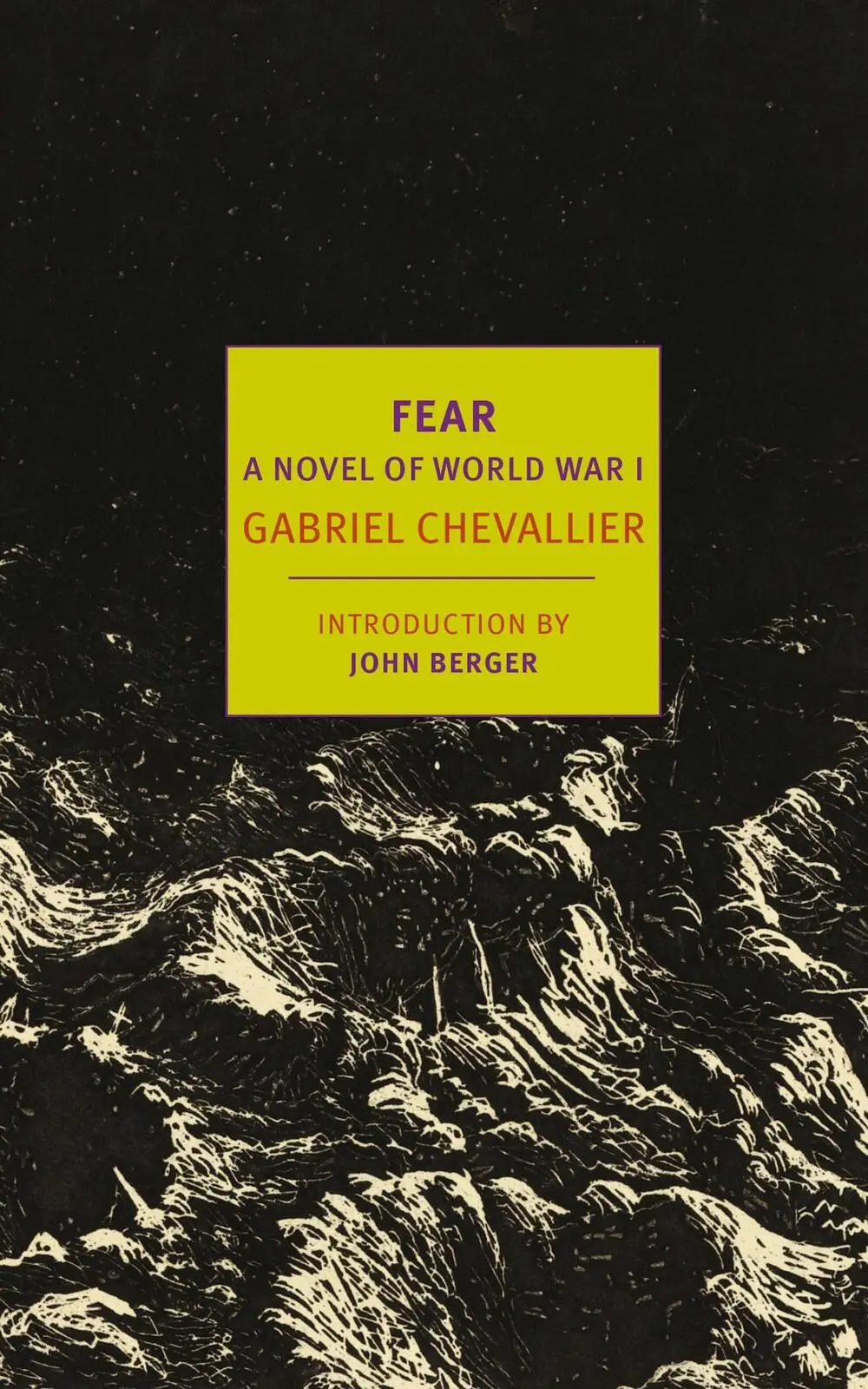
- Название:Fear
- Автор:
- Издательство:New York Review Books
- Жанр:
- Год:2014
- Город:New York
- ISBN:нет данных
- Рейтинг книги:3 / 5. Голосов: 1
-
Избранное:Добавить в избранное
- Отзывы:
-
Ваша оценка:
Fear: краткое содержание, описание и аннотация
Предлагаем к чтению аннотацию, описание, краткое содержание или предисловие (зависит от того, что написал сам автор книги «Fear»). Если вы не нашли необходимую информацию о книге — напишите в комментариях, мы постараемся отыскать её.
1915: Jean Dartemont heads off to the Great War, an eager conscript. The only thing he fears is missing the action. Soon, however, the vaunted “war to end all wars” seems like a war that will never end: whether mired in the trenches or going over the top, Jean finds himself caught in the midst of an unimaginable, unceasing slaughter. After he is wounded, he returns from the front to discover a world where no one knows or wants to know any of this. Both the public and the authorities go on talking about heroes — and sending more men to their graves. But Jean refuses to keep silent. He will speak the forbidden word. He will tell them about fear.
John Berger has called
“a book of the utmost urgency and relevance.” A literary masterpiece, it is also an essential and unforgettable reckoning with the terrible war that gave birth to a century of war.
Fear — читать онлайн бесплатно полную книгу (весь текст) целиком
Ниже представлен текст книги, разбитый по страницам. Система сохранения места последней прочитанной страницы, позволяет с удобством читать онлайн бесплатно книгу «Fear», без необходимости каждый раз заново искать на чём Вы остановились. Поставьте закладку, и сможете в любой момент перейти на страницу, на которой закончили чтение.
Интервал:
Закладка:
We hear a faint humming, which rapidly increases in volume, becoming so loud that it even drowns out the explosions. It comes from the sky… Soon afterwards a whole wing of bombers, bearing our colours, flies overhead. We count more than two hundred machines in triangular formation, covered by fighters, at about two thousand metres. Their mass, flanked by hundreds of machine guns on the fighters, gives the impression of an irresistible force, unaffected by enemy gunfire which causes no visible damage. The armada disappears from sight into the clear sky. Later on we hear the echoes of a string of explosions that shake the earth: the aeroplanes are flattening a village, destroying an assembly point.
At twilight, the artillery has gone quiet. We descend the slopes in small groups. Fog comes down, spreading its veil over the distant landscape. All we can still see are a few shining patches: rivers and lakes that reflect the last light of the day. Then they too disappear.
I have taken command of a stray group of a dozen men, including two American runners who have been attached to us since the start of the offensive. One carries a shovel and the other a pick, and both have large packs of blankets. They have chucked away all their weapons, considering them useless, keeping only items of protection and comfort. Such a precise grasp of the needs of the present fills us with admiration.
We spend the night in a crater caused by one of our 270s, big enough to hold a platoon.
The following morning, we see two American officers approaching. One of them asks us questions and I manage to pick out a few words:
‘I am… Colonel… Have you seen?…’
I realise that we are in the presence of an American colonel who, baton in hand, is looking for his regiment. Using sign language I explain that I don’t know any more than he does. Or rather I cannot express to him what I do know. Which is that through complete inexperience his regiment has lost three quarters of its strength in six days. (Did he not notice the bunches of men in khaki strewn across the plateaus, slowly turning from their natural brown to the green of decomposition?) The other quarter, with some disgust at this war whose results they have seen, must have gone and pitched their tent well away from the fighting, somewhere near the canteens and supplies. Deeply upset, the colonel headed off in the direction of rifle shots. The notion of this colonel who had lost his regiment kept us amused for the rest of the day, which we passed very peacefully eating tinned food and smoking. Shells were falling a long way behind us, and there was little danger from bullets.
Unfortunately the battalion was reassembled in the evening, so we can’t go it alone any more. During the night we march forward again, a very hesitant march, broken by interminable pauses. Morning finds us on a fine open road, where our column is all too visible. The battalion digs in on the ditch on the right and we camouflage ourselves as best we can with foliage and tent canvas.
At about one o’clock a German aeroplane circles over us, banking round several times to have a good look at what is happening below. He must find the area much changed… Someone is shooting somewhere but the bullets don’t come near us.
The day ends badly. Around five o’clock we are directly targeted by shellfire. A battery of 150s and another of 88s catch us in an enfilade. The firing is precisely aimed at the length and breadth of the battalion. At the very moment when it was furthest from our minds, terror seizes us by the throat, and the guts. We are pinned down under a systematic bombardment. Once again our lives are at stake and we are powerless to protect ourselves. We are lying in the ditch, flat as corpses, squeezed together to make ourselves smaller, welded into a single strange reptile of three hundred shuddering bodies and pounding chests. The experience of shelling is always the same: a crushing, relentless savagery, hunting us down. You feel individually targeted, singled out from those around you. You are alone, eyes shut, struggling in your own darkness in a coma of fear. You feel exposed, feel that the shells are looking for you, and you hide among the jumble of legs and stomachs, try to cover yourself and also to protect yourself from the other bodies that are writhing like tortured animals. All we can see are hallucinations of the horrible images that we have come to know through years of war.
The projectiles bracket our position. Almost all of them are hitting the road and the field to our right, behind a hedge. There are wounded men ten metres ahead of us, and more further off. Our victorious battalion is now begging for mercy, humiliated by some brute beast. I am thinking that today is the second of October 1918, and that this war is near its end… and I must not, I must not get killed!
This one has my name on it!… Ssss… First the crash so loud that it shakes your head almost off your shoulders, leaves you dizzy… and then the enveloping smoke that burns your eyes and nose and fills your chest with its unbreathable stench. We’re coughing and spitting, our eyes are streaming. The shell came down on the road two metres away. If you stretch out your arm you can touch the edge of the crater…
Behind us an explosion of a 150 is followed by screams. Someone says Lieutenant Larcher has been wounded: Larcher the invulnerable, who had been in the thick of every fight for the last two years. And now he is stupidly wounded in a roadside ditch by a retreating enemy which has at most ten field guns! It is ridiculous and unfair! And if Larcher can be hit then surely none of us can avoid the same stroke of fate!
Every new burst of fire leaves us gasping for breath. And where is our own artillery, for christ’s sake? We lie prostrate for an hour suspended between luck and death until the two German batteries run out of shells.
Night falls. The stretcher-bearers set off into twilight heavy with the smell of gunpowder, leaving in their wake the cries of agony from their charges. More tragically still, the stretchers carried by the last teams to leave are silent ones. On one of them lies Chassignole, the bomber.
Petrus Chassignole, class of 1913, in service at the front since the start of the war, was killed this evening, 2 October 1918, after fifty months of suffering.
We move around this plain for several more days. The runners are based at a crossroads in a battered forest, which is sometimes even hit by our own 75 shells.
A little further forward what remains of our units are attacking the village of Challerange where the enemy has dug in deeply and seems to want to put up a fight. The Germans launch a surprise counter-attack and take some prisoners.
Support from our own artillery is inadequate.
It has been raining and the nights are cold. For ten days now the men have slept on the bare ground and have had to fight with hardly any sleep and nothing hot to eat. They are tired, and sick; quite a number are evacuated. We are all asking to be relieved.
At last we are, after an offensive of eleven days in which we have advanced about fifteen kilometres. This victory has cost us half our troops. A company in the battalion now consists of no more than twenty fighters.
We are taken away on trucks, utterly exhausted. But alive. Maybe we will be among those who come back from the final relief…
6. CEASEFIRE!
WE WERE MOVED BY train and truck, and a few days after leaving Champagne we found ourselves back in the mountains of Alsace.
They sent us straight to the front lines. Soldiers who had just attacked were already on alert on the fire-steps, having repulsed a surprise assault by the Germans that had greeted our arrival. For the poilus the war drags on relentlessly with its long hours of guard duty and sudden dangers. We know that there will be no let-up from now on, no end to the efforts we must make. The word is that high command is planning an offensive on this front, attacking the flank of the German armies. This time we cannot count on assault troops coming up from our rear at the last moment. This one will be for us, and we know how much victory will cost…
Читать дальшеИнтервал:
Закладка:
Похожие книги на «Fear»
Представляем Вашему вниманию похожие книги на «Fear» списком для выбора. Мы отобрали схожую по названию и смыслу литературу в надежде предоставить читателям больше вариантов отыскать новые, интересные, ещё непрочитанные произведения.









Обсуждение, отзывы о книге «Fear» и просто собственные мнения читателей. Оставьте ваши комментарии, напишите, что Вы думаете о произведении, его смысле или главных героях. Укажите что конкретно понравилось, а что нет, и почему Вы так считаете.