Gabriel Chevallier - Fear
Здесь есть возможность читать онлайн «Gabriel Chevallier - Fear» весь текст электронной книги совершенно бесплатно (целиком полную версию без сокращений). В некоторых случаях можно слушать аудио, скачать через торрент в формате fb2 и присутствует краткое содержание. Город: New York, Год выпуска: 2014, Издательство: New York Review Books, Жанр: Классическая проза, на английском языке. Описание произведения, (предисловие) а так же отзывы посетителей доступны на портале библиотеки ЛибКат.
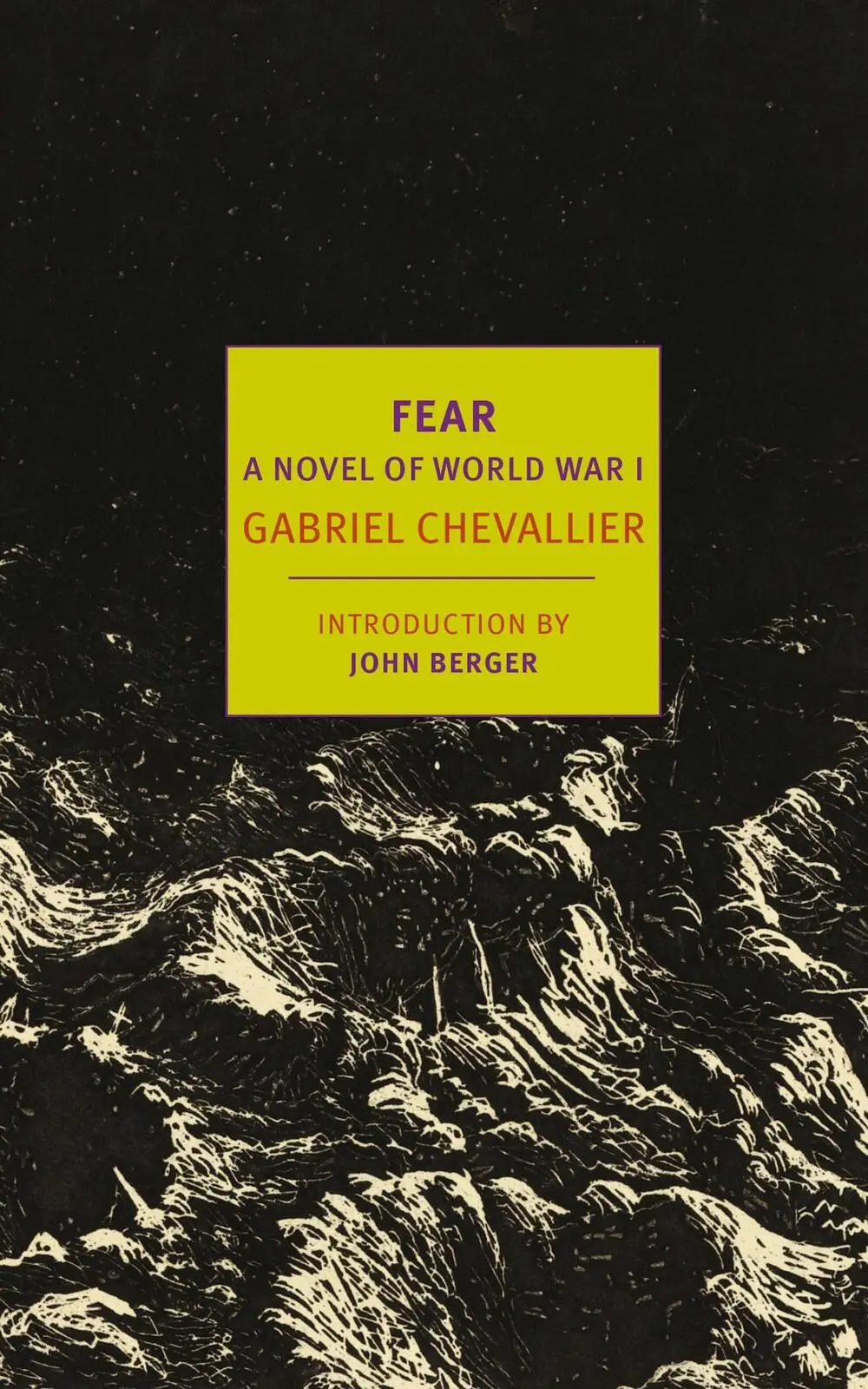
- Название:Fear
- Автор:
- Издательство:New York Review Books
- Жанр:
- Год:2014
- Город:New York
- ISBN:нет данных
- Рейтинг книги:3 / 5. Голосов: 1
-
Избранное:Добавить в избранное
- Отзывы:
-
Ваша оценка:
Fear: краткое содержание, описание и аннотация
Предлагаем к чтению аннотацию, описание, краткое содержание или предисловие (зависит от того, что написал сам автор книги «Fear»). Если вы не нашли необходимую информацию о книге — напишите в комментариях, мы постараемся отыскать её.
1915: Jean Dartemont heads off to the Great War, an eager conscript. The only thing he fears is missing the action. Soon, however, the vaunted “war to end all wars” seems like a war that will never end: whether mired in the trenches or going over the top, Jean finds himself caught in the midst of an unimaginable, unceasing slaughter. After he is wounded, he returns from the front to discover a world where no one knows or wants to know any of this. Both the public and the authorities go on talking about heroes — and sending more men to their graves. But Jean refuses to keep silent. He will speak the forbidden word. He will tell them about fear.
John Berger has called
“a book of the utmost urgency and relevance.” A literary masterpiece, it is also an essential and unforgettable reckoning with the terrible war that gave birth to a century of war.
Fear — читать онлайн бесплатно полную книгу (весь текст) целиком
Ниже представлен текст книги, разбитый по страницам. Система сохранения места последней прочитанной страницы, позволяет с удобством читать онлайн бесплатно книгу «Fear», без необходимости каждый раз заново искать на чём Вы остановились. Поставьте закладку, и сможете в любой момент перейти на страницу, на которой закончили чтение.
Интервал:
Закладка:
Our men tell of an event which happened in their camp. One of their sergeants is distributing the coffee ration in the kitchens. Each soldier goes up and holds out his mug (theirs are double the size of ours, half a litre). One man drains his mug. He goes back to the sergeant and demands a second helping. ‘No!’ says the sergeant. ‘No?’ ‘No!’ The man then pulls out his revolver and shoots the sergeant dead on the spot. NCOs run over, grab the murderer, tie a rope to a tree and hang him without further ado. The onlookers all roar with laughter, enjoying the comedy… The poilus love this story. They reckon that people who hold the lives of others so cheaply will be excellent soldiers. We are counting on them to finish the war.
The days go by and our victories continue, one after another. There is no doubt that the end is in sight. Clemenceau and Foch are popular, but we cannot admire them: they threaten our lives and their status goes up as our numbers go down.
Our lives now become ever more precious as we see the chance of saving them. We are less and less prepared to risk them. Thus we stop complaining about having to hold our positions for so long, since everywhere else our troops are attacking.
The night is disturbed by a dull sound, the murmur of an ocean, masses on the march. It starts far off in the rear, comes out of the distance, spreads across the plain, rises up towards us like a flood. Something is happening out there in the darkness, something vast and spectacular…
In the morning we see heavy artillery down in the ravine where the reserves are encamped. Tribes of artillerymen drive us out of our shelters. We are informed that henceforth we are not allowed to use the roads, which are reserved for convoys; the infantry must stick to the paths.
This deployment of forces and the new regulations confirm the news that is starting to spread: Gouraud’s forces are attacking. Preparations continue through the following nights. We lie awake listening to the great hum of human activity. Once daylight comes, everything stops, everything slumbers. The number of big guns keeps rising. In the battalion’s dugouts and shelters, the men exchange views:
‘We’re going to be relieved.’
‘Yeah, probably. They can’t expect us to do the attacking after leaving us here in the shit for five bloody months!’
‘It’s the colonials who are coming. They’ve been seen at the rear.’
For two days we wait optimistically for the assault troops to arrive. On the third day we learn that the assault troops are us… This news is not greeted with enthusiasm.
We receive quantities of paperwork, including maps on which I have to work flat out marking objectives and routes. We have to move several times to make way for the rising tide of artillerymen. On the fourth night we crowd into damp saps, packed in too tightly to stretch out. We don’t sleep any more, we are too tired and worried. The power suggested by all the rumbling in the nights reassures us slightly. Men coming up from the rear say that there is artillery everywhere. Those who come from the front report that our 75s, covered with a simple camouflage of painted canvas, are lined up on the plain between our first and second lines.
We feel sure that ‘it will work’. But we also know that it cannot work without losses and that we have to go over the top , that chilling phrase.
Our battalion will form the regiment’s second wave.
The evening of 24 September. We are entering the fifth and final night. Three years ago, to the day, I was waiting on the eve of the attack in Artois.
We go up to take our assault positions where we have to be before the bombardment which will begin very soon. We are marching with an infantry company. The men are fully equipped, without heavy packs, but with food rations for several days. A captain adjutant-major has been working alongside the commandant for the past few days.
We crowd into a big sap on the left sector, on the side of the ravine which separates the front lines. We are too many to fit in the shelter and I predict another sleepless night. But I have made up my mind to get some sleep. Partly as a precaution, to build up a store of sleep on which I can live for the next day or two. Partly because it is bad to spend the eve of a battle lying awake and thinking about all that might happen when nothing can be done to change it. I manage to get to the front of the line and find some bunks in a small dugout. I share one with a comrade. I wrap myself up and sleep.
I wake later. The darkness is full of people’s backs, of bodies jumbled together. I see one man leaning on his elbows staring pensively into the flame of a candle.
‘What time is it?’ I ask.
‘Two o’clock.’
‘Has it started?’
‘Yes, it’s been going on since eleven.’
And indeed I can hear rumbling in the distance. No shells are coming down above us at the moment.
‘What time do we go?’
‘Five twenty-five.’
Three hours of safety and oblivion left… I go back to sleep.
Someone is shaking me violently.
‘Up, now, come on, we’re attacking…’ I hear.
We are attacking?… Oh, yes, right, now is the time… There is agitation all round me. Candlelight reveals tense, hardened faces, reflecting the anger that is a reaction to weakness. Everyone is asking questions:
‘Is it going OK up there?’
‘Are the Boche hitting back much?’
I have got to rush! I leap off my bunk, roll up my blanket and tent canvas, still thick-headed. I must concentrate on my gear: my two haversacks, water bottle, gas mask, maps, pistol… Have I forgotten anything?… Oh, yes, my cane, my chinstrap… I have scarcely got everything when the order is shouted:
‘Forward!’
We are near an exit. I take my place in the line, follow the others. We are already at the foot of the steps, we are going up, we are going to go out… the terrible moment when you surrender yourself…
Outside… Whistles and screams of the bombardment we have unleashed… Into the colourless chill of dawn, like splashing your face in a tub of icy water. We are all shivering, our faces green, mouths thick with that foul smell that bad awakenings belch up. We wait in the communication trench to give the column time to get organised.
Whipcracks lash the air, so low it seems they might take our heads off; it is the mad onslaught of our 75s whose barrage precedes our assault. Above that the heavy artillery forms a vault of gasps and growls across the sky. A vast net of trajectories is spread over the earth and we are caught in its mesh. Waves of sound collide, break, swirl and eddy overhead. Impossible still to make out what contribution the enemy is making to this overwhelming storm of steel.
Still, some distinct explosions indicate incoming shells, though none of them land near us. We stand motionless on the threshold of the battle, all retreat cut off. Our voices are as pale as our faces. To get a grip on myself, I turn to my neighbour and, speaking slowly and precisely with feigned indifference, as if I am using a foreign language, tell him:
‘The strap on your water bottle is unfastened, mind you don’t lose it.’
‘Forward!’
We set off down the communication trenches. Here we go. Soon we are descending the slopes of the ravine, covered with a sinister mist that smells like gas. We put on our masks then remove them again because we can’t breathe. We go up the reverse slope and come out on to the plateau.
We are now at the enemy positions. There is such chaos that we have to leave the trenches and move forward on the plain. We are entering a repulsive landscape, where nature has been stripped bare, closed off by a horizon of swirling, booming, thick yellow smoke. Five hundred metres ahead, thin columns of men are taking possession of this erupting expanse, conquering the flanks of a deserted, ravaged and sulphurous planet. From time to time, black balls with red hearts burst among the columns: enemy shells.
Читать дальшеИнтервал:
Закладка:
Похожие книги на «Fear»
Представляем Вашему вниманию похожие книги на «Fear» списком для выбора. Мы отобрали схожую по названию и смыслу литературу в надежде предоставить читателям больше вариантов отыскать новые, интересные, ещё непрочитанные произведения.










Обсуждение, отзывы о книге «Fear» и просто собственные мнения читателей. Оставьте ваши комментарии, напишите, что Вы думаете о произведении, его смысле или главных героях. Укажите что конкретно понравилось, а что нет, и почему Вы так считаете.