Gabriel Chevallier - Fear
Здесь есть возможность читать онлайн «Gabriel Chevallier - Fear» весь текст электронной книги совершенно бесплатно (целиком полную версию без сокращений). В некоторых случаях можно слушать аудио, скачать через торрент в формате fb2 и присутствует краткое содержание. Город: New York, Год выпуска: 2014, Издательство: New York Review Books, Жанр: Классическая проза, на английском языке. Описание произведения, (предисловие) а так же отзывы посетителей доступны на портале библиотеки ЛибКат.
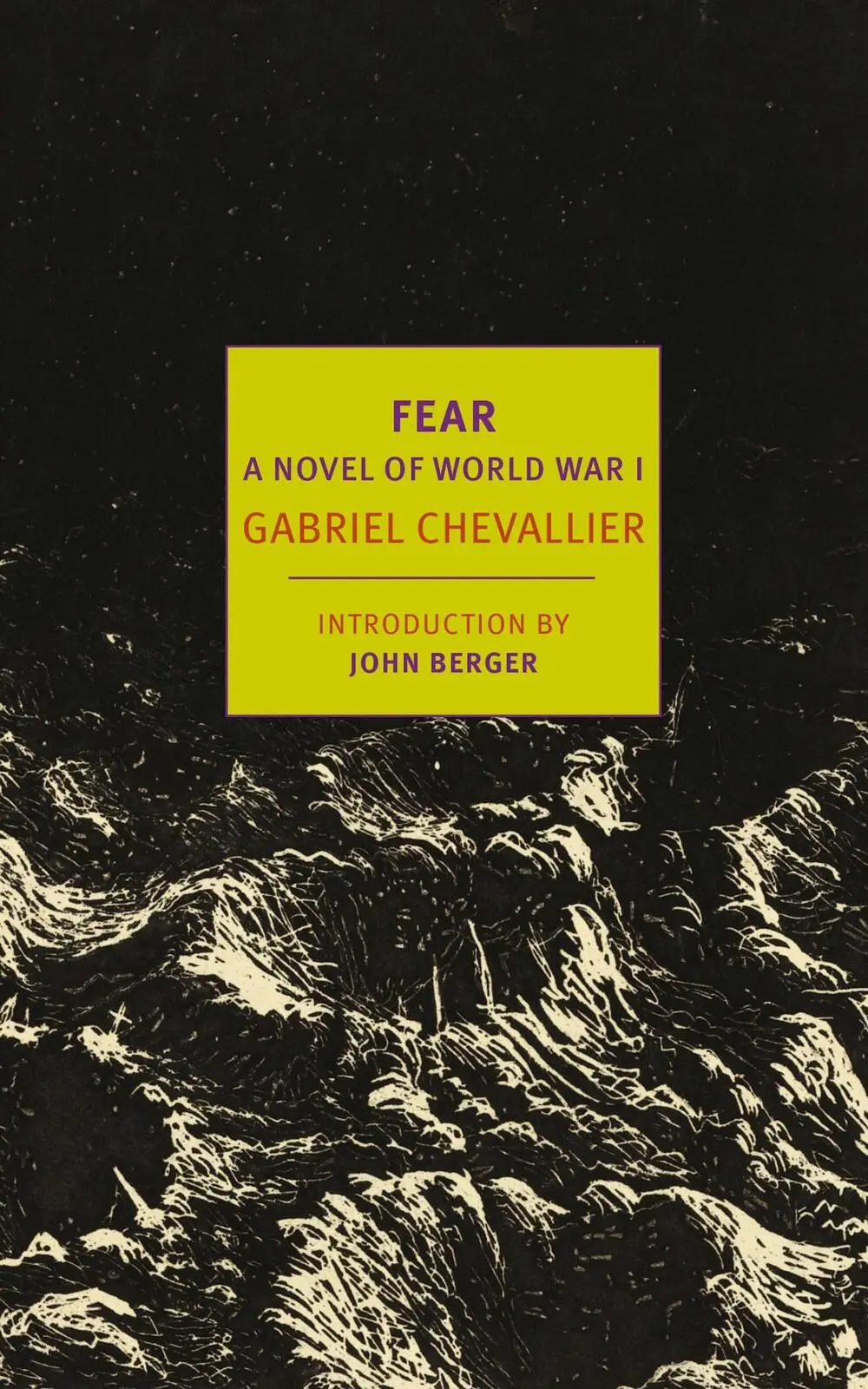
- Название:Fear
- Автор:
- Издательство:New York Review Books
- Жанр:
- Год:2014
- Город:New York
- ISBN:нет данных
- Рейтинг книги:3 / 5. Голосов: 1
-
Избранное:Добавить в избранное
- Отзывы:
-
Ваша оценка:
Fear: краткое содержание, описание и аннотация
Предлагаем к чтению аннотацию, описание, краткое содержание или предисловие (зависит от того, что написал сам автор книги «Fear»). Если вы не нашли необходимую информацию о книге — напишите в комментариях, мы постараемся отыскать её.
1915: Jean Dartemont heads off to the Great War, an eager conscript. The only thing he fears is missing the action. Soon, however, the vaunted “war to end all wars” seems like a war that will never end: whether mired in the trenches or going over the top, Jean finds himself caught in the midst of an unimaginable, unceasing slaughter. After he is wounded, he returns from the front to discover a world where no one knows or wants to know any of this. Both the public and the authorities go on talking about heroes — and sending more men to their graves. But Jean refuses to keep silent. He will speak the forbidden word. He will tell them about fear.
John Berger has called
“a book of the utmost urgency and relevance.” A literary masterpiece, it is also an essential and unforgettable reckoning with the terrible war that gave birth to a century of war.
Fear — читать онлайн бесплатно полную книгу (весь текст) целиком
Ниже представлен текст книги, разбитый по страницам. Система сохранения места последней прочитанной страницы, позволяет с удобством читать онлайн бесплатно книгу «Fear», без необходимости каждый раз заново искать на чём Вы остановились. Поставьте закладку, и сможете в любой момент перейти на страницу, на которой закончили чтение.
Интервал:
Закладка:
A new military doctrine is being spread around: ‘territory is not what matters.’ How true! And yet we are rather close to Paris to start innovating. And why if this is true have so many men been massacred to take a salient or occupy a ridge?
On the fourth day, enemy observation balloons are openly flying behind us. We are going to be outflanked… It seems unlikely that we will emerge unscathed from this situation.
Leave is suspended. Orders come, instructing us to transport weaponry and munitions to the rear. We are on fatigues for two nights.
Then the orders are countermanded. We restock with cartridges and boxes of grenades. After that no one knows. We have battle orders, some dealing with resistance where we are, others with evacuation. Our command is hesitating between the two. Our own preference is for the latter, and it seems to us impossible to resist a heavy attack with the small numbers we have holding our lines.
More days of uncertainty go by. The sector livens up. We are getting some heavy incoming shells, which are obviously range-finding. Our fate is clear!
‘They’ll have another go to get it right!’ mutter the men in the trenches.
‘Will it stand up to a 210?’ we ask ourselves as we look at our shelter.
‘With a long-range 210 they can’t miss!’
This realisation does not do much for our morale, and we would dearly like to avoid fighting. We are now in the first days of April and the Germans are near Amiens.
Without any warning, our front lines are evacuated at night. The companies have been brought back to our second lines on the ridges, and we have just set up our battalion command post in the rear, in a huge cave, full of men, its approaches crowded with vehicles laden with matériel and with ragged territorials.
The following morning the bombardment resounds opposite us and we get the last ricochets. The Germans are smashing up our abandoned positions. Then we are informed that they have broken through and are making slow progress. Our troops are falling back but doing them some damage on the way. All day long the artillery roars and machine guns crackle. Coucy is heavily bombarded. We do not leave the command post, we cannot see what is happening ahead of us, and we do not know where our units are.
The companies take advantage of the night to take up new positions. The battle starts again at daybreak and there is much confusion. Shells fall at random. We abandon the cave, retreat across the countryside, following the ravines. We spend part of the day on the slopes of a wooded hill. Every quarter of an hour the sky is filled with a tremendous whistling noise. 380s crash down into the soft earth of the valley but none of them explodes. Later on we skirt the ridges and come back down on to the plain following the slopes of a spur.
There we learn that the battalion has mustered ahead of us, on the far side of the canal, and runners get the order to rejoin it. In groups of two or three we set off along a quiet stretch of road. On our way we pass some of our men leading a tall German prisoner, wearing a leather helmet, looking extremely cross and agitated. He is an airman who was flying a spotter plane very low over our platoons and was shot down with rifle fire.
The battalion is drawn up along a bank going up from the road. We are pointed to a sloping field that blocks the horizon and told that ‘the Boches are up there, in the grass behind the ridge’. They must be able to see us and are hesitating: the battle would degenerate into hand-to-hand combat. No one fires and our little detachments continue to move around freely in the open. The proximity of our enemies does not bother us, far less than a bombardment would. We fix bayonets. We hold our fire until they stand up: we will see clearly. They are only men like us. But the Germans do not try anything.
At sunset we get the order to fall back. We cross back over the canal, which must mark the furthest point of the enemy advance. We do all this in silence, without casualties. We return to the high ground. Ammunition wagons gallop by. Around us the 75s open fire. Fresh troops arrive whose duty will be to defend our new positions. The retreat has been carried out in good order, without too much damage, without our leaving the enemy with prisoners. It must be said that the attack was somewhat half-hearted, the Germans counting on their strategic advantage to compel us to withdraw.
We vanish into the night, heading for the rear. We are marching towards fresh dangers but there will be time enough to think of them when we have to face them. For now, our role here is over. This happy retreat feels like a victory. Soon sounds can be heard from our column, the men are singing and swearing. We’ve got out of it alive, one more time.
5. IN CHAMPAGNE
A MARCH LASTING SEVERAL HOURS in torrential rain has brought us to the heart of ‘dry’ Champagne.[38] The downpours pen us like cattle in a slough of despond, where all we can see is running water, dampening and depressing our spirits. Miserable huts, soiled with the mud that cakes our boots, remind us of prison camps. Our clothes are soaked, our food cold, and we have no way of making a fire. Fatigue stretches us out on the damp straw of our pallets but steam rises from our bodies and we cannot get warm. We had not seen a single tree or house in our surroundings. This is an inhospitable, hostile land, where nature itself denies us the smallest bit of joy.
We stay for a week in the tarpaulin shacks, surrounded by deep puddles, lacking anything which could make our lives more agreeable.
One morning the captain who is temporarily in command takes us off to reconnoitre the support positions that we must soon occupy. Our sector is located between Tahure and the Main des Massiges, names made famous by our offensive in 1915. It is well equipped and the trench system is very deep, as it was in Artois. Everywhere we find old battery emplacements and empty shelters, in the walls of the trenches. The reserve battalion occupies the reverse slope of a ridge, behind another ridge that hides the summits where the trenches are. On our right you can see in the distance a great expanse of green, which contrasts with the bare, grey landscape, like a desert, that we have under our noses. They say it is the Argonne.
The battalion command post is a dugout in a trench, roofed with a good thickness of logs, and with openings at ground level to let in the light. It is relatively comfortable. We are not going any further forward today.
On our way back we make a halt in a ruined village some four kilometres from the front lines, where the colonel has set up his headquarters in some very fine shelters built against the wall of a quarry. They look as stylish as mountain chalets and are fronted by an arcade protected by sandbags in zigzag rows. The neat and tidy surroundings are impressive.
Through the windows we can see secretaries in their indoor clothes, writing and drawing at large tables, cigarettes in hand. Typewriters imitate the sound of machine guns in a way that is silly and unseemly. Batmen hurry about, bringing bowls and bottles of eau de cologne, and cooks carry folded napkins over their arms, like maîtres d’hôtel. We hardly go near these privileged ones, these courtiers, who keep us at a distance as if we were of no account. They are afraid lest among our number are Gascon cadets[39] who might rise too swiftly in their careers under the benevolent eyes of the great and powerful. Everyone here is defending his position and scents a rival a mile off. A fall from favour may mean a return to the front line, the threat of death. This world of employees knows all the servants’ gossip and office secrets. The desire to flatter, to make oneself indispensable, leads to an excess of zeal. There are corporals here who would strike fear in the heart of a battalion leader.
Читать дальшеИнтервал:
Закладка:
Похожие книги на «Fear»
Представляем Вашему вниманию похожие книги на «Fear» списком для выбора. Мы отобрали схожую по названию и смыслу литературу в надежде предоставить читателям больше вариантов отыскать новые, интересные, ещё непрочитанные произведения.









Обсуждение, отзывы о книге «Fear» и просто собственные мнения читателей. Оставьте ваши комментарии, напишите, что Вы думаете о произведении, его смысле или главных героях. Укажите что конкретно понравилось, а что нет, и почему Вы так считаете.