Gabriel Chevallier - Fear
Здесь есть возможность читать онлайн «Gabriel Chevallier - Fear» весь текст электронной книги совершенно бесплатно (целиком полную версию без сокращений). В некоторых случаях можно слушать аудио, скачать через торрент в формате fb2 и присутствует краткое содержание. Город: New York, Год выпуска: 2014, Издательство: New York Review Books, Жанр: Классическая проза, на английском языке. Описание произведения, (предисловие) а так же отзывы посетителей доступны на портале библиотеки ЛибКат.
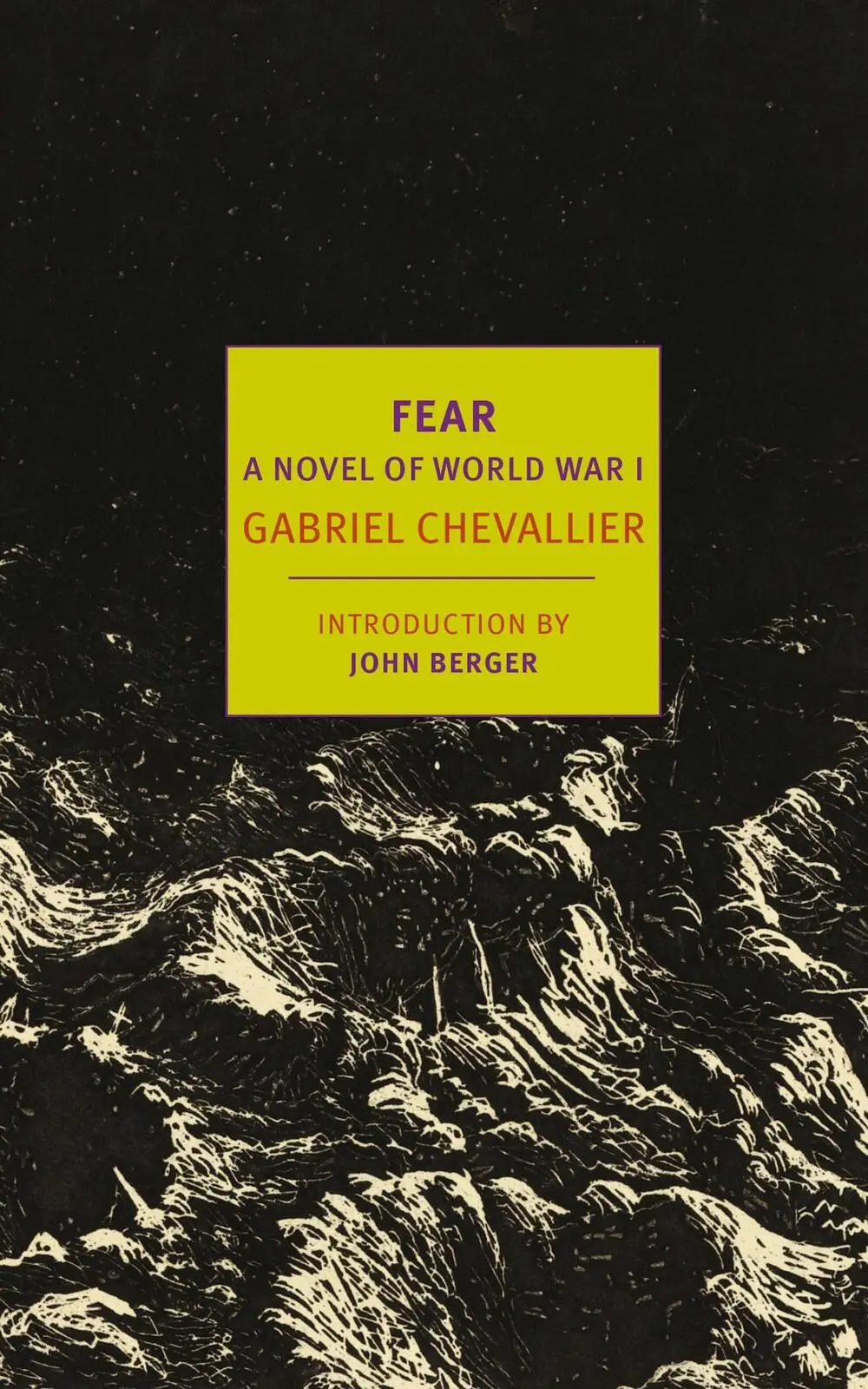
- Название:Fear
- Автор:
- Издательство:New York Review Books
- Жанр:
- Год:2014
- Город:New York
- ISBN:нет данных
- Рейтинг книги:3 / 5. Голосов: 1
-
Избранное:Добавить в избранное
- Отзывы:
-
Ваша оценка:
Fear: краткое содержание, описание и аннотация
Предлагаем к чтению аннотацию, описание, краткое содержание или предисловие (зависит от того, что написал сам автор книги «Fear»). Если вы не нашли необходимую информацию о книге — напишите в комментариях, мы постараемся отыскать её.
1915: Jean Dartemont heads off to the Great War, an eager conscript. The only thing he fears is missing the action. Soon, however, the vaunted “war to end all wars” seems like a war that will never end: whether mired in the trenches or going over the top, Jean finds himself caught in the midst of an unimaginable, unceasing slaughter. After he is wounded, he returns from the front to discover a world where no one knows or wants to know any of this. Both the public and the authorities go on talking about heroes — and sending more men to their graves. But Jean refuses to keep silent. He will speak the forbidden word. He will tell them about fear.
John Berger has called
“a book of the utmost urgency and relevance.” A literary masterpiece, it is also an essential and unforgettable reckoning with the terrible war that gave birth to a century of war.
Fear — читать онлайн бесплатно полную книгу (весь текст) целиком
Ниже представлен текст книги, разбитый по страницам. Система сохранения места последней прочитанной страницы, позволяет с удобством читать онлайн бесплатно книгу «Fear», без необходимости каждый раз заново искать на чём Вы остановились. Поставьте закладку, и сможете в любой момент перейти на страницу, на которой закончили чтение.
Интервал:
Закладка:
One evening in early March, already quite warm.
We are holding the regiment’s right sector. The battalion command post is on the side of a rugged ravine, and smoke is rising from our camp kitchens at the bottom. A little higher up is the start of the plateau where we have established our front lines, about a thousand metres ahead. In this bleak, bare place, our view is limited by three arid slopes. But on the left we have a vista of a smaller, gentler valley. In the mornings the trees tremble in a fresh breeze blowing across the plain and the sun piercing the mist drapes it with rosy pink, like tulle on a woman’s skin. Rolling hills form the background, harmoniously arranged with that unaffected charm you find in landscape paintings of the French countryside.
All is quiet, as usual. We are waiting for the end of a day like the rest, in the great idleness of war that is only broken by various little tasks. We have a good shelter, quite spacious and bright, solidly constructed, partly underground. We enjoy the calm, safely outside our cave.
All of a sudden, the peace is shattered by a massive artillery barrage. Despite the distance, we can feel the shock waves of exploding mortar shells. From the first shots, we recognise the frenzied rhythm of a major attack. Shells soon start whistling low overhead. They have missed the ridge and explode on the other side of the ravine, which fills with black clouds of smoke. Powerful time-shells burst in the air, blotting out the sky. There can be no doubt about it: this is preparation for an assault or an all-out attack, made all the more dangerous by the fact that at the end of the long access trenches we only have a single front line, and the troops manning it are spread out widely.
This looks very bad. We were not thinking about the war and now must face it with all its dangers. Men are going to die, perhaps some are dead already, and we are all threatened. We get our kit together nervously, so as to be ready for whatever comes. Our hearts are less submissive than our bodies and you can read our anxiety on our faces.
Our little group is not at full strength. In peaceful sectors like this one, people wander off on whatever pretexts they can find. We have no idea where the others are.
The battalion leader sends off two runners to alert the reserves in the rear. They set off through the upper end of the ravine. Two more go to find the colonel. Must we go forward? That is the only question that matters.
Our own artillery goes into action. Now we can hear the howls of our 75s. The air is full of the roar and rush of shell after shell. The din gets louder.
The commandant summons the adjutant who returns quickly.
‘Runners to the companies.’
Two men take the trench that leads to the company on the right. But it is on the left that the bombardment seems to be doing most damage… There is only one runner left and a runner is never sent out alone under shellfire. The adjutant hesitates… At that moment we see a man running across the ravine and clambering up the slope, and soon he appears, breathless and soaked in sweat. It’s Aillod from the 11th. He lets out the sigh that means: ‘Saved!’ But the adjutant calls out his name:
‘You’re to go to the 9th with Julien.’
‘Yeah, sure, the same ones get sent every bloody time!’ he responds feebly, standing in front of me.
I see how terror has replaced joy on his face, and I meet his gaze, the gaze of a dog who is used to being beaten, a man picked out to die. That gaze makes me ashamed. Without thinking, and just because it is unfair, I shout:
‘I’ll go!’
I see his gaze come back to life, its gratitude. And I see the astonishment of the adjutant:
‘OK, good, off you go!’
I know this sector because I have been through it to check our maps. I set off and Julien follows me… It is a twenty-minute walk, with detours, to reach the command post of the company on the left, at the end of our front line.
We soon emerge on to the plateau where the ground is shaken by shock waves from explosions that are now even more intense, violent and resonant. Waves of steel are crashing down in front of us, in a great wall of smoke as if an oil well had caught fire. We dive on into it, driven by the force of the order we have been given, prisoners of discipline just as surely as if we’d been handcuffed.
I become aware of what I am doing. I am a volunteer, I asked to go through this avalanche… This is madness! No one has volunteered for ages, no one wants to take upon themselves the responsibility for what will happen, to usurp the role of chance, to expose themselves to regretting having been struck down.
Something strange is happening to me. My character is such that I always take logic to its limits, accept my acts in all their consequences, envisage the worst. Now I’ve embarked on this mad adventure by a simple reflex, without taking the time to consider it. But it is too late to go back. I will go where I have promised to go.
Now we are entering the zone of heat and chaos. Shells are exploding nearby, throwing up showers of metal; fierce gusts of air make us stagger. Behind me I catch the sound of Julien panting like a dog trotting after his master’s carriage. It’s not our pace that’s making him breathless, it’s suffocating terror. I know that these surprise bombardments are short but extremely violent. For an hour, this is Verdun, this is the Chemin des Dames, this is as relentless as it gets. And we are under it. Either I must take some sort of moral decision or collapse in shame. I can feel fear rising up, hear its moans, and I know its livid mask will cover my face, making me gasp like a fox fleeing the pack…
Logic dictates to me: to be a volunteer is to accept all the risks of war, to accept to die … I need this consent to continue, need this agreement between my will and my action…
‘So, you accept?’
‘Yes! I do.’
‘The final sacrifice?’
‘Yes, yes, just get it over with!’
This slim, blond boy, with his pale skin and well-proportioned body (the legs a little too heavy, for my taste), this boy of twenty-two who looks sixteen, this soldier with a schoolboy’s face, his forehead still smooth, and his mocking smile, they say (how could it not be mocking?), and his eyes that stare into the depths of beings (I know how my mechanism works, I have taken it apart often enough), this Jean Dartemont, is going to die, on this March evening in 1918, because a man said: ‘It’s always the same ones who have to take the risks’, because in the gaze of this man with whom he could not have an hour’s enjoyable conversation he found some unbearable glimmer of reproachful light, which was immediately extinguished by the habit of submission…
Striding forward vigorously like a true infantryman, Jean Dartemont is going to get himself killed on this plateau of the Aisne and he is not calling for help from either the notion of duty or God. As for God, he cannot love him without loving the shells that he sends, which seems absurd to him. If he calls upon him, it is only confusedly: ‘I am giving the most that I can give and you know what it is costing me. If you are just, then judge. If you are not, then I have nothing to expect from you!’
He is going to get himself killed, this boy, because he thinks it is inevitable. Just for self-esteem. Ever since he began to think, he only envisaged life in terms of a success. Precisely what success he did not know, except that this success would be inseparable from an inner success, sanctioned by himself. Such a conception does not allow him to face death resolutely without having the intention of dying.
At that moment, he has it. The mind has mastered the body, and the body will no longer shirk at marching on to the final agony.
Читать дальшеИнтервал:
Закладка:
Похожие книги на «Fear»
Представляем Вашему вниманию похожие книги на «Fear» списком для выбора. Мы отобрали схожую по названию и смыслу литературу в надежде предоставить читателям больше вариантов отыскать новые, интересные, ещё непрочитанные произведения.







Обсуждение, отзывы о книге «Fear» и просто собственные мнения читателей. Оставьте ваши комментарии, напишите, что Вы думаете о произведении, его смысле или главных героях. Укажите что конкретно понравилось, а что нет, и почему Вы так считаете.