Gabriel Chevallier - Fear
Здесь есть возможность читать онлайн «Gabriel Chevallier - Fear» весь текст электронной книги совершенно бесплатно (целиком полную версию без сокращений). В некоторых случаях можно слушать аудио, скачать через торрент в формате fb2 и присутствует краткое содержание. Город: New York, Год выпуска: 2014, Издательство: New York Review Books, Жанр: Классическая проза, на английском языке. Описание произведения, (предисловие) а так же отзывы посетителей доступны на портале библиотеки ЛибКат.
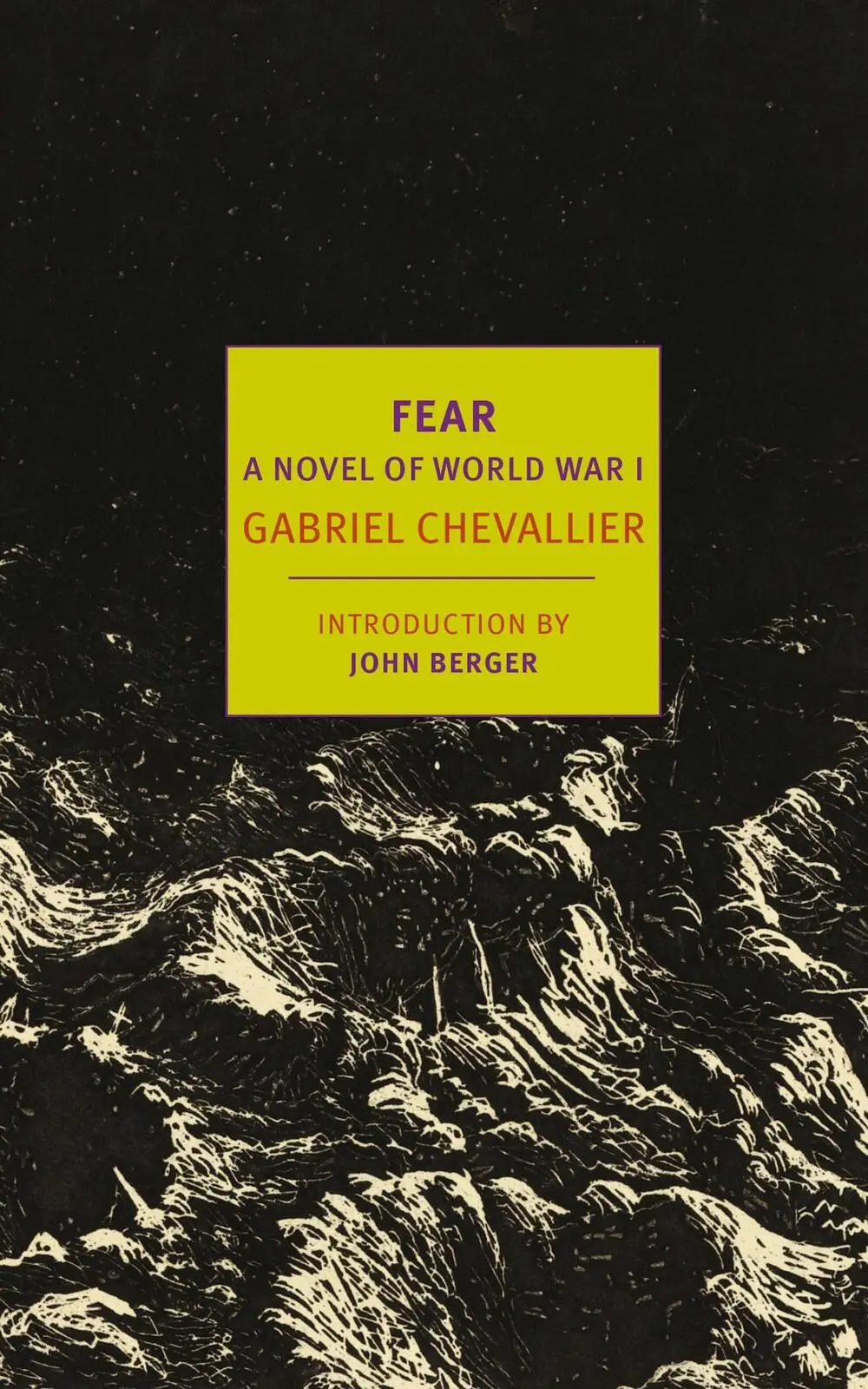
- Название:Fear
- Автор:
- Издательство:New York Review Books
- Жанр:
- Год:2014
- Город:New York
- ISBN:нет данных
- Рейтинг книги:3 / 5. Голосов: 1
-
Избранное:Добавить в избранное
- Отзывы:
-
Ваша оценка:
Fear: краткое содержание, описание и аннотация
Предлагаем к чтению аннотацию, описание, краткое содержание или предисловие (зависит от того, что написал сам автор книги «Fear»). Если вы не нашли необходимую информацию о книге — напишите в комментариях, мы постараемся отыскать её.
1915: Jean Dartemont heads off to the Great War, an eager conscript. The only thing he fears is missing the action. Soon, however, the vaunted “war to end all wars” seems like a war that will never end: whether mired in the trenches or going over the top, Jean finds himself caught in the midst of an unimaginable, unceasing slaughter. After he is wounded, he returns from the front to discover a world where no one knows or wants to know any of this. Both the public and the authorities go on talking about heroes — and sending more men to their graves. But Jean refuses to keep silent. He will speak the forbidden word. He will tell them about fear.
John Berger has called
“a book of the utmost urgency and relevance.” A literary masterpiece, it is also an essential and unforgettable reckoning with the terrible war that gave birth to a century of war.
Fear — читать онлайн бесплатно полную книгу (весь текст) целиком
Ниже представлен текст книги, разбитый по страницам. Система сохранения места последней прочитанной страницы, позволяет с удобством читать онлайн бесплатно книгу «Fear», без необходимости каждый раз заново искать на чём Вы остановились. Поставьте закладку, и сможете в любой момент перейти на страницу, на которой закончили чтение.
Интервал:
Закладка:
The officers of the colonel’s entourage (his deputy officer, an information officer, an officer for the 37mm cannon, flag bearer, etc.) are carefully shaved, powdered and scented; these are men who have time to devote to their toilet. In particular they must be good company, clubbable, able to tell a funny story over dinner. They do not concern themselves with the actual war except in extremis, and, if at all possible, at a good distance.
Finally the colonel shows up. He’s tall and slim, with a long Gallic moustache, dressed in khaki, cap pulled down over one ear, chest pushed out — very much the musketeer. (In civilian life, with light trousers and white gaiters, he would make a classic ageing philanderer.) He pulls himself to his full height when he sees a soldier, fixes his magnetic gaze upon him, and salutes him with a fulsome gesture which might signify ‘All honour to you, bravest of the brave!’ or ‘Always follow my plume!’[40] Unfortunately, at the moment of a skirmish, that plume will stay put rather far in the rear… I am only going by appearances, and I do not know the true worth of the colonel, apart from his theatrical salute. But I never trust people who give themselves airs.
His audience over, the captain rejoins us. We leave Versailles…
Just before we set off for the front, a new battalion leader has come to take command of our unit. This is our third commandant since I became a runner, not counting the temporary captains. Changes like this always worry us. Our fate can depend on the cool- headedness of our leader, and our well-being depends on his moods.
The newcomer has a distrustful manner. He handed me all the operations maps he found in the shelter and told me: ‘Check all these and bring them up to date.’
So twice a day I take my gas mask, my helmet, my revolver, my cane, my pencil and papers and set off alone on topographic reconnaissance. It is a hard job to identify the terrain because bombardments have levelled it all, destroyed all the landmarks. I have to establish a point using some detail from the trenches and determine other points on the basis of this one. The sector is absolutely vast, the front line for three companies stretching over about twelve hundred metres, on the flank of the first summits of the Champagne mountains, whose peaks are held by the Germans. Their dominant position compelled us to fill in parts of the trenches dating from their occupation and to dig new communication trenches which they could not see or hit with direct fire from machine guns. The result was a tangle of trenches that I have to explore to get my bearings, indications on the map being somewhat fanciful. I often climb over barriers of sandbags, making myself visible at ground level for a few seconds, and I wander through abandoned trenches which are crumbling away and getting covered by grass. The slope facing the Germans is deserted. I find myself in total solitude for hundreds of metres, and, if I were to get seriously wounded, no one would have the idea of looking for me in places where I am the only one to venture. In the beginning I had a few bullets fired at me, luckily from five hundred metres; they served to warn me of the danger presented by these old ditches. I go back there, though, taking all due precautions, as much for pleasure as necessity. I love the isolation, the silence, I love discovering old dugouts with mushrooms growing on their damp walls, which have all the poignant mystery of ruins. These particular ruins have their own pathos, and I imagine the destinies of the men who spent time here, many of them now dead. Along with pleasure comes pride in knowing secret places, which become my own domain, on this land that one army observes and another defends.
My first concern is to mark those shelters and dugouts that are in good condition. It inevitably happens that the zone I am exploring as I make my rounds gets hit by some shells. I then run for the nearest shelter. I am more afraid of shells than bullets. Because of their stupid noise and the way they rip apart the body. Bullets are more discreet and operate more cleanly.
I spend a lot of time at the front lines, to the point where look outs start to wonder what form of madness compels me to roam around places that they would dearly like to leave. The colonel wants the fullest details and demands that the thickness of each barbed-wire entanglement be indicated on the map. Since it is out of the question to go and take measurements in front of our lines, I estimate as best I can by looking over the parapet. It is a tricky task which could, with a moment’s distraction, earn me a bullet in the head.
My conscientiousness does not spare me from reproaches. Recently, and with his customary asperity, the commandant held out a map to me and said:
‘You don’t really know what you’re doing. That squad isn’t there.’
After a fortnight we have been able to judge that our commandant is not an ill-natured man. But he does have bad manners and the burden of responsibilities weighs heavily on his mind. I replied with good humour:
‘It is you who are making a mistake, sir. The squad is indeed there and I will show you on the ground whenever you like.’
‘You are sure of this?’
‘Quite sure, sir.’
‘OK.’
He must have checked for himself later. He did not mention it again and ever since then he exercises his authority more politely.
We have just heard the news about the offensive at the Chemin des Dames: a new breach has been opened in our front lines and is getting wider by the minute. They say that the Germans turned up in Fismes a few hours after they launched the attack, catching by surprise a paymaster general, some airmen, etc. To those who know the region, the speed of their advance is overwhelming. It is also overwhelming to know that the enemy is marching on Fère-en-Tardenois, where we have seen fields full of munitions stretching off into the distance, vast depots of matériel that they are going to capture.
Two strong surprise attacks on neighbouring sectors to our right and left caused us some losses. The Germans are harassing us with shells without any warning. I have been caught several times by unexpected shelling, and the other day nearly got killed on some low ground. Everything is going badly. The end seems further away than ever… I am at the end of my tether. I think to myself:
‘I’ve had enough of this! I’m twenty-three years old, I’m already twenty-three! Back in 1914 I embarked on a future that I wanted to be full and rich and in fact I’ve got nothing at all. I am spending my best years here, wasting my youth on mindless tasks, in stupid subservience; the life I’m living goes against everything that is dear to me, it doesn’t offer me any goal but burdens me with privations and constraints, and may well finish with my death… I’ve had enough! I am the centre of the world, as each of us is for himself the centre of the world. I am not responsible for others’ mistakes, I have nothing to do with their ambitions and their appetites, and I have better things to do than pay for their glory and their profits with my blood. Let those who love war make it, I want nothing more to do with it. It’s the business of professionals, let them sort it out between themselves, let them do their job. It isn’t mine! By what right can these strategists do with me as they please, when I can see through all their ruinous, murderous elucubrations? I reject their hierarchy which is no measure of true worth, I reject the policies that have led to this. I have no faith in those who organise massacres, I despise even their victories for I have seen what they are made of. I have no hatred, I only detest mediocrities and fools, and often enough they get promoted, they become all-powerful. My patrimony is my life. I have nothing more precious to defend. My homeland is whatever I manage to earn or to create. Once I am dead, I don’t give a damn how the living divide up the world, about the frontiers they draw on their maps, about their alliances and their enmities. I demand to live in peace, far away from barracks, battlefields and military minds and machinery in any shape or form. I do not care where I live, but I demand to live in peace and to slowly become what I must become… Killing has no place in my ideals. And if I must die, I intend to die freely, for an idea that I cherish, in a conflict where I will have my share of responsibility…’
Читать дальшеИнтервал:
Закладка:
Похожие книги на «Fear»
Представляем Вашему вниманию похожие книги на «Fear» списком для выбора. Мы отобрали схожую по названию и смыслу литературу в надежде предоставить читателям больше вариантов отыскать новые, интересные, ещё непрочитанные произведения.







Обсуждение, отзывы о книге «Fear» и просто собственные мнения читателей. Оставьте ваши комментарии, напишите, что Вы думаете о произведении, его смысле или главных героях. Укажите что конкретно понравилось, а что нет, и почему Вы так считаете.