Henry Roth - Call It Sleep
Здесь есть возможность читать онлайн «Henry Roth - Call It Sleep» весь текст электронной книги совершенно бесплатно (целиком полную версию без сокращений). В некоторых случаях можно слушать аудио, скачать через торрент в формате fb2 и присутствует краткое содержание. Год выпуска: 1992, Издательство: Farrar, Straus and Giroux, Жанр: Классическая проза, на английском языке. Описание произведения, (предисловие) а так же отзывы посетителей доступны на портале библиотеки ЛибКат.
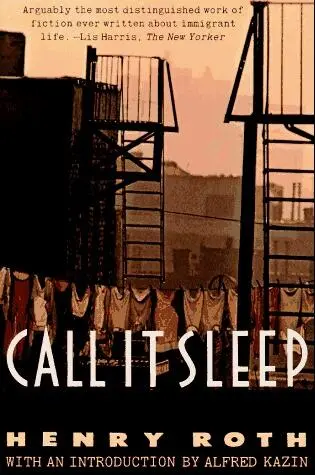
- Название:Call It Sleep
- Автор:
- Издательство:Farrar, Straus and Giroux
- Жанр:
- Год:1992
- ISBN:нет данных
- Рейтинг книги:4 / 5. Голосов: 1
-
Избранное:Добавить в избранное
- Отзывы:
-
Ваша оценка:
Call It Sleep: краткое содержание, описание и аннотация
Предлагаем к чтению аннотацию, описание, краткое содержание или предисловие (зависит от того, что написал сам автор книги «Call It Sleep»). Если вы не нашли необходимую информацию о книге — напишите в комментариях, мы постараемся отыскать её.
, his first novel, in 1934, it was greeted with critical acclaim. But in that dark Depression year, books were hard to sell, and the novel quickly dropped out of sight, as did its twenty-eight-year-old author. Only with its paperback publication in 1964 did the novel receive the recognition it deserves.
was the first paperback ever to be reviewed on the front page of
, and it proceeded to sell millions of copies both in the United States and around the world.
Call It Sleep
Call It Sleep — читать онлайн бесплатно полную книгу (весь текст) целиком
Ниже представлен текст книги, разбитый по страницам. Система сохранения места последней прочитанной страницы, позволяет с удобством читать онлайн бесплатно книгу «Call It Sleep», без необходимости каждый раз заново искать на чём Вы остановились. Поставьте закладку, и сможете в любой момент перейти на страницу, на которой закончили чтение.
Интервал:
Закладка:
“Yea, better’n movin’ pitchiz!”
“Wadda yuh wan’ I shul do?” Their growing excitement added to his terror.
“Hurry up an’ take dat sword an’ go to dem tracks and t’row it in— See like dis. In de middle.”
“I don’t wanna go.” He began to weep.
“G’wan yuh blubber-mout’.” Weasel’s fist tightened.
“G’wan!” The other lieutenant’s face screwed up. “’Fore we kick de piss ouda yiz.”
“G’wan, an’ we’ll letchiz go,” promised Pedey. “G’wan! Shake!”
“If I jost pud id in?”
“Yea. Like I showed yuh.”
“An’ den yuh’ll led me go?”
“Sure. G’wan. Id ain’ gonna hoitcha. Ye’ll see all de movies in de woil! An’ vawderville too! G’wan before a car comes.”
“Sure, an’ all de angels.”
“G’wan!” Their fists were drawn back.
Imploringly, his eyes darted to the west. The people on Avenue D seemed miles away. The saloon-door in the middle of the block was closed. East. No none! Not a soul! Beyond the tarry rocks of the river-shore, the wind had scattered the silver plain into rippling scales. He was trapped.
“G’wan!” Their faces were cruel, their bodies stiff with expectancy.
He turned toward the tracks. The long dark grooves between each pair looked as harmless as they had always looked. He had stepped over them hundreds of times without a thought. What was there about them now that made the others watch him so? Just drop it, they said, and they would let him go. Just drop it. He edged closer, stood tip-toe on the cobbles. The point of the sheet-zinc sword wavered before him, clicked on the stone as he fumbled, then finding the slot at last, rasped part way down the wide grinning lips like a tongue in an iron mouth. He stepped back. From open fingers, the blade plunged into darkness.
Power!
Like a paw ripping through all the stable fibres of the earth, power, gigantic, fetterless, thudded into day! And light, unleashed, terrific light bellowed out of iron lips. The street quaked and roared, and like a tortured thing, the sheet zinc sword, leapt writhing, fell back, consumed with radiance. Blinded, stunned by the brunt of brilliance, David staggered back. A moment later, he was spurting madly toward Avenue D.
IX
WHEN he looked behind him again, the light was gone, the roaring stilled. Pedey and his mates had fled. At the crossing, several people had stopped and were staring toward the river. Eyes shifted to David as he neared Avenue D, but since no one tried to block his way, he twisted around the corner and fled toward Ninth Street. His father’s milk wagon was standing beside the curb. His father was home. He might guess that something had gone wrong. He’d better not go up. He slunk past his house, cut across the street and broke into a run. At the cheder entrance he turned, scurried through the sheltering doorway, and came out into the sunlit and empty yard. The cheder door was closed. He had come far too early. Trembling in every limb, weak with fright, he looked about for a place to rest. The wide wooden doors that covered a cellar sloped gently into the sun. A new, brass padlock gleamed at their seam — too many of the rabbi’s pupils had been banging them on their subterranean way into the cheder yard. He dragged himself over, dropped down on one of the wooden wings and shut his eyes. In the red sea of sun-lit eyelids his spirit sickeningly rolled and dipped. Though the planks were warm and the sun was warm, his teeth chattered and he shivered as if an icy gale were blowing. With a groan of anguish, he turned on his side hardly feeling the warm padlock under his cheek. Deep, shaking sobs caught on the snag of his throat. The hot tears crowded through his sealed eyelids, trickled unheeded across his cheek and nostril. He wept silently.
How long he lay there he did not know. But little by little the anguish lifted, his blood thawed, the sobbing calmed. Empty and nerveless, he opened his eyes; the rough-walled familiar houses, the leaning fences, the motley washing, wash-poles, sunlight, the cramped and cluttered patch of blue above him were good. A mottled, yellow cat crept carefully out upon a fire-escape, leapt down behind a fence. Realities warm and palpable. From open windows, the sound of voices, rattling of pots, rush of water in a sink, laughter shearing away loud snatches of familiar speech. It was good. In the veering of the light wind, the odors of cooking, strong and savory, hung and drifted. From somewhere up above a steady chop-chopping began. Meat or fish or perhaps the bitter herbs of the Passover. The limp, vacant body expanded, filled with certainties.
Chop. Chop. The sound was secure. His thoughts took the rhythm of the sound. Something within him chanted. Words flowed out of him of their own accord. Chop. Chop. Showed him, showed. In the river, showed him, showed. Chop. Chop. Showed him, showed. If He wants. Showed him, showed.
— In the dark, chop, chop. In the river, showed him, showed. In the dark, in the river was there. Came out if He wanted, was there. Stayed in if He wanted, was there. Came out if He wanted, stayed in if He wanted, came out if He wanted, was there …
— Could break it in his hands if He wanted. Could hold it in His hands if He wanted. Could break it, could hold it, could break it, could hold it, could break it, could hold it, was there.
— In the dark, in the hallways, was there. In the dark, in the cellars was there. Where cellars is locked, where cellars is coal, where cellars is coal, is
— Coal!
— Coal!
He sat bolt upright.
“Rabbi!” his startled cry rang out over the yard. “Rabbi! Is coal under! White in cellars!” He sprang to his feet in exaltation, stared about him wildly. On all the multicolored walls that hemmed him in, one single vision was written. “Is coal under! White!” Dazedly, he lurched toward the door. “Rabbi!” He rattled it; it held. “Rabbi!” He had to get in. He had to. He raced around the corner of the cheder. The window! He clawed at it. Loose, unbolted, it squealed up easily. There was no hesitation. There could be none. An enormous hand was shoving him forward. He leapt up, abdomen landing on the sill, teetered half in, half out, sprawled into the cheder, hands forward.
That closet! Where all of them were! He ran to it. It was just out of reach. He dragged the rabbi’s chair over, stood up, flung open the door. The blue one! The blue one! Feverishly he pried among them — found it. He leapt down, already turning the pages. Page sixty-eight it was — twenty-six — forty — seventy-two— sixty-nine — sixty-eight! On top! With all your might! He wriggled over the bench.
“Beshnas mos hamelech Uziyahu vawere es adonoi yoshav al kesai rum venesaw, vshulav malaiim es hahahol. Serafim omdim memal lo shash kanowfayim, sash kanowfayim lawehhad, beshtayim yahase fanav uvishtayim yahase raglov uvishtayim yofaif.”
All his senses dissolved into the sound. The lines, unknown, dimly surmised, thundered in his heart with limitless meaning, rolled out and flooded the last shores of his being. Unmoored in space, he saw one walking on impalpable pavements that rose with the rising trees. Or were they trees or telegraph-poles, each crossed and leafy, none could say, but forms stood there with footholds in unmitigated light. And their faces shone because the light in their midst was luminous laughter. He read on.
The book returned. The table hardened … Behind him the sound of a key probing a keyhole screeked across infinite space. The lock snapped open — suddenly near at hand. Realization struck like an icy gust. With a start of dismay, he spun around over the bench, threw himself at the window. Too late! The rabbi, long black coat and derby, stepped into the light of the open door. He drew back with a groan of fright, but recognizing who it was, his eyes opened wrathfully and he came forward, head cocked sideways.
Читать дальшеИнтервал:
Закладка:
Похожие книги на «Call It Sleep»
Представляем Вашему вниманию похожие книги на «Call It Sleep» списком для выбора. Мы отобрали схожую по названию и смыслу литературу в надежде предоставить читателям больше вариантов отыскать новые, интересные, ещё непрочитанные произведения.








Обсуждение, отзывы о книге «Call It Sleep» и просто собственные мнения читателей. Оставьте ваши комментарии, напишите, что Вы думаете о произведении, его смысле или главных героях. Укажите что конкретно понравилось, а что нет, и почему Вы так считаете.