Henry Roth - Call It Sleep
Здесь есть возможность читать онлайн «Henry Roth - Call It Sleep» весь текст электронной книги совершенно бесплатно (целиком полную версию без сокращений). В некоторых случаях можно слушать аудио, скачать через торрент в формате fb2 и присутствует краткое содержание. Год выпуска: 1992, Издательство: Farrar, Straus and Giroux, Жанр: Классическая проза, на английском языке. Описание произведения, (предисловие) а так же отзывы посетителей доступны на портале библиотеки ЛибКат.
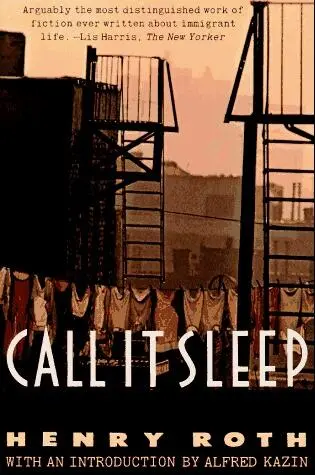
- Название:Call It Sleep
- Автор:
- Издательство:Farrar, Straus and Giroux
- Жанр:
- Год:1992
- ISBN:нет данных
- Рейтинг книги:4 / 5. Голосов: 1
-
Избранное:Добавить в избранное
- Отзывы:
-
Ваша оценка:
Call It Sleep: краткое содержание, описание и аннотация
Предлагаем к чтению аннотацию, описание, краткое содержание или предисловие (зависит от того, что написал сам автор книги «Call It Sleep»). Если вы не нашли необходимую информацию о книге — напишите в комментариях, мы постараемся отыскать её.
, his first novel, in 1934, it was greeted with critical acclaim. But in that dark Depression year, books were hard to sell, and the novel quickly dropped out of sight, as did its twenty-eight-year-old author. Only with its paperback publication in 1964 did the novel receive the recognition it deserves.
was the first paperback ever to be reviewed on the front page of
, and it proceeded to sell millions of copies both in the United States and around the world.
Call It Sleep
Call It Sleep — читать онлайн бесплатно полную книгу (весь текст) целиком
Ниже представлен текст книги, разбитый по страницам. Система сохранения места последней прочитанной страницы, позволяет с удобством читать онлайн бесплатно книгу «Call It Sleep», без необходимости каждый раз заново искать на чём Вы остановились. Поставьте закладку, и сможете в любой момент перейти на страницу, на которой закончили чтение.
Интервал:
Закладка:
With the end of a stick, Kushy pried the oven door open. Heads drew closer. Inside, on the red-hot bottom of the oven, what had once been yellow grains were now charred and shriveled beads.
“Aaa, shit!” A groan of disgust burst from lifted throats. “Dey ain’ w’ite!”
“But mebbe we can ead anyway,” one of the invincibles comforted himself. “Ain’ id pop-cunn?”
“Sure, betcha dey taste good! I’ll try foist. Push id in my hand. Ooy! Id’s hod!”
“Da-a-a-vid! Da-a-avid!”
“Me?” He gazed about, startled.
“Da-a-avid!”
Up! Oh! It was his mother, leaning from a window.
“Wa-a-at?”
“Come u-up!”
“Ye-e-es!”
Her head disappeared inside.
That was strange. She almost never called him from the window. What did she — Gee! He stared. There, beside his house stood his father’s milk wagon. That was even stranger. What was he doing home at this hour? He never came back so late in the morning. Something must be wrong. Disquieted, he crossed the street, scrutinized the black horse resting his feed-bag on the curb. Perhaps it was some other milk man. No, it was Billy sure enough, the black, powerful animal they had recently given his father. Reluctantly he went into the hall-way, climbed the stairs and hung back a moment before he opened his door — familiar blue cap and black whip on the washtub. His father, already seated before the table, glanced at him as he entered and then turned to his mother who was standing before the ice-box:
“Have you any sour cream left?”
“Without end,” she answered, smiling at David as he entered. “And a few more scallions?”
“Let it be—” And to David. “Wash your hands and sit down.”
Completely at a loss now, David went over to the sink. When he returned to the table, his mother had set his combination lunch and breakfast before him — things he liked: Golden-skinned, smoked white-fish, cucumbers and tomatoes, pumpernickel, milk, purple plums. His mouth watered; in the twinges of awakening hunger apprehensions were momentarily forgotten. He had just opened the white-fish — a middle-piece, it opened like a golden volume — when his father, nodding curtly, said:
“After you’ve finished, I want you to stay near the wagon where I can find you.”
David sought his mother’s eyes.
“You’re going with father,” she explained.
“Me?”
“Yes!” his father interposed. “Don’t jump as though you saw the gloomy angel.”
“It will only be for a short time,” his mother reassured him. “An hour — no, Albert?”
“Perhaps longer,” was his curt reply.
“He has the cheder,” she reminded him. “It’s early during the summer.”
“I told you he’d be there in good time. Do you know, if you go on keeping him from seeing how I earn his bread, he’ll begin to believe I’m one of God’s playfellows.”
“I didn’t mean that,” she answered. “I—”
“Yes! Yes! Yes! Another child would have been with me long ago — would have begged to go. But enough of this — You stay near the wagon.” He scooped a dripping radish from the cream, slumped back, still chewing. There was silence for a few seconds.
“When is he coming,” ventured his mother, “the other I mean.”
“Tomorrow maybe. I can’t tell.”
“Poor man!”
“It happens … Lucky for me I brought an extra cake of ice along. I wouldn’t have had enough with this heat — But better the summer than the winter.”
“At least the ways aren’t so icy.”
“Yes. And you can see the stairs at four in the morning. And the handle of the tray isn’t so frozen it burns through your gloves like fire.”
“It’s all bitter, Albert.”
“Mm!” he grunted. “You hardly know. I sell my days for a little silver — a little paper — sixteen smirched leaves a week — I’ll never buy them back with gold. It’s enough sometimes to make one savage with man and beast.”
“But other men work as well.”
“You needn’t tell me that!”
There was silence again, while his father ate, staring with heavy eyes at the table.
“And you’d really want your days back?” She sat down, hands in her lap.
He snorted. “What a question!”
“I wouldn’t.”
“You mean days such as you’ve had? Like these?”
“Any kind.”
“Hmph!” he grunted. “Won’t you be a grandmother soon enough without posting?”
“No,” she smiled, her wide brown eyes lifted to the ceiling. “I want to be one tomorrow.”
“You’re a fool!”
“When I can say as mine did. It’s over. I stepped into the sun, I took one breath and suddenly I was a grandmother — Throw clocks away!”
“She grew wise as she grew old?” he asked with dry sarcasm.
“They measure nothing, she would say. Only the swing of cranes in the tides of their flight is worth reckoning. The rest is a rattle on Purim — deliverance from Haman long hanged.”
He chuckled once, sneered. “You and your grandmother!”
She laughed with him.
He pushed his plate away, breathing heavily, ran weathered powerful fingers through his thinning black hair, pressed down the ridge in the back of his head where the cap had bitten in.
“No more?” she asked.
“No.” He rose, tilted his head back, stretched. Drowsiness slowly cobwebbed the taut, impassive face. “No later than half-past ten.”
“I’ll wake you, Albert.”
He plodded into the bedroom, shut the door behind him. The bed creaked …
“Mama!” David whispered.
“Yes, child?”
“What does he want?”
“Oh—! There’s a milkman out. He cut his hand on a bottle — fearful thing!” she shuddered. “And they’ve divided his route among the rest.”
“Why does he want me?”
“He’s delivering to the gas houses there — the other man’s route. And he wants you to sit in the wagon while he’s gone.”
“Aaa! I don’t want to go.”
“I know. I’m worried too,” she confessed. “The other man always had a dog in his wagon — you’ll be the dog this time.” She smiled. “Just this once, won’t you? You’ll like it, riding on the wagon, seeing new streets. It will be cool when the horse is running.”
He shook his head resentfully. Her words aroused a foreboding in him.
“Come!” she coaxed, “just this once.”
Moodily, he pecked at his food. “How far are the gas houses?”
“Not at all far. Twentieth Street — I think that’s what your father said.”
“That is far!”
“Sh!” She looked uneasily at the bedroom door. “Do finish your lunch.”
“Only one side of the white fish,” he said sullenly.
“Don’t you like it any more?”
“No.”
“Why are you so frightened, child! You’re not leaving me! Drink the rest of your milk.”
But his appetite had vanished. It was only after a great deal of urging that she prevailed upon him to finish his lunch.
“Can I go now?” he asked, rising.
“Don’t you want to wait here? It’s cooler than the street.”
He hesitated a moment. “No, I’ll go down.”
“Very well,” she sighed. “I beg you stay near the wagon.” She bent down, let him kiss her brow. “Come straight home after cheder.”
II
HE WENT down the stairs, and reaching the street, looked eagerly toward Avenue D. He had meant to return to the pop-corn oven when he came down in order to forget his uneasiness and at the same time be near the wagon. But now they were gone. The pop-corn oven lay beside the curb, a shattered heap of iron. Evidently, they had repaid it for its recalcitrance. But where had they gone to? Eating perhaps. No, it wasn’t their lunch time yet. It was only ten o’clock.
Читать дальшеИнтервал:
Закладка:
Похожие книги на «Call It Sleep»
Представляем Вашему вниманию похожие книги на «Call It Sleep» списком для выбора. Мы отобрали схожую по названию и смыслу литературу в надежде предоставить читателям больше вариантов отыскать новые, интересные, ещё непрочитанные произведения.









Обсуждение, отзывы о книге «Call It Sleep» и просто собственные мнения читателей. Оставьте ваши комментарии, напишите, что Вы думаете о произведении, его смысле или главных героях. Укажите что конкретно понравилось, а что нет, и почему Вы так считаете.