Pearl Buck - Kinfolk
Здесь есть возможность читать онлайн «Pearl Buck - Kinfolk» весь текст электронной книги совершенно бесплатно (целиком полную версию без сокращений). В некоторых случаях можно слушать аудио, скачать через торрент в формате fb2 и присутствует краткое содержание. Год выпуска: 2012, Издательство: Open Road Media, Жанр: Классическая проза, на английском языке. Описание произведения, (предисловие) а так же отзывы посетителей доступны на портале библиотеки ЛибКат.
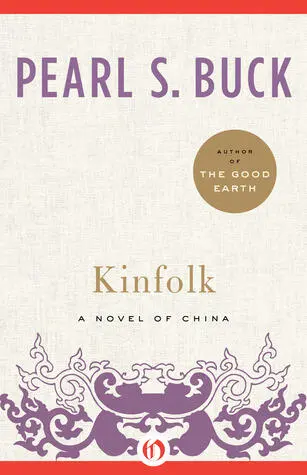
- Название:Kinfolk
- Автор:
- Издательство:Open Road Media
- Жанр:
- Год:2012
- ISBN:нет данных
- Рейтинг книги:4 / 5. Голосов: 1
-
Избранное:Добавить в избранное
- Отзывы:
-
Ваша оценка:
Kinfolk: краткое содержание, описание и аннотация
Предлагаем к чтению аннотацию, описание, краткое содержание или предисловие (зависит от того, что написал сам автор книги «Kinfolk»). Если вы не нашли необходимую информацию о книге — напишите в комментариях, мы постараемся отыскать её.
, a sharp dissection of the expatriate experience, Pearl S. Buck unfurls the story of a Chinese family living in New York. Dr. Liang is a comfortably well-off professor of Confucian philosophy, who spreads the notion of a pure and unchanging homeland. Under his influence, his four grown children decide to move to China, despite having spent their whole lives in America. As the siblings try in various ways to adjust to a new place and culture, they learn that the definition of home is far different from what they expected.
Kinfolk — читать онлайн бесплатно полную книгу (весь текст) целиком
Ниже представлен текст книги, разбитый по страницам. Система сохранения места последней прочитанной страницы, позволяет с удобством читать онлайн бесплатно книгу «Kinfolk», без необходимости каждый раз заново искать на чём Вы остановились. Поставьте закладку, и сможете в любой момент перейти на страницу, на которой закончили чтение.
Интервал:
Закладка:
17
DR. LIANG RECEIVED THE LETTER and immediately he refused to believe that Peter was dead. Who would kill the son of Liang Wen Hua? Even the secret police, whose existence he had never acknowledged, would not dare to do such a thing. It was therefore probable that Peter had joined the Communists. This being the case, he, Liang Wen Hua, as a loyal citizen of China, would disown his younger son. His first feeling upon putting down the letter was one of swift anger. Peter knew how his father felt about Communists. To run away from school, to leave no message, to join the traitorous ones, was unfilial beyond measure. He would disown Peter publicly.
Upon the first impulse of his anger he went to find Mrs. Liang. She was in the kitchen, since this was Nellie’s day off. A fine aroma met his nostrils as he opened the door. Mrs. Liang was heating a combination of fresh ginger and onion in lard and soy sauce, ready to brown a whole fish. She looked happy when he came in and immediately burst into speech.
“Liang, look! I made the Ashman leave on the head. That is good luck, for once.”
He took a dark pleasure in spoiling her joy. “We have no luck,” he said bitterly. “Here is a letter from James. Peter is gone.”
Mrs. Liang felt her legs tremble. She sat down quickly on the kitchen stool. “You mean—” she could not say the unlucky word “death.”
“Who knows?” Dr. Liang shouted. Now that he took thought he perceived that it was possible that they would never see Peter again, dead or alive. In his heart of hearts he was a soft and tender man, and tears came into his eyes.
When his wife saw these tears she was terrified. She remembered the first time she had ever seen him cry. It was after he had been told that he had failed an examination, many years ago. It was in the first year of their marriage and she had wept with him. In old times scholars not only wept but sometimes they hanged themselves or swallowed opium if they failed in an examination. She had watched Dr. Liang for some time after that and had not felt wholly safe until two years later he had taken the examination again and had passed successfully and so had removed the shame from himself.
Now seeing his tears she burst into loud wails. “He is dead!” she sobbed. “You are afraid to tell me!”
This dried his tears again with anger. “Why should I be afraid to tell you?” he retorted. “He is your son. No, he has simply run away.”
To his surprise she turned on him with fury. “This is your fault! You sent him no money. He has nothing to spend. He took money from somewhere and now he is afraid. Sit down at once, Liang, and write to James and send him money to use to find Peter. I will not eat until you do this.”
So it was. She finished the fish and prepared the meal and she would eat none of it. Dr. Liang ate alone until he could not endure it. Then he threw down his chopsticks and with much complaint he wrote the letter and enclosed a check which he made twice as large as he wished.
After this they both felt better, as though now it was certain that Peter would come back. They finished the fish together and Dr. Liang went to his study for his nap and Mrs. Liang went to mail the letter.
“I will just go to see Louise,” she told him. “I will talk with her about Peter and see how he was when she was with him.”
Dr. Liang, outstretched upon his couch and covered by a light silk quilt, listened to her footsteps and the closing of the front door. The rooms were very still. He tried not to think of Peter but he found himself remembering him. Of all the children Peter was the most American. He had gone to the excellent public school of the district and he had stood often at the head of his class. But he had not written one letter to his father after he went to China. They had not thought this strange, for it was natural that James as the eldest should make tie report to his parents, and when Mary wrote it was to her mother. Now, however, in the silence about him, and thinking of Peter’s face, Dr. Liang wondered if there was something he did not know about his son. Strange that the face he saw was not Peter’s at eighteen, but the face of twelve-year-old Peter, coming home from school, his books in a strap, a boy always gay and always hungry. The door would burst open and Peter would shout, “Ma, I’m hungry!”
He lay, listening to that boy’s voice, and for some reason which he could not explain, the tears began to flow again. Why should he weep for Peter? Was it an omen? He got up from the couch and walked up and down the room, his hands clasped tightly together. Perhaps he ought not have let Peter go to China. Yes, he should have kept the boy here. He had allowed him to grow up with a sentimental notion of what China was like. He had even helped to make the notion — let him be honest, now while he was alone. But he had wanted the children to understand the glory of China, the honor, the dignity of an ancient race and country. He himself purposely dwelled upon these things. It was necessary to do this in order to have a perspective upon the disagreeable present. The present was always transient. It faded away. Only the past and the future were eternal. Therefore he had done well to teach his children of their people’s greatness. It was what Confucius himself had taught. Confucius too had lived in troubled and divided times, and he had not allowed himself to be troubled or divided. Instead he had gathered together all the greatness of the ancients and he had put this greatness into a book which had lived through the ages.
Dr. Liang stood still, his head lifted. Here was inspiration. He would write such a book about the past that it would inspire the young of today. They would know their roots and they would feel fresh life come up into them. He should have done it long ago, but perhaps it was not yet too late.
He sat down at the desk and took up his brush and began to make the exquisite letters for which he was famous among Chinese scholars. Then he paused. Should he not dedicate the book to his own children? He would write it first of all for them. Over this he pondered, then he decided. If Peter came back before the book was finished, the dedication would be to James, Mary and Peter, citizens of China. If Peter never came back? Then he would simply dedicate it “To Peter, whom China has lost.”
The tears stung again but he refused to allow them. He had immense work to do.
Mrs. Liang mailed the letter and then she took a taxi across town. The day was gray but it neither rained nor snowed and she rode through the park and stopped at the Wetherstons’ apartment house and took the elevator to the twelfth floor. She liked Mrs. Wetherston very much and the two had become good friends. True, she thought the American lady was too fussy about the baby, but this was natural since it was her own grandchild, though by an unknown woman. The child was fine enough. He grew well; he was trying already to walk; he looked much like his father. A grandmother naturally would be proud of all these things. She herself, also naturally, was more interested in the child Louise herself would bear before the year was over. Mrs. Wetherston hoped this child would be a little girl, but Mrs. Liang said frankly that for herself she wished a boy. It was true that Alec was not her son, and this child could be only an outside grandchild, but she had grown fond of Alec, and with all her own sons away, it was nice to have a tall young man call her Mother, even though he was not Chinese. With much that she did not approve, it could be said for the Americans that here both mothers-in-law received attention, and not only the mother of the son, as in China.
Mrs. Wetherston opened the door and the two ladies greeted each other with affection. Mrs. Liang produced a small gardenia that she had bought on the street and Mrs. Wetherston thanked her for it as she pinned it on her dress.
Читать дальшеИнтервал:
Закладка:
Похожие книги на «Kinfolk»
Представляем Вашему вниманию похожие книги на «Kinfolk» списком для выбора. Мы отобрали схожую по названию и смыслу литературу в надежде предоставить читателям больше вариантов отыскать новые, интересные, ещё непрочитанные произведения.



Обсуждение, отзывы о книге «Kinfolk» и просто собственные мнения читателей. Оставьте ваши комментарии, напишите, что Вы думаете о произведении, его смысле или главных героях. Укажите что конкретно понравилось, а что нет, и почему Вы так считаете.