Pearl Buck - Kinfolk
Здесь есть возможность читать онлайн «Pearl Buck - Kinfolk» весь текст электронной книги совершенно бесплатно (целиком полную версию без сокращений). В некоторых случаях можно слушать аудио, скачать через торрент в формате fb2 и присутствует краткое содержание. Год выпуска: 2012, Издательство: Open Road Media, Жанр: Классическая проза, на английском языке. Описание произведения, (предисловие) а так же отзывы посетителей доступны на портале библиотеки ЛибКат.
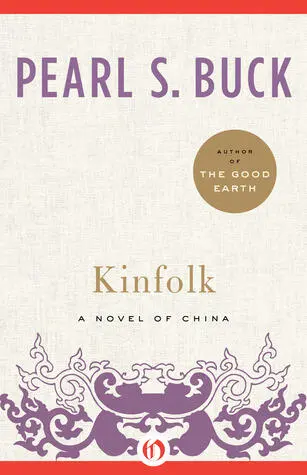
- Название:Kinfolk
- Автор:
- Издательство:Open Road Media
- Жанр:
- Год:2012
- ISBN:нет данных
- Рейтинг книги:4 / 5. Голосов: 1
-
Избранное:Добавить в избранное
- Отзывы:
-
Ваша оценка:
Kinfolk: краткое содержание, описание и аннотация
Предлагаем к чтению аннотацию, описание, краткое содержание или предисловие (зависит от того, что написал сам автор книги «Kinfolk»). Если вы не нашли необходимую информацию о книге — напишите в комментариях, мы постараемся отыскать её.
, a sharp dissection of the expatriate experience, Pearl S. Buck unfurls the story of a Chinese family living in New York. Dr. Liang is a comfortably well-off professor of Confucian philosophy, who spreads the notion of a pure and unchanging homeland. Under his influence, his four grown children decide to move to China, despite having spent their whole lives in America. As the siblings try in various ways to adjust to a new place and culture, they learn that the definition of home is far different from what they expected.
Kinfolk — читать онлайн бесплатно полную книгу (весь текст) целиком
Ниже представлен текст книги, разбитый по страницам. Система сохранения места последней прочитанной страницы, позволяет с удобством читать онлайн бесплатно книгу «Kinfolk», без необходимости каждый раз заново искать на чём Вы остановились. Поставьте закладку, и сможете в любой момент перейти на страницу, на которой закончили чтение.
Интервал:
Закладка:
From this wedding feast James returned to his own room late that night and he sat thinking and alone for a long time. He was not here, he perceived, only to do what good he could. Perhaps he was not here to do good at all. He was here to release some force of life now hidden in his people. To heal their bodies was to release force, to teach them to read and to write was to release yet more of such force. What was this force? It was good sense and strong wisdom, and it was an inheritance. It was also his inheritance. While he gave his people the tools of health and letters, he gave himself the means of learning what their wisdom was, and when he knew them he could enter into his inheritance, from which he had been cut off. Thus would he find his own roots.
In this humility he began his new life.
Spring delayed that year, and week after week the cold winter nights covered the city. On one such night the sky clouded soon after sunset and snow began to fall. Many poets of ancient times had written poems about snow falling upon the roofs of the palaces, but Peter could not read these poems and he did not even know of their existence. And the peaceful times in which they had been written were gone. It was one thing to look out from a snug and comfortable house set in a prosperous nation and see the snowflakes drifting upon imperial roofs. Today the palaces were empty and poet and emperor alike were dust. The city was desolate, the people without good rulers and the enemy only newly driven away. The past was no more, and the future could not be seen.
Peter, pressing his face against the small dirty windowpane of his friend’s room, saw the lamplight reflected only upon large wet snowflakes that tomorrow would make the day’s work harder, the classrooms more chill and damp, the streets slippery. Here inside this heatless room the temperature was already freezing. Like most students, his friend Chang Shan had contrived a small stove upon which to boil hot water to drink, or at best for making a little tea. The stove was only an oil can bought from someone who had followed the American army and had salvaged all tin cans. But Chang Shan, being inventive, had lined the tin with clay and had made a frame of heavy wire to support a small copper kettle. The hot water, poured into cheap pottery bowls, kept their hands from being too chilblained for writing, and the same hot water in their stomachs gave them momentary warmth within.
Peter looked at Chang Shan. He was a tall very thin young man of twenty-two. Anyone could see that he had tuberculosis, as most of the students had. His head was large and the bones of his skull protruded. A big slightly arched nose, full pale lips and solid white teeth were nothing uncommon in his looks, but these, combined as they were with fiery eyes, gave his head nobility. Everybody secretly admired Chang Shan, but few dared to be his friends. In these times when life depended upon many things besides food, friends could be more dangerous than enemies. Peter and Chang Shan were friends.
“You will not believe me when I tell you that the place where my father lives is warmed in every corner by pipes carrying hot water,” Peter said.
“It is a pity you do not return to your father,” Chang Shan said. He was reading a badly printed book and he did not look up.
“I do not know why I cannot return,” Peter replied. They spoke in Chinese because Chang did not speak English. Peter had learned to speak the Peking Mandarin, partly that he might talk with Chang Shan. Yet he had never taken Chang Shan to the city house. James and Mary, he had felt, would not like this friend. Chang Shan was an absolutist. When anything was not good, he believed in its total destruction. Thus he believed now in the destruction of the old family system, of the president of the university, of all capitalists, of the Chinese written language, of inflation, of the high cost of living, of the gold standard, of Confucianism, the classics, and the government. It was only a matter of time until Chang Shan would be caught by the secret police and killed. He knew it and for this reason he did not allow himself to fall in love with a girl who loved him. He refused even to see her and the only way she could comfort herself was to come to the room when he was away and leave small packages of food. Chang Shan tried not to eat these but sometimes his hunger compelled him to do so. The girl, Fengying, was a plain ugly female student, and she waylaid Peter as often as she could to ask if Chang Shan had eaten the food and to beg Peter to persuade him to do so. She did not hide her adoration. She declared to Peter, “Chang Shan will be a great revolutionary leader. It is our duty to keep him alive.” In her heart she hoped Peter did not consume her gifts, but she did not say so, fearing he might be angry and so refuse to answer her questions about Chang Shan.
“Yes, yes—” Peter had agreed. She was so ugly, her bulging eyes so pathetic behind her steel-rimmed spectacles, that he escaped from her as soon as he could.
“I do not know why I do not return to my father,” Peter said now to Chang Shan. He, too, was trying to study but he had found it impossible to read the assignment for the next day. It mattered little enough whether he read it or not. The professor would doubtless not come to his class through the snow. His shoes, like those of his students, were only of cotton cloth, and the snow would soon wet them and he had not another pair. He had long ago sold his leather shoes for money to buy rice and so could buy no more leather shoes.
“You are weakening again,” Chang Shan said scornfully. “You have been wet-nursed on Confucianism. You are, I suppose, the superior man.”
“You are very unjust,” Peter said bitterly.
“I am not unjust, then, to myself,” Chang Shan said gravely. All this time he had not lifted his eyes from the book. Now suddenly he looked at the window. When he saw the reflection of the light upon the falling snowflakes, he got up quickly and went out.
Peter did not ask where he went. Chang Shan might have gone out for any reason. Since there were no indoor toilets, he might merely have stepped outside in the street to relieve himself. Or he might have decided that this was a good night to go to the marble bridge.
He came back in a few minutes. “The night is dark and even the police will not be out in the snow,” he announced. “I am going to the bridge.”
Chang Shan never asked anyone to go with him to the bridge. He merely told a few other students that he was going. Then he went off alone. Usually before he reached the bridge two or three others would follow him. At the bridge they would work in silence, digging into the yellow clay, making a hole big enough for dynamite. Did they have the pure dynamite that Americans used it would not have taken them so long. But they had only the poor stuff left by the Japanese in a warehouse — lucky at that, for the students had found it first. The bridge was huge. Built centuries ago of marble with granite foundations, it was as strong as the day it had been finished. The only signs of time were the hollows worn by the feet of generations upon its surface. Since these were even now only an inch or so deep, the bridge could exist for thousands of years longer. But the students were planning to blow it up for the very reason that it was so old and huge and because its size and permanence made them angry. It signified the glory of an age that was gone, and it was a bridge not only over the water beneath it, but also from the present into the past. The past was what the students wanted to forget because they could not share its glory, and dead glory did them no good now. It was the present which they wanted to build, and they craved hope for the future. Yet the people, those who lived in villages and upon the land, remained on the other side of the bridge, separated from the students in the university. These people still lived in the past, they were content with themselves, they trusted the land, which is eternal. Therefore the students wanted to destroy the bridge in protest.
Читать дальшеИнтервал:
Закладка:
Похожие книги на «Kinfolk»
Представляем Вашему вниманию похожие книги на «Kinfolk» списком для выбора. Мы отобрали схожую по названию и смыслу литературу в надежде предоставить читателям больше вариантов отыскать новые, интересные, ещё непрочитанные произведения.


Обсуждение, отзывы о книге «Kinfolk» и просто собственные мнения читателей. Оставьте ваши комментарии, напишите, что Вы думаете о произведении, его смысле или главных героях. Укажите что конкретно понравилось, а что нет, и почему Вы так считаете.