Pearl Buck - Kinfolk
Здесь есть возможность читать онлайн «Pearl Buck - Kinfolk» весь текст электронной книги совершенно бесплатно (целиком полную версию без сокращений). В некоторых случаях можно слушать аудио, скачать через торрент в формате fb2 и присутствует краткое содержание. Год выпуска: 2012, Издательство: Open Road Media, Жанр: Классическая проза, на английском языке. Описание произведения, (предисловие) а так же отзывы посетителей доступны на портале библиотеки ЛибКат.
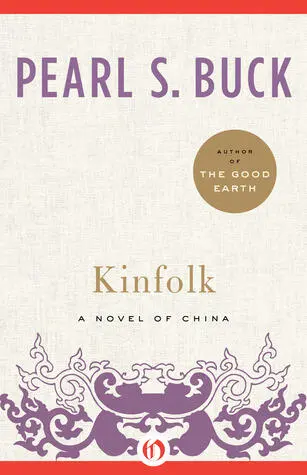
- Название:Kinfolk
- Автор:
- Издательство:Open Road Media
- Жанр:
- Год:2012
- ISBN:нет данных
- Рейтинг книги:4 / 5. Голосов: 1
-
Избранное:Добавить в избранное
- Отзывы:
-
Ваша оценка:
Kinfolk: краткое содержание, описание и аннотация
Предлагаем к чтению аннотацию, описание, краткое содержание или предисловие (зависит от того, что написал сам автор книги «Kinfolk»). Если вы не нашли необходимую информацию о книге — напишите в комментариях, мы постараемся отыскать её.
, a sharp dissection of the expatriate experience, Pearl S. Buck unfurls the story of a Chinese family living in New York. Dr. Liang is a comfortably well-off professor of Confucian philosophy, who spreads the notion of a pure and unchanging homeland. Under his influence, his four grown children decide to move to China, despite having spent their whole lives in America. As the siblings try in various ways to adjust to a new place and culture, they learn that the definition of home is far different from what they expected.
Kinfolk — читать онлайн бесплатно полную книгу (весь текст) целиком
Ниже представлен текст книги, разбитый по страницам. Система сохранения места последней прочитанной страницы, позволяет с удобством читать онлайн бесплатно книгу «Kinfolk», без необходимости каждый раз заново искать на чём Вы остановились. Поставьте закладку, и сможете в любой момент перейти на страницу, на которой закончили чтение.
Интервал:
Закладка:
No one had expected Young Wang to remain in the village since he so enjoyed city life, but he had surprised all of them by falling in love with the daughter of the village innkeeper. Chen had first suspected it in the careless service and generally absent-minded behavior which Young Wang began to show soon after their arrival. Upon inquiry Young Wang confessed that he felt it was time for him to start a family for himself, and that it would be convenient if he settled here. He reminded himself and James that he had always dreamed of returning to the sea to be a ship’s cook, but now that he had seen the innkeeper’s daughter, he preferred to be a land cook. The inn was a good business, he further explained, and it was his luck that the innkeeper’s two sons had died, one as a child and the other last year of smallpox, leaving the daughter the only offspring. This meant that her husband would be accepted in place of a son, and he could step into the business as heir.
“I suppose you care nothing about the girl herself,” Chen had said teasingly.
Young Wang had grinned. “I have seen her once or twice,” he admitted. “She is not too ugly.”
Anybody could see the innkeeper’s daughter any day as she served at the tables and Chen had laughed loudly. “You need a marriage broker,” he told Young Wang. “Allow me to offer myself. I will ask no fee except a good meal cooked by your own hands and served by your wife after the wedding.”
Young Wang was much pleased, and Chen had gone to the innkeeper and had made so handsome a picture of Young Wang that both parents had soon agreed to accept him.
“Shall we not also ask the young woman if she will consider him as a husband?” Chen had suggested daringly.
“No,” the innkeeper said with decision. “It is none of her business. The inn is mine.”
Nevertheless Chen took care one day before the betrothal papers were written to eat a meal at the inn and to ask for wine, which the girl always served. The hour was early and he sat alone at a table. When she poured the wine from the long slender spout of the pewter winepot, he leaned toward her and without looking at her he said these words in a low voice. “If there is any reason why you do not wish to proceed with the papers which bind you to Young Wang, remove the lid of the winepot as a sign.”
He did this in order to spare the feelings of a young girl. But she was no shy and modest creature. All her life had been spent in the inn and she saw new men every day. Therefore she answered smartly though not loudly, “A woman has to marry some man or other, and if he has his two eyes and his two arms and two legs, he is as good as any.”
Thus did she say that her heart was pleased with Young Wang, and so the wedding was set for the first lucky day after the opening of spring. Chen felt proud at this first achievement in the village and word went around that he had been a go-between and people praised him for his good common ways. He himself foresaw that his function in the years to come, if these two young Liangs persisted in staying here as they now swore themselves to do, would be to stand as bridge between the old and the new. With all the good intent in the world, James was too cautious and Mary too quick. James could not easily understand these country people in the very excess of his sensitive wish to do so, and Mary did not wait on understanding. If a child’s face was dirty she wiped it clean without perceiving that the jealous mother was wounded thereby.
Yet Mary was more fortunate than James. She paid little heed to the elders but she had witchery over children. She was full of stories and songs and games, and following James’s command she did not try to teach anything for a full month. The two dozen and more Liang children allowed her to wash them and to tend their scratches and cuts and soon they followed her everywhere, so that she had not one moment to herself.
Her danger was that she was impatient with Uncle Tao. She refused to respect him. She told him boldly that he would feel better if he washed himself all over with hot water and soap even though it was winter, and while he was washing she would put a powder into his clothes that would kill the lice.
Uncle Tao listened to her with astonishment. He was not quite angry for his real anger he never wasted on women. But he pursed his lips and rolled his eyes around and refused to wash himself. “I have never washed in the winter,” he declared. His sleeves were wide and he withdrew his arms from them the better to scratch remote parts of his body. “As for lice, they are a sign of good health.”
“They are a proof of dirt,” Mary said severely.
Uncle Tao rolled his head round and round on his short neck to signify rage. “You know nothing about lice! I tell you, they will not stay on a sickly person or on any person about to die. I am healthy and I have many lice.”
Mary walked away, her cheeks flaming and her head high. When Chen begged her to remember that this was China and not America, that it was country and not city, Mary flouted him. She said, “Uncle Tao is just a fat dirty old man.”
Had she been a boy she might have suffered. But it was accepted in this household as in all others that women were like children and must be allowed a license which a man as a superior being could not have. Therefore although no other woman dared to quarrel with Uncle Tao, it became a matter for family respect that Mary was not afraid of him and that he, although he roared at her, did not demand that she be beaten.
Peter remained unknown and aloof. It was plain to all that something secret weighed upon the boy’s mind. James, probing him, could not find what it was, for Peter would not tell him anything.
“I think you should go back to America, Peter,” James said one day.
“I don’t want to go,” Peter replied.
“Then what do you want to do?” James asked with something as near impatience as he allowed himself.
Peter had shrugged his shoulders. “Leave me alone,” he said.
So this day, too, he sat in silence while the others talked together. The first small sign of the northern spring had shown itself. Young Wang had found in the village market some lily bulbs and he had brought them home and had shown Mary how by keeping the water tepid about their roots they could be forced, though the room was cold. Now the flowers hung in rich golden-hearted clusters and their fragrance filled the room. In the court, too, a small bare lamay bush had begun to show buds of waxen yellow even before there was a leaf, and the brown buds on the plum tree were beginning to swell. “I must begin to do something,” Mary declared. As usual when they were together they spoke in English and as usual James reproved them.
“Please,” he said, “there is nothing we need hide, and if they hear us speaking a foreign language it makes them think us foreign.”
“You are overcareful,” Chen said lazily. He sat in the sun and the warmth was creeping into his heart. “They know we speak English.”
“I shall begin by teaching a few of our own Liang children how to read,” Mary said. “Then others will join us. And I shan’t ask Uncle Tao.”
“I think I shall not begin on our own family,” James said thoughtfully. “And I will ask Uncle Tao.”
Chen laughed. “We will see how far each of you goes,” he said.
Peter had been listening and now he suddenly broke forth as though he could not contain what was in his thought. “You are all foolish — as if it matters what you do in one little village to a handful of people among so many millions!”
His angry young voice stilled them in the midst of their pleasure in the coming spring and in each other.
“What do you suggest?” Mary asked. She put the bitter question in English for Peter had cried out in that tongue.
Читать дальшеИнтервал:
Закладка:
Похожие книги на «Kinfolk»
Представляем Вашему вниманию похожие книги на «Kinfolk» списком для выбора. Мы отобрали схожую по названию и смыслу литературу в надежде предоставить читателям больше вариантов отыскать новые, интересные, ещё непрочитанные произведения.





Обсуждение, отзывы о книге «Kinfolk» и просто собственные мнения читателей. Оставьте ваши комментарии, напишите, что Вы думаете о произведении, его смысле или главных героях. Укажите что конкретно понравилось, а что нет, и почему Вы так считаете.