Pearl Buck - Kinfolk
Здесь есть возможность читать онлайн «Pearl Buck - Kinfolk» весь текст электронной книги совершенно бесплатно (целиком полную версию без сокращений). В некоторых случаях можно слушать аудио, скачать через торрент в формате fb2 и присутствует краткое содержание. Год выпуска: 2012, Издательство: Open Road Media, Жанр: Классическая проза, на английском языке. Описание произведения, (предисловие) а так же отзывы посетителей доступны на портале библиотеки ЛибКат.
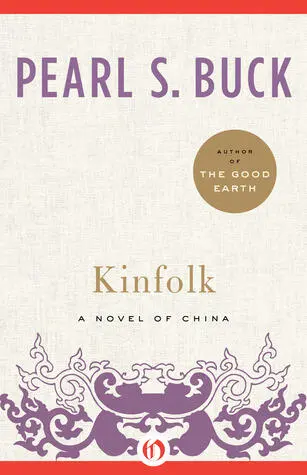
- Название:Kinfolk
- Автор:
- Издательство:Open Road Media
- Жанр:
- Год:2012
- ISBN:нет данных
- Рейтинг книги:4 / 5. Голосов: 1
-
Избранное:Добавить в избранное
- Отзывы:
-
Ваша оценка:
Kinfolk: краткое содержание, описание и аннотация
Предлагаем к чтению аннотацию, описание, краткое содержание или предисловие (зависит от того, что написал сам автор книги «Kinfolk»). Если вы не нашли необходимую информацию о книге — напишите в комментариях, мы постараемся отыскать её.
, a sharp dissection of the expatriate experience, Pearl S. Buck unfurls the story of a Chinese family living in New York. Dr. Liang is a comfortably well-off professor of Confucian philosophy, who spreads the notion of a pure and unchanging homeland. Under his influence, his four grown children decide to move to China, despite having spent their whole lives in America. As the siblings try in various ways to adjust to a new place and culture, they learn that the definition of home is far different from what they expected.
Kinfolk — читать онлайн бесплатно полную книгу (весь текст) целиком
Ниже представлен текст книги, разбитый по страницам. Система сохранения места последней прочитанной страницы, позволяет с удобством читать онлайн бесплатно книгу «Kinfolk», без необходимости каждый раз заново искать на чём Вы остановились. Поставьте закладку, и сможете в любой момент перейти на страницу, на которой закончили чтение.
Интервал:
Закладка:
“It’s all rotten,” Peter cried. “Nothing will be any use except a clean sweep from top to bottom.” He got up and walked about the room and sat down again but this time out of the sunshine and beside the table.
“Go on,” James said, “tell us what you think. None of us know.”
“I don’t know what to think,” Peter said. “I have been trying to find out. The dirt — the disease — the stupidity!” He stared at them all in a sort of rage. “I shall never forgive Pa as long as I live — letting us believe that everything was wonderful, hiding it all under a Confucian mist! No wonder he doesn’t come back!”
“I suppose you wish you hadn’t come back,” Mary flung at him.
But Peter would not accept this. “I don’t wish that. I am glad I came back. If this is the way things are in my country I’d rather know it.”
“Still you wish they weren’t,” Mary argued.
“Of course I wish they weren’t!” Peter reared his head like a young stallion and glared at them. “I wish the president of my college weren’t a pussy-footing old fool! I wish he didn’t love tea parties and flattering sycophantic professors — and women! I wish we had a decent government! I wish we needn’t be afraid of secret police sneaking everywhere like rats in sewers! I wish I didn’t have to see my college mates jailed — tortured — killed! I wish we even had the guts to rebel — and stand together — which we haven’t — because we’re all rotten through and through—” His voice broke, tears rushed to his eyes, and he turned away his head.
James had listened, his eyes steadily on his young brother’s flushed face. Now he spoke. “We all wish that some things were different. It is like coming home from college and discovering that your parents can’t read and write. But they are still your parents. We have to take our people as they are and change them as we can.”
“They won’t change,” Peter muttered.
“I suppose we have to prove to them that change would be better,” James said reasonably.
“How can you prove anything to a lot of village dolts?” Peter demanded.
“What else can you do?” Mary demanded in return.
Peter gave her a strange dark look. “There are other ways,” he said.
They gazed at him with blank looks and he rose to his feet impetuously. “Oh, I don’t belong here and we all know it. The sooner I go back to the city the better it will be for us all. I can board at the college.”
He went into his own room and shut the door. They were silent for a moment after this. Chen looked very grave. He sat on the high wooden threshold of the door, his hands clasped about his knees, and he gazed out into the barren court surrounded by the low earthen wall. “The innocents!” he murmured. “We must pity them. But they are terrible in their innocence — and dangerous.”
“What do you mean?” Mary asked.
“Peter is American,” Chen said. “He has been brought up innocent. He believes that anything can be done and done quickly. You do it by force, either of money or arms. What can the innocent understand of the long slow years, the thousands of years? What can they know of the incorruptible people?”
“Are the people incorruptible?” Mary asked. Her voice was troubled and wondering and not at all like Mary’s voice, usually brisk and firm.
“There are corruptible men but no corruptible people,” Chen said.
“You give me hope,” James said.
They talked long together that day without Peter. They planned how they would begin, in what small ways, with what few people. They would begin at once, tomorrow, Mary gathering the children together, James setting up his small clinic. They would let the people of the ancestral village lead them, and as they themselves were led, they would lead again.
“And Peter?” Mary asked.
“Peter must decide for himself,” James said.
Young Wang was much troubled. He had been told to go with Peter to the city and see him settled in his room at the college and then come back again. This he would do. But should he first tell his master about the marble bridge? So long as Peter was safe in the village he had felt no need to tell. Yet were Peter to be alone in the city should there not be warning to the elder brother?
He took his chance to talk with Peter himself as they wound along the country roads northward. “Now, young master,” he argued, “I am older than you, though a serving man only, and I beg you to have nothing to do with such students as do not read their books and who instead spend their time complaining against the government. All governments are devouring beasts, and they feed upon the people. Avoid officials, I pray you. This we are taught even when we are children. And especially now, avoid our present officials, who are beside themselves with greed, since money is worthless. They will destroy all who complain. The nearer a government is to its end, the more cruel and hungry it becomes. Was it not so in the days of the old empire?”
Peter did not answer this and Young Wang, stealing a look at his sullen face, went on. “I have not told your elder brother anything about the marble bridge, and I will not if you will promise me only to read your books and not mix yourself with those who read no books.”
“I do not need to promise anything to you,” Peter said rudely. “Let me tell you this — I do not care what you say to my brother.”
Young Wang did not say any more after this. He became again only the good silent servant and he went with Peter to the college and there they found no room empty. But after some search Peter found a friend, a youth from the province of Hupeh, whose name was Chang Shan, and this friend said, “There is space in my room for another bed, and you are welcome to the space if you can find the bed.”
So Young Wang ran to the thieves’ market and found a bed and put it up in the narrow room and he spread quilts and he bought some fruits and sweets and did all he could for his young master. When there was nothing more to do, he waited until he could find the Hupeh youth alone for a few minutes and then he said, “This young master of mine is wholly ignorant, coming from America, and he does not understand anything here. I beg you to shield him and watch over him and warn him and do not let him fall into evil hands. He walks with his head high and he does not see where his feet are going.”
The Hupeh youth smiled at this and said, “Yes, yes,” and Young Wang gave him a parcel of food he had bought as a gift and then having indeed done all he could, he returned to the village. There he made no report to James beyond saying that he had seen Peter safely to the college and had bought him a bed and that he was among friends. Young Wang was a prudent man and he was loath to make trouble in the family he served. It might be that Peter would heed his warning. At least he would wait and see. Meanwhile the affairs of his own marriage began to press him. His father-in-law was a canny man who did not wish to yield up his authority in the inn too easily. The first necessity therefore, Young Wang decided, was to marry the daughter and get her with child and so establish himself secure in this family.
Young Wang’s wedding day dawned clear and calm, a good day in the midst of days of wind and sandstorm and this he took to be a favorable omen. The wedding was a common one without extra show, but Young Wang in his thriftiness considered it money soundly spent to pay for a meal at the inn for everybody. The gentry ate apart from the others, and the Liang family were put in the inner rooms. Uncle Tao let his hunger loose and he ate and drank mightily, and all admired his capacity.
Chen, delicately perceiving what was his proper place, did not sit down long with the Liangs and yet he did not sit anywhere else. He wandered about among the guests making jokes and teasing the bride, who ran here and there with the feast dishes as though it were any wedding except her own. James sat near to Uncle Tao but at the outer edge of the tables, and from here he looked at the villagers and country folk. They were hearty people and good, ignorant of letters and yet wise in the ways of human life. They were not innocents. They did not expect much and they were happy with what they had. Yet they would gladly be more happy if it were possible. They liked Uncle Tao and they despised him, too. They bore with such gentry; they did not wish them dead, but they watched their own scales when they measured seed rice and harvested grain. No, they were not innocents. They granted to every man his own right to the life he liked best, or the life that he had been given by Heaven.
Читать дальшеИнтервал:
Закладка:
Похожие книги на «Kinfolk»
Представляем Вашему вниманию похожие книги на «Kinfolk» списком для выбора. Мы отобрали схожую по названию и смыслу литературу в надежде предоставить читателям больше вариантов отыскать новые, интересные, ещё непрочитанные произведения.





Обсуждение, отзывы о книге «Kinfolk» и просто собственные мнения читателей. Оставьте ваши комментарии, напишите, что Вы думаете о произведении, его смысле или главных героях. Укажите что конкретно понравилось, а что нет, и почему Вы так считаете.