Pearl Buck - Kinfolk
Здесь есть возможность читать онлайн «Pearl Buck - Kinfolk» весь текст электронной книги совершенно бесплатно (целиком полную версию без сокращений). В некоторых случаях можно слушать аудио, скачать через торрент в формате fb2 и присутствует краткое содержание. Год выпуска: 2012, Издательство: Open Road Media, Жанр: Классическая проза, на английском языке. Описание произведения, (предисловие) а так же отзывы посетителей доступны на портале библиотеки ЛибКат.
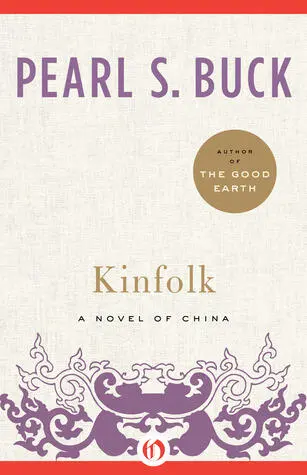
- Название:Kinfolk
- Автор:
- Издательство:Open Road Media
- Жанр:
- Год:2012
- ISBN:нет данных
- Рейтинг книги:4 / 5. Голосов: 1
-
Избранное:Добавить в избранное
- Отзывы:
-
Ваша оценка:
Kinfolk: краткое содержание, описание и аннотация
Предлагаем к чтению аннотацию, описание, краткое содержание или предисловие (зависит от того, что написал сам автор книги «Kinfolk»). Если вы не нашли необходимую информацию о книге — напишите в комментариях, мы постараемся отыскать её.
, a sharp dissection of the expatriate experience, Pearl S. Buck unfurls the story of a Chinese family living in New York. Dr. Liang is a comfortably well-off professor of Confucian philosophy, who spreads the notion of a pure and unchanging homeland. Under his influence, his four grown children decide to move to China, despite having spent their whole lives in America. As the siblings try in various ways to adjust to a new place and culture, they learn that the definition of home is far different from what they expected.
Kinfolk — читать онлайн бесплатно полную книгу (весь текст) целиком
Ниже представлен текст книги, разбитый по страницам. Система сохранения места последней прочитанной страницы, позволяет с удобством читать онлайн бесплатно книгу «Kinfolk», без необходимости каждый раз заново искать на чём Вы остановились. Поставьте закладку, и сможете в любой момент перейти на страницу, на которой закончили чтение.
Интервал:
Закладка:
“We are of the Liang family!” James called to him. “Do you remember us? Look at my face!”
The watchman stared and saw him. “Eh, you bring too many with you,” he objected.
“My sister, who came before, my younger brother, my friend and our serving man. The rest are muleteers,” James replied.
“The inn cannot hold all these muleteers,” the man objected.
Young Wang came forward at this moment. “Elder brother, the muleteers will not sleep here if there is no room,” he said with courtesy. All this time he had been counting money inside his bosom and now his hand came out clenched about a roll of bills and he went close to the gate and somehow the money met the watchman’s hand through the small open panel and after a moment the gate swung open. Dogs were waiting inside and they sprang at the mules, but the mules, long used to them, plodded on, only breathing hard and kicking at the leaping dogs if they came too near.
Thus they went in single file down the street and so came to the gate of the ancestral house. This gate, too, was closed but the middle son of Uncle Tao had been waked by the dogs and he had risen and stood near the gate. His heart beat fast, for why should horsemen pass through the village now? When he heard a knock upon his own gate that heart stopped for a second. Did not the Communists always come to the house of the landlord first? He slid back a little panel and looked out.
“It is I, Cousin Brother,” James said.
The gate was thrown wide then, and the cousin stood holding his robes about him as he had thrown them on when he rose from his bed.
“Come in,” he said, “welcome, even at this hour. We knew you were coming one day or another, and we have been expecting you any day. Come in, come in—”
It was a pleasant welcome and they all came in while the cousin ran to wake the women. They rose, with such men cousins as waked themselves, and millet soup was heated and water was boiled for tea, while Young Wang paid the muleteers with much loud argument and anger over the wine money which was to be given above the price agreed upon.
At last all was settled, and the loads were in the house and the mules gone. In the middle room all gathered to eat and drink before they slept again, each feeling somewhat shy because of the new life ahead. Kinfolk they were, and yet they were strangers, too, now that they were to live together under the same roof. Uncle Tao had not waked and none had called him. Let that be for tomorrow.
Yet the kinswomen were kind and they pressed the newcomers to eat and drink and the kinsmen were courteous and asked how the journey had been. They looked often at the boxes which James had brought and one asked if they contained money. “Only medicines,” James said. “You know I am a doctor.”
To this none answered and he felt them afraid and bewildered by a new thing under the roof.
Peter said not a word. He ate a little and drank some tea and from under his dark eyebrows he looked at these kinfolk of his. He felt not one drop of blood in him that was like the blood in them. Yet they were all Liangs. His father, thousands of miles away, in a world as different from this as though it were upon another star, was still a Liang, with these. Mind knew, but could not comprehend, and heart rebelled. Peter only longed to sleep.
Chen was cheerful. There was nothing here too strange to him. This village was like his own, and these frowzy women and slovenly men were like those who lived in his own father’s household. He made small talk, and asked questions in courtesy and they laughed once or twice at what he said and their eyes were lively. This he did with intent. They must like him, because in days to come he must stand often between them and Mary, and even perhaps Jim. He pitied these two with all his heart for he loved them well. Peter? Peter would not stay here, that he believed. But Jim and Mary were bound by their own wills.
“Now we must sleep,” Chen, said at last. “You, Elder Brothers, are too good. Please go back to your beds.”
So saying all rose and the kinsmen took the newcomers to their rooms, and the kinswomen led Mary to her room where she had slept before. Young Wang lay down upon three chairs in the middle room and wrapped his quilt about him.
All tiptoed as they passed Uncle Tao’s room until they heard his great rumbling cough and then they paused and looked at one another.
“Can it be he has been awake this whole time?” the eldest kinswoman whispered.
For answer there came a second great rumbling cough from Uncle Tao. They waited listening, but he did not speak and neither did he come out. After a long few minutes of such waiting they crept on, each to his own bed.
Uncle Tao lay listening to their footsteps creeping away. He knew very well what had happened. The first dog had wakened him. But he did not get up. He lay slowly making up his mind and only mischief made him cough when he heard them pass his door. Let them know that he was awake and would not get up!
15
A PLEASANT HOME, VIOLET Sung told herself, a pleasant woman, this mother of Alec Wetherston, and Louise was lucky. Violet sat in a comfortable chair in a large living room full of too many things and now and then she looked through the wide window in the central garden of the huge apartment house.
“Dr. and Mrs. Liang will be pleased when I tell them how you feel,” she said in her sweet deep voice. With her instinctive gift she appeared a gentle somewhat simple-hearted young woman before this gentle and very simple-hearted older woman. “You can understand that they have been a little troubled at such a quick marriage. Not everyone would be so generous as you have been. We Chinese pay great heed to the mother-in-law. Therefore it was natural that I should offer, on behalf of my friends, to come and see you first.”
Mrs. Wetherston looked troubled. “I do hope,” she said with pathetic emphasis, “that nobody will think of me as a mother-in-law!”
Violet smiled. “To us a mother-in-law is a revered figure. A son honors his mother, and the son’s wife must both honor and obey.”
“Oh, I don’t want to be obeyed!” Mrs. Wetherston exclaimed. She was a small plump white-haired woman whose face was no whit different from that of any plump white-haired woman whom one might pass on the street. She was dressed in a gray wool frock, tight across her ample hips and bosom, and her feet, crossed upon a worn hassock of red velvet, were encased in black kid pumps, too tight across the instep. But she had grown accustomed to such restrictions and there was something pleasant and good about her. She was a woman sheltered and loved for so long that she did not know her own privilege. The mother of five children, of whom Alec was the youngest, she had already eight grandchildren. But the big apartment was empty now. Sons and daughters had scattered.
Mrs. Wetherston saw Violet’s roaming gaze. “I know this apartment ought to be redecorated,” she said apologetically. “But I just can’t bear to have it done. The children grew up here and I want to keep it like this. That spot on the arm of your chair — Rob, that’s my oldest, spilled his ice cream there when he was having his tenth birthday party. Of course it’s been cleaned but I can remember him so well when he was ten. And the piano stool is a sight, but they would kick it when they were practicing — Lilian plays beautifully, but the others got tired of it except Ken, who sings tenor. Not professionally, of course! I’m sentimental, Miss—”
“Violet Sung—”
“Oh, yes, of course. Chinese names are so — but I can call her Louise right away so it doesn’t matter if I can’t remember—”
“Liang,” Violet said gently.
Читать дальшеИнтервал:
Закладка:
Похожие книги на «Kinfolk»
Представляем Вашему вниманию похожие книги на «Kinfolk» списком для выбора. Мы отобрали схожую по названию и смыслу литературу в надежде предоставить читателям больше вариантов отыскать новые, интересные, ещё непрочитанные произведения.







Обсуждение, отзывы о книге «Kinfolk» и просто собственные мнения читателей. Оставьте ваши комментарии, напишите, что Вы думаете о произведении, его смысле или главных героях. Укажите что конкретно понравилось, а что нет, и почему Вы так считаете.