Pearl Buck - Kinfolk
Здесь есть возможность читать онлайн «Pearl Buck - Kinfolk» весь текст электронной книги совершенно бесплатно (целиком полную версию без сокращений). В некоторых случаях можно слушать аудио, скачать через торрент в формате fb2 и присутствует краткое содержание. Год выпуска: 2012, Издательство: Open Road Media, Жанр: Классическая проза, на английском языке. Описание произведения, (предисловие) а так же отзывы посетителей доступны на портале библиотеки ЛибКат.
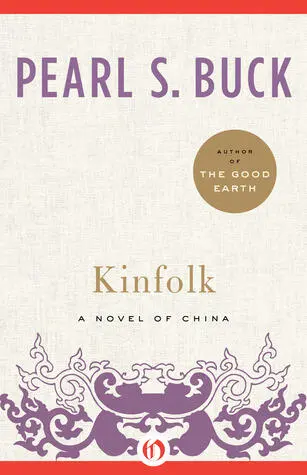
- Название:Kinfolk
- Автор:
- Издательство:Open Road Media
- Жанр:
- Год:2012
- ISBN:нет данных
- Рейтинг книги:4 / 5. Голосов: 1
-
Избранное:Добавить в избранное
- Отзывы:
-
Ваша оценка:
Kinfolk: краткое содержание, описание и аннотация
Предлагаем к чтению аннотацию, описание, краткое содержание или предисловие (зависит от того, что написал сам автор книги «Kinfolk»). Если вы не нашли необходимую информацию о книге — напишите в комментариях, мы постараемся отыскать её.
, a sharp dissection of the expatriate experience, Pearl S. Buck unfurls the story of a Chinese family living in New York. Dr. Liang is a comfortably well-off professor of Confucian philosophy, who spreads the notion of a pure and unchanging homeland. Under his influence, his four grown children decide to move to China, despite having spent their whole lives in America. As the siblings try in various ways to adjust to a new place and culture, they learn that the definition of home is far different from what they expected.
Kinfolk — читать онлайн бесплатно полную книгу (весь текст) целиком
Ниже представлен текст книги, разбитый по страницам. Система сохранения места последней прочитанной страницы, позволяет с удобством читать онлайн бесплатно книгу «Kinfolk», без необходимости каждый раз заново искать на чём Вы остановились. Поставьте закладку, и сможете в любой момент перейти на страницу, на которой закончили чтение.
Интервал:
Закладка:
The cheerful little voice chirped along like a cricket at the door.
In the dining room, crowded with the doctors, James and Chen were listening to a steady chorus of disapproval and dissuasion. The food was excellent. Mrs. Su was a good cook, and Lao Po faithfully watched for an empty bowl.
“You will waste yourselves in a village,” Dr. Su declared loudly. His last marriage was turning out well and he was beginning to put on weight. His handsome oval face was no longer thin and intellectual looking. He had a prosperous air, he smiled often and his voice carried the dominating note of the well-satisfied man. He heaped shrimp upon James’s bowl as he went on talking. “Now, you know, Liang, the Generalissimo was very wise when in the recent war with Japan he decreed that our educated men were to stay in the colleges and not to go to the front. The youths from the villages were made into soldiers. We have too few educated men. We should conserve ourselves. We must live long. We must breed children.”
“Eh, Liang!” Dr. Peng called jovially across the table. “You are not even married yet!”
“Liu Chen is not married, either,” Kang retorted. “Two bachelors! We must penalize them! They must get drunk!”
“Of course they do not live in continence,” Peng said with some malice. “Look at Liang — see, he is blushing! Eh — eh — everybody look at Liang!”
Dr. Su as host took pity. “Now, now, Peng — because you make love to every pretty nurse does not mean that all men are like you. Come, Liang — come, Liu Chen — you two fellows — tell us what you think you can do in this village!”
James had been all but silent until now. He was heartily enjoying his food. The cost of good food made this dinner a pleasure. He had not tasted pork and shrimp and sharks’ fins for a long time. Where did Su get so much money?
“Perhaps I am only going to the village to learn.” His voice was cool and quiet.
A shout of laughter answered this. “Learn what?” Su demanded. “How to eat sheets of pot bread and raw garlic?”
“How to kill lice?” Peng screamed.
“Now, now,” Dr. Kang said, spreading his fine pale hands, “we are getting too coarse. I respect Liang and Liu Chen. They wish to serve the people, I am sure. Serve the people — ah, yes — it is very fine!” His voice, his manner, carried sarcasm, mild but tinged with apology. Liu Chen was saying nothing at all. “Liu Chen, why do you not speak?” he asked smiling affably at Chen.
Chen lifted his bushy eyebrows. “Me? Why should I talk when I can eat such good food? I am not so foolish.” He held out his bowl to Lao Po. “More rice, old mother,” he commanded. “I’ve only eaten four bowls.”
They laughed again and James smiled. “Liu Chen is going to the country to eat,” Peng declared.
But after they had eaten and had drunk their wine in tiny pewter bowls these doctors became serious with the two young men. “Now seriously,” Dr. Su said, “in a sense what you are doing is to betray us all. You go to the country, you say to learn, in order that you may be more useful. But think in what light this puts the rest of us! You say, in effect, you are doing the right thing and we are doing the wrong.”
“No,” James replied. “We are only doing what we wish to do — not what is right, not what is wrong.”
Liu Chen clapped his hands. “Truth — truth—” he declared.
Yet this truth continued to make them all uncomfortable with each other. Why did anybody wish to go to live in a village? Those who did not wish to go could not understand, and those who did wish to go could not explain. When the feast ended, the separation was already made. James and Chen had cut themselves off from the others and none would oppose their going.
Uncle Tao had not written an answer to the letter James sent him, but it was not expected that he would. Doubtless years had passed since he had put brush to paper. The preparations went forward therefore. Young Wang sold the furniture at the thieves’ market and rejoiced when it brought many times the money it had cost. This was not all pure gain, since money was not worth nearly as much, but there was some gain. The stove was a cause for argument. Mary wished to sell it, so that they might live exactly as their kinfolk did, but Chen was prudent.
“You will find the village is just as cold as the city,” he declared. “It is necessary that there be one place where we can get warm.”
“We can sit on the k’ang,” Mary said.
“You will not always want to sit on the k’ang among your cousins and all their children,” he retorted.
“We cannot get coal in the village,” Mary declared.
Chen had to yield. “You will not be content until you have us plowing,” he said in mock complaint.
Little Dog and his mother made a great lamentation, since they were not to go. Where would they find so pleasant a place in which to live and to sleep and to eat? But Chen said sternly that the fewer the mouths that were brought to the village the more welcome James and Mary and Peter would be to their kinfolk. He himself was enough, and Young Wang was one more. Plenty of servants would be in the village, and so Little Dog was paid well and his mother was given a new padded coat. Nor were they turned out of the house at once. They could stay as long as the landlord allowed and it might be that a new tenant would need them.
As for the landlord, they did not go to bid him farewell. Chen’s prudence was against this. A small parting gift was made of some cakes and at the last moment James kept back an easy chair for the old gentleman, so that he might sit in the sun and sleep.
Thus on a fine cold sunny morning in February they rose early and ate their last meal in the city house and bidding farewell to the weeping Little Dog and his mother, they mounted their hired mules and the muleteers yelled and brandished their whips and they began the long day’s ride southwest to the ancestral village. The wind had died down in the night and the clouds of fine sandy dust which hung over the city for a week had settled. The air, made clean by the sandstorm, was as pure and dry as desert air, and the sun shone as though through glass. The landscape sparkled with light and distance was shortened and the rim of the earth seemed near. Under a gray sky this same land could look gray and dispirited, the people gray mites upon its surface, the villages scarcely to be seen. But on this day the houses were clear and the people no less clear in blue and gray flecks of red. The very brown of their skins was rich and lively.
Thus as the sun rose higher the spirits of the riders rose, too. They were young; they had set forth on the adventure; they had cut themselves clean from all that had been before. None had been content with life, and what was to come must have some good in it. Only Young Wang was gloomy. He who had lived all his childhood in a village under a landlord could not think with pleasure of Uncle Tao. Nevertheless, even he allowed himself to be cheered as the day wore on, remembering that those whom he served were kinfolk to Uncle Tao, and that they would protect him in time of need.
Only Peter was less cheerful than the others. He looked doubtful when they stopped at an inn for their noon meal. It was an inn like any other, the floor of beaten earth, the tables unpainted wooden boards set on legs. The innkeeper’s wife was snaggle-toothed and unkempt, as all decent country women are lest it be thought they make themselves beautiful for men, and her hair was unbrushed for many days and the sandstorms had left it brown and dusty. Yet she was cheerful and when she asked them in a loud voice what they would eat, her breath came out hearty with garlic.
“What have you?” James asked.
Читать дальшеИнтервал:
Закладка:
Похожие книги на «Kinfolk»
Представляем Вашему вниманию похожие книги на «Kinfolk» списком для выбора. Мы отобрали схожую по названию и смыслу литературу в надежде предоставить читателям больше вариантов отыскать новые, интересные, ещё непрочитанные произведения.



Обсуждение, отзывы о книге «Kinfolk» и просто собственные мнения читателей. Оставьте ваши комментарии, напишите, что Вы думаете о произведении, его смысле или главных героях. Укажите что конкретно понравилось, а что нет, и почему Вы так считаете.