Pearl Buck - Kinfolk
Здесь есть возможность читать онлайн «Pearl Buck - Kinfolk» весь текст электронной книги совершенно бесплатно (целиком полную версию без сокращений). В некоторых случаях можно слушать аудио, скачать через торрент в формате fb2 и присутствует краткое содержание. Год выпуска: 2012, Издательство: Open Road Media, Жанр: Классическая проза, на английском языке. Описание произведения, (предисловие) а так же отзывы посетителей доступны на портале библиотеки ЛибКат.
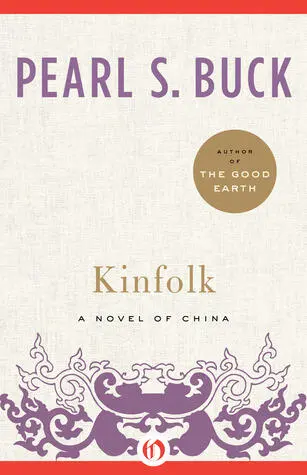
- Название:Kinfolk
- Автор:
- Издательство:Open Road Media
- Жанр:
- Год:2012
- ISBN:нет данных
- Рейтинг книги:4 / 5. Голосов: 1
-
Избранное:Добавить в избранное
- Отзывы:
-
Ваша оценка:
Kinfolk: краткое содержание, описание и аннотация
Предлагаем к чтению аннотацию, описание, краткое содержание или предисловие (зависит от того, что написал сам автор книги «Kinfolk»). Если вы не нашли необходимую информацию о книге — напишите в комментариях, мы постараемся отыскать её.
, a sharp dissection of the expatriate experience, Pearl S. Buck unfurls the story of a Chinese family living in New York. Dr. Liang is a comfortably well-off professor of Confucian philosophy, who spreads the notion of a pure and unchanging homeland. Under his influence, his four grown children decide to move to China, despite having spent their whole lives in America. As the siblings try in various ways to adjust to a new place and culture, they learn that the definition of home is far different from what they expected.
Kinfolk — читать онлайн бесплатно полную книгу (весь текст) целиком
Ниже представлен текст книги, разбитый по страницам. Система сохранения места последней прочитанной страницы, позволяет с удобством читать онлайн бесплатно книгу «Kinfolk», без необходимости каждый раз заново искать на чём Вы остановились. Поставьте закладку, и сможете в любой момент перейти на страницу, на которой закончили чтение.
Интервал:
Закладка:
This munching next annoyed Dr. Liang. He looked at her and compared her large somewhat flabby face with Violet Sung’s exquisite one. “What a noise you are making with that toast!” he exclaimed. “It sounds like a mill crushing grain.”
She stopped and looked at him across the table. Her mouth was full of the half-chewed toast and she did not know what to do.
“Swallow it,” he said violently.
She drank some tea, held her handkerchief before her face, and swallowed. The bit of toast she had been holding in her hand ready for the next bite she put down. She sat neither eating nor speaking until he had finished his breakfast and rising with dignity had gone to his study and closed the door. Then she finished the toast, took another piece, and spread it with strawberry jam. Butter she could not abide for it tasted of cows and milk. The teapot was empty and she called cautiously, “Neh-lee!”
Nellie came in wiping her hands on her apron. “Want more tea?” she asked kindly. She and the madam got on all right.
Mrs. Liang nodded. “What you think, Neh-lee?” she asked in a half whisper.
“What?” Nellie asked, with the teapot in her hand.
“Louise is marrying,” Mrs. Liang whispered, “American fellow and a baby!”
“Louise got a baby?” Nellie exclaimed in the undertone they used when Dr. Liang was in the house.
“He got baby,” Mrs. Liang explained. “Before time another Chinese wife.” It was the one thing that James, after some thought, had decided not to make clear. The baby’s mother, he had written, was the former wife of the American. Why, he asked himself, should the child assume a stigma when it reached America? In China people did not blame a child for the failures of its parents.
“Whaddya know,” Nellie said. “Will they live here? It’ll be kinda nice to have Louise home at that. Though a baby — still, there’s the diaper service.”
“His father and mother live also in New York,” Mrs. Liang told her. “So maybe they live that side. But I am so glad to have some child again.” She touched the corner of her napkin to her eyes.
“The mister is kinda tough on you, ain’t he!” Nellie said with sympathy. “Well, cheer up now, madam. I’ll fetch the hot tea.”
She went away and Mrs. Liang sat alone and thinking, the lines of her face growing kind and soft. She would go down to Chinatown and find Mrs. Pan and tell her everything. It was so nice to have a woman friend again.
Behind his closed study door Dr. Liang sat moodily staring out of the window. Nothing in his philosophy, so closely derived from Confucius, prepared him for what had now happened. He did not know what to do. Louise had suddenly become no longer important to him. She was not a favorite child now that she had chosen to defy him and marry an American. Neither was the man important. Dr. Liang could, for his own part, live as though neither of them existed. He would not disown his daughter or dignify her by any such notice. The young couple could come here and pay their respects to him and he would greet them carelessly, as though nothing they did mattered to him. Children were disappointing. One produced them and cared for them and taught them and paid huge sums in school fees and then they did what they liked. It was America that spoiled them. In China — the old China — children remained subject to their parents as long as the elders lived. For this they were recompensed by becoming elders in their turn. Thus society was sound and the generations proceeded in order. That China, he knew, was gone. It was already passing when he himself was young, and had insisted that he would not have an illiterate girl for his wife. But he believed that the old wise ways would return. A nation that did not organize its generations in proper relationships was doomed to disintegration.
All this philosophy did not help him at the moment. The important thing, he discovered after he had sorted his thoughts, was what the Wetherston family was like. Were they entirely mediocre? How could he approach them? Should he approach them or should he wait for them to approach him? He could answer none of these questions, and his wife, he knew, would not even understand why he asked them. It would be her nature to rush over at once to see the new family and get on a footing of immediate and absurd friendliness which might involve him later in all sorts of obligations unsuitable to his position. If the Wetherstons proved to be poor and crude, for example, they might even seize at the chance to be connected with a famous man, though a Chinese.
In his indecision he took up the receiver of the telephone and dialed the number of Violet Sung’s apartment. They had never mentioned Ranald but Violet had said, “It is quite safe to telephone me in the morning, but please not at night.”
So he waited for a moment and then heard her voice, still rather drowsy. “Yes?”
“Violet?” he said very softly, for Mrs. Liang had an acute ear.
“Oh, yes,” she replied, recognizing him.
“Please forgive me for calling you so early. I have had bad news. I need you.”
“Tell me,” she said with the warmth in her voice which was so charming to him.
“My youngest daughter has unexpectedly married an American. The letter came this morning. His family, unfortunately, is here in New York.”
“How strange,” she murmured.
“Yes, so I feel it,” he agreed. “Now I must have your advice. What shall I do?”
She hesitated a moment, then she repeated his question. “What shall you do? But what can you do if they are already married?”
“Yes, that I know,” he said a trifle impatiently, “but how shall I behave with the family? How can I know what they are and how they will feel? Doubtless by now they know what their son has done and perhaps they will be expecting me to — or ought I wait for them?”
“Where do they live?” Violet asked.
He gave the mediocre address and she considered it thoughtfully and so long that he asked rather piteously, “Can you suggest anything?”
“I will go to see them,” she said at last. “I will call upon them, saying that I am a friend of your family.”
He was relieved and deeply grateful, for he had not thought of such a thing. Yet it was in excellent Chinese tradition — a go-between, so to speak, someone who would break the blow of compulsory acquaintance.
“Who but you—” he murmured, breaking his sentence there. “Who but you would be so kind, so beautiful, so understanding—” any of these things could be said. But he preferred not to be explicit.
She laughed a soft wistful laugh. “I am really not much use in the world,” she said. “I’d like to be of use to you.”
“Of such use,” he said gravely, “that I cannot live without you.”
He put the receiver down upon that.
14
THE HOUSE FELT EMPTY after Louise had left it. While she was there each separate member of the family had felt her discontented presence and each had tried to please her in some small way, to make her smile at least for the moment. Now there was no more need for such effort. When the four came home at their various times, they could go their own ways, give greeting or not, and they had no duty to a lonely little sister.
Yet they missed her. Because of her very loneliness Louise had compelled them all, James and Mary, Peter and Chen, to come out of themselves and to enter into her being. And there were times when she was not sulky, times when she played with the kittens and laughed, times when she found a fledgling bird, or a new flower growing in the ancient court. She was so pretty, her little face so pleasant to see when she was happy, that they remembered her tenderly now that she was gone. Only Peter seemed careless, and when the others spoke of her he put his mind elsewhere and sat silent.
Читать дальшеИнтервал:
Закладка:
Похожие книги на «Kinfolk»
Представляем Вашему вниманию похожие книги на «Kinfolk» списком для выбора. Мы отобрали схожую по названию и смыслу литературу в надежде предоставить читателям больше вариантов отыскать новые, интересные, ещё непрочитанные произведения.






Обсуждение, отзывы о книге «Kinfolk» и просто собственные мнения читателей. Оставьте ваши комментарии, напишите, что Вы думаете о произведении, его смысле или главных героях. Укажите что конкретно понравилось, а что нет, и почему Вы так считаете.